Discover how a 2000-year-old granite slab in the Egyptian desert opened the world of ancient Egypt to us –and learn how to read a bit of the stélé yourself.
Start learning with a NaTakallam Language Partner in Arabic, Armenian, English, French, Kurdish, Persian, Russian, Spanish or Ukrainian!
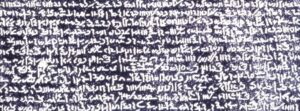
In 1799, a French soldier digging fortifications near the Egyptian town of Rashid (known by the French as Rosetta) pulled a dark granite stélé from the rubble. Although many stélé had been found, this one was different because it was a bilingual, Egyptian-Greek inscription written in three scripts: Hieroglyphics, Demotic Egyptian, and Greek.
The Rosetta Stone
Consequently, it proved to be the key to three thousand years of untranslated Egyptian civilization, unlocking the meaning of the Egyptian hieroglyphs. From texts like the Egyptian Book of the Dead to numerous temple inscriptions, the Rosetta Stone was the key to understanding all of them. In addition, the archaeological work that resulted from this text still continues to form the basis of modern Egyptology, with far-reaching ramifications in the fields of history and linguistics.
It should be noted that for all its fame, the text of the Rosetta Stone was just a government memo: Carved in 196 BCE during the reign of Ptolemy V, it records a priestly decree granting tax exemptions and honors to the king. That is, it’s the ancient world’s equivalent of an official press release. However, what made it a crucial find was that the same text was written in three different scripts, providing a means of decoding the then-lost meaning of Egyptian hieroglyphs.
Hieroglyphs were the royal, priestly script found in temple walls and royal inscriptions. Note that the terms “hieroglyphs” and “hieroglyphics” are used interchangeably, but generally, hieroglyphics refer to the writing system at large, whereas hieroglyphs refer to the actual symbols used.
Demotic was the cursive Egyptian script used in everyday handwritten documents, from marketplace transactions to legal documents. Its predecessor was Hieratic, famously used in the Egyptian Book of the Dead.
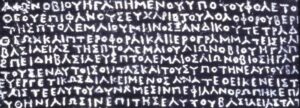
Lastly, the transcription in Ancient Greek reflected the political power ruling Egypt at the time, the Ptolemaic dynasty.
Here’s a summary tracing the stélé’s origins in Memphis to its current housing in the British Museum:
Timeline of the Stélé
196 BCE
The stone is carved at Memphis, Egypt, during the reign of Ptolemy V Epiphanes. It is a copy of a decree issued by Egyptian priests who supported the Ptolemaic dynasty. There have been three other nearly identical stelae found since the initial discovery in 1799.
1799
The stone was rediscovered at Rashid (Rosetta), when French soldiers under Napoleon's Egyptian campaign excavated the stone from ancient fort walls near the Nile Delta. Officer Pierre-François Bouchard recognizes its significance.
1801
The British seize the stone after defeating Napoleon's forces. Under the Treaty of Alexandria, it is transferred to London, where it has remained in the British Museum ever since.
1822
Jean-François Champollion cracks the code, working from the Greek text as a guide, and building on earlier work by Thomas Young. The French scholar fully deciphers Egyptian hieroglyphics through the Coptic he learned from the priest Youhanna Chiftichi.
Insight Born of Dedication
"Je me livre entièrementau copte. Je veux savoir l’égyptien comme mon français…"
Jean-François Champollion, the father of modern Egyptology, said inone of his letters: “I devote myself entirely to Coptic. I want to know Egyptian like my French…” The key insight Champollion had was understanding that hieroglyphics were not purely symbolic, as scholars had previously assumed. Employing his knowledge of both Greek and Coptic (the last stage of the Egyptian language), and using the Rosetta Stone as a guide, he was able to understand the hieroglyphic inscriptions.
To illustrate, let’s go through a simplified version of this process, starting with the Greek name of the monarch responsible for the stélé:
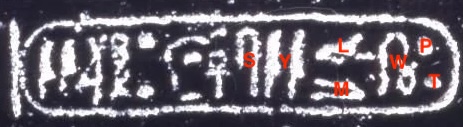
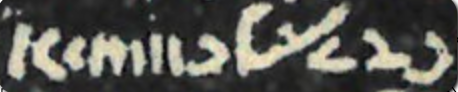
Reading left-to-right, this reads as PTOLEMAIOS, similar to English. Then, in the Demotic part of the stele, this word below corresponds to the above Greek text. The first thing you note is that the left-most and right-most characters seem to bracket the text in between, like cartouches encircle names in hieroglyphs.
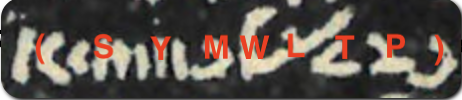
Note that in Demotic Egyptian, like in Arabic, not all vowels are written, and words are also written right-to-left. The spelling of Ptolemy can vary in Demotic, so let’s assume it’s ptlwmys. Mapping this to the text would look like:
So this would be Ptolemy/Ptolemaios in Demotic, with the special brackets that indicate a name. Further, note that Demotic L looks like a modified version of the R character: This is because Egyptian hieroglyphs initially had no separate letter for L. Later on, they used a reclining lion (as seen below) to indicate the first letter of Greek ΛΕΩΝ (león).
Through this method of assigning phonetics to characters, scholars now know that these sounds map onto hieroglyphs in this way:
Another thing to note is that hieroglyphs can be written left-to-right or right-to-left, and you can tell where to begin by following the heads of the animals depicted! In this case, the lion for L faces right, so we read right-to-left.
Connecting Past and Present
Thus, the Rosetta Stone revealed the world behind Egyptian hieroglyphs, and showed the connections between civilizations both remembered and forgotten. For instance, the Demotic Egyptian language on the stone was the direct ancestor of Coptic, a language still used liturgically by the Copts of Egypt. Because Coptic preserved the sounds of ancient Egyptian, Champollion figured out how the old hieroglyphs actually sounded by cross-referencing his work with Coptic.
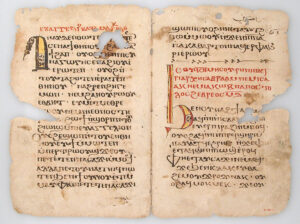
A Coptic manuscript from Wadi Natrun.
And this work would not have been possible without one of the unsung heroes of this story: The priest Yuhanna Chiftichi, whose Coptic lessons made Champollion’s work possible.
With NaTakallam, you can learn Egyptian Arabic from our native language partners, and likewise open the doors into this fascinating civilization for yourself. Every session is also an act of solidarity, as many of our language partners are displaced, and by booking sessions with NaTakallam, you are supporting their livelihood.
Whether you want to trace the living echo of the ancient world through Egyptian Arabic, other Arabic dialects,French,Spanish,and more, there is a tutor waiting to help you uncover the world behind their language.
Start learning with NaTakallam!
Learn from a wide selection of languages to open up to new worlds, cultures, and histories to explore—all while making a tangible impact.
Women have shaped the world through education, art, community-building, and so much more – speaking truths that might otherwise have been lost.
Courage looks different in every context – it can mean insisting on education, painting stories on city walls, founding institutions, or rebuilding life in a new place. This list honors women worldwide – from educators and artists to community leaders and NaTakallam’s own Language Partners – who embody courage in action.
Book a session and learn from women sharing their language and stories across borders
Across borders and generations, women have turned resilience into change.
Courage in Exile
Women who crossed borders and rebuilt voice, identity, and impact
For many women, courage begins far from home. Displacement can silence voices – but for some, it becomes the beginning of advocacy, storytelling, and leadership.
Yusra Mardini
From displacement to global advocacy
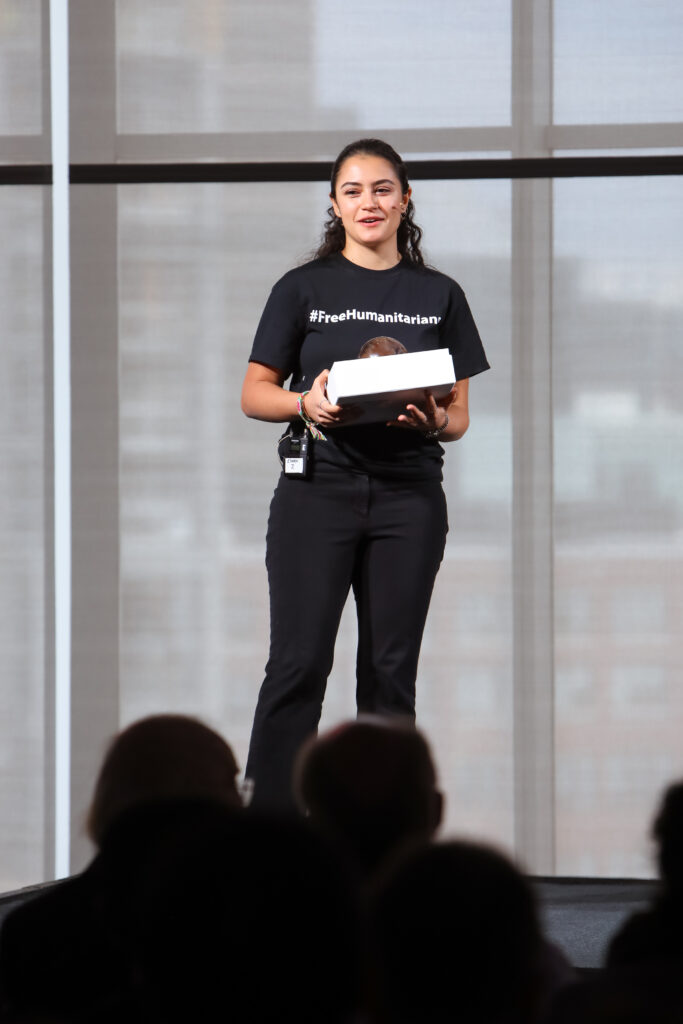
Yusra Mardini - 2018 Disobedience Awards at the MIT Media Lab
Yusra Mardini is a Syrian refugee and Olympic swimmer who competed as part of the first-ever Refugee Olympic Team at the 2016 Summer Olympics. She fled Syria in 2015 and, when the engine of her refugee boat failed mid-journey, she and her sister helped guide it to safety to reach Lesbos.
After eventually settling in Berlin, Yusra continued her swimming career and became the youngest Goodwill Ambassador for the United Nations High Commissioner for Refugees in 2017, advocating for displaced communities worldwide.
Her journey, alongside her sister Sara Mardini, was later portrayed in the Netflix film ‘The Swimmers’.
Yusra Mardini’s journey shows how courage in exile can transform survival into advocacy and global impact.
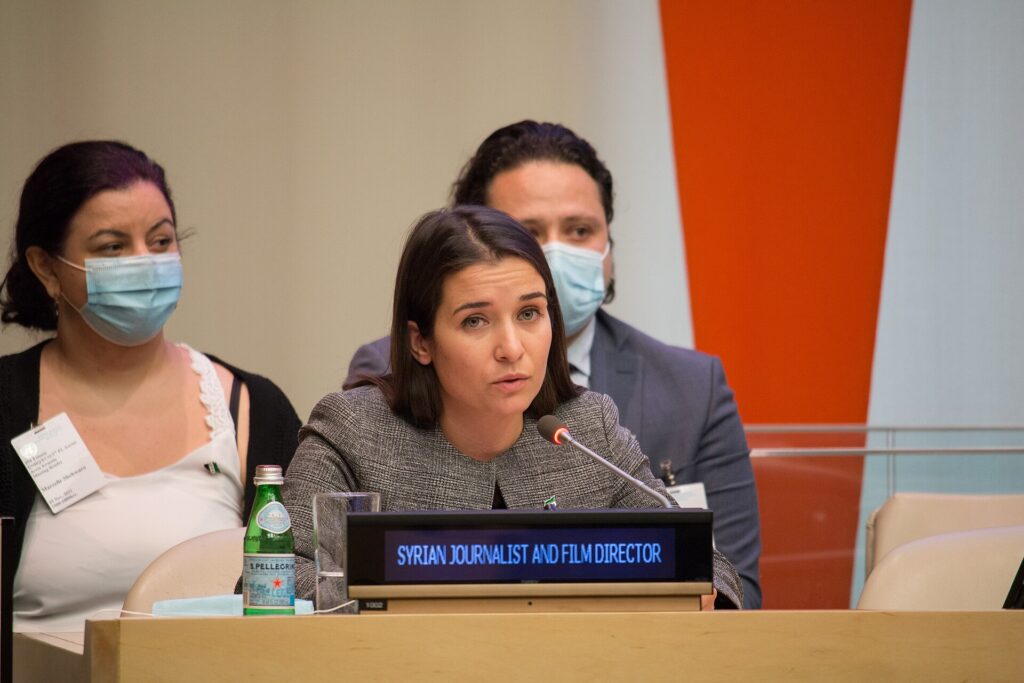
Waad Al‑Kateab
From displacement to global advocacy
Waad Al-Kateab - Photo by Liisa Toots
Waad Al-Kateab is a Syrian journalist and filmmaker who documented life during the Syrian conflict while living in the besieged city of Aleppo. As violence escalated around her, she began filming daily life, capturing the realities faced by families, hospitals, and communities trying to survive the war
Her footage later became the acclaimed documentary, For Sama, a deeply personal film dedicated to her daughter that brought global attention to the human cost of the conflict.
Through storytelling and film, Waad Al-Kateab ensured that the voices and experiences of civilians in Aleppo would not be forgotten.
Her work reminds us that courage can also mean bearing witness — and telling the stories that history must remember.
Ilhan Omar
Representation and civic participation
"Ilhan Omar speaking at a Hillary for MN event at the U of MN" by Lorie Shaull is licensed under CC BY-SA 2.0.
Ilhan Omar is a Somali-born American politician who serves as the U.S. Representative for Minnesota’s 5th congressional district. After fleeing the Somali Civil War, she spent four years in a refugee camp in Kenya before immigrating to the United States in the 1990s.
A member of the Democratic Party (United States), Omar became the first Somali-American, the first former refugee, and one of the first Muslim women elected to the U.S. Congress. Throughout her political career, she has advocated for more inclusive immigration policies and greater representation for immigrant and refugee communities.
Her journey reflects how courage in exile can grow into civic leadership and representation on the global stage.
Courage Through Language
Women who used speech, storytelling, and education as power
Language has long been one of the most powerful tools of change, allowing women to educate, preserve stories, and amplify voices across generations.
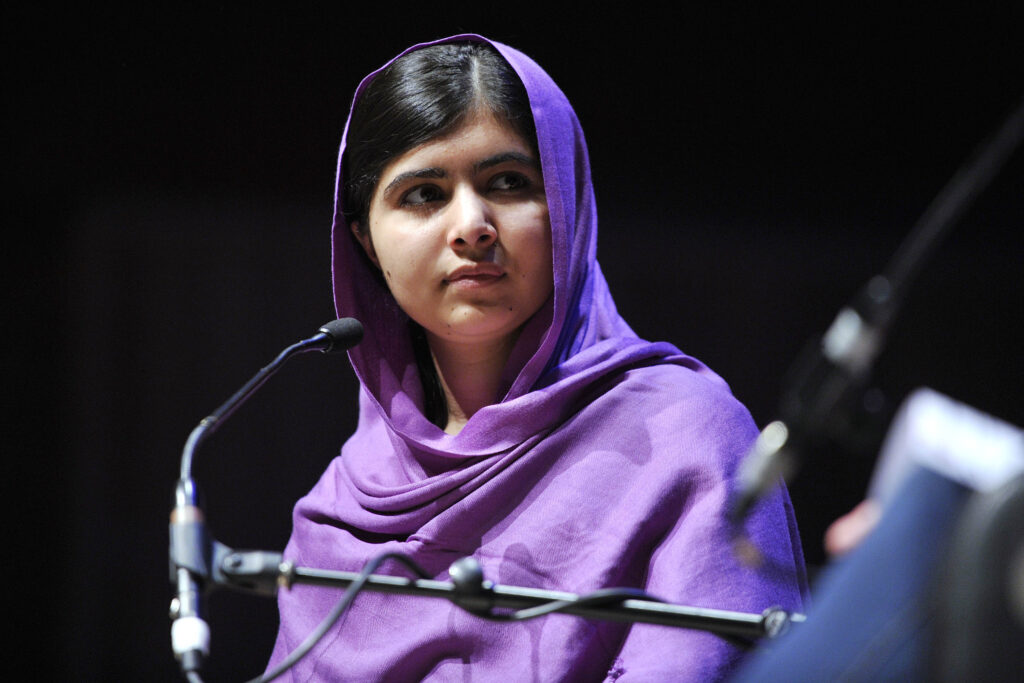
Malala Yousafzai
Education as courage
Malala Yousafzai - Photo by Southbank Centre
Malala Yousafzai is a Pakistani education activist who became an international symbol for girls’ education after surviving an attack in 2012 for speaking out against restrictions on girls’ schooling in her hometown of Swat Valley.
Following her recovery, she continued advocating globally for the right of every girl to receive an education. In 2014, Malala became the youngest-ever recipient of the Nobel Peace Prize, recognizing her efforts to defend children’s rights and access to education.
Her story shows just how essential courage is for women and girls seeking education; and how speaking out for education can become one of the most powerful forms of activism.
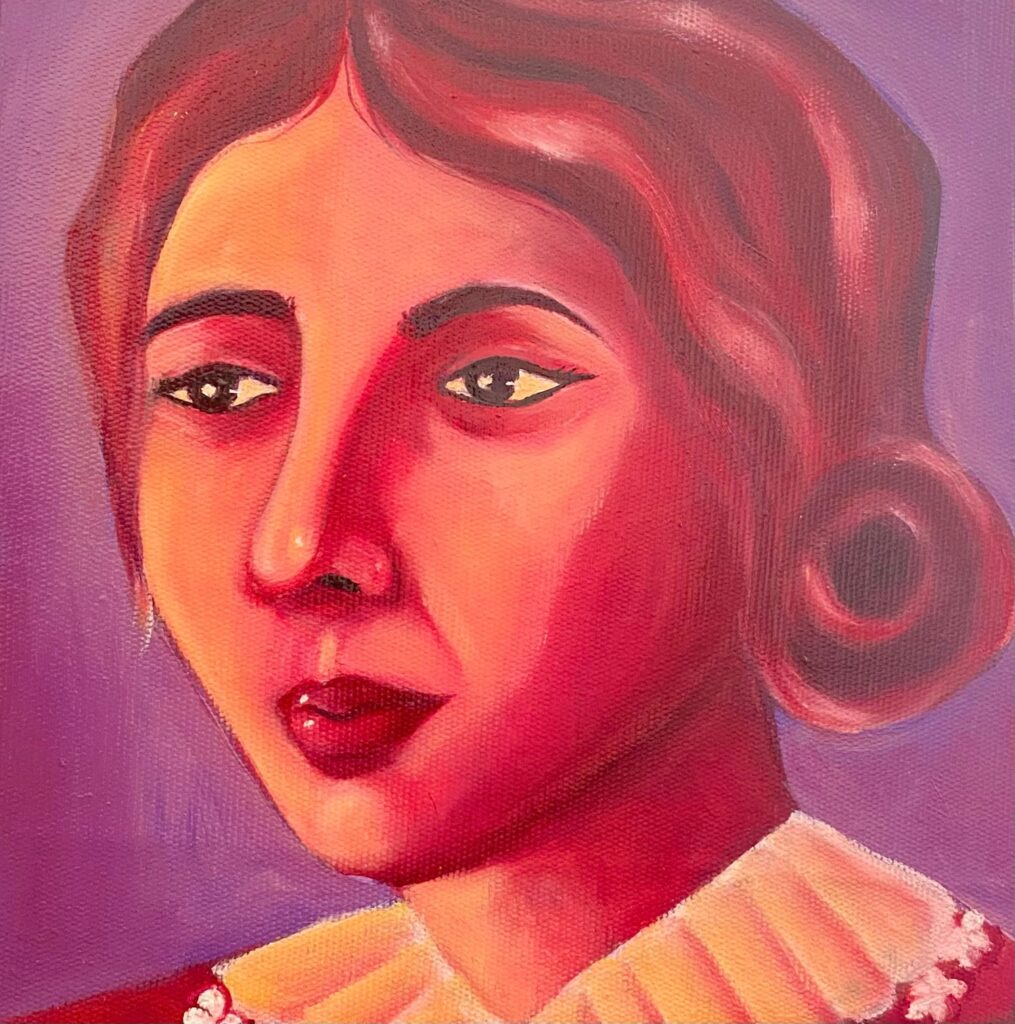
Yusra Al Barbari
Education and civic leadership
“Yusra al-Barbari” (2023, oil on canvas) by Malak Mattar
Yusra Al Barbari was the first female university graduate in the Gaza Strip. Fluent in English, French and Arabic, Yusra was a teacher at a girls’ school but also a social activist. She was one of the first women to play a leading role in education and civic life in Gaza. She played a prominent role in establishing and heading the Women’s Union in Gaza and served as executive secretary of the Palestinian Red Crescent Society in the Gaza Strip.
In 2005, the Palestine Consultative Council of the Swiss group “League of 1000 Women for the Nobel Peace Prize” (1000 Femmes pour le Prix Nobel de la Paix) nominated her as one of eight Palestinian women candidates for the award.
Her work reflects how education and civic engagement are essential in standing up for justice in the face of occupation and driving change at scale.
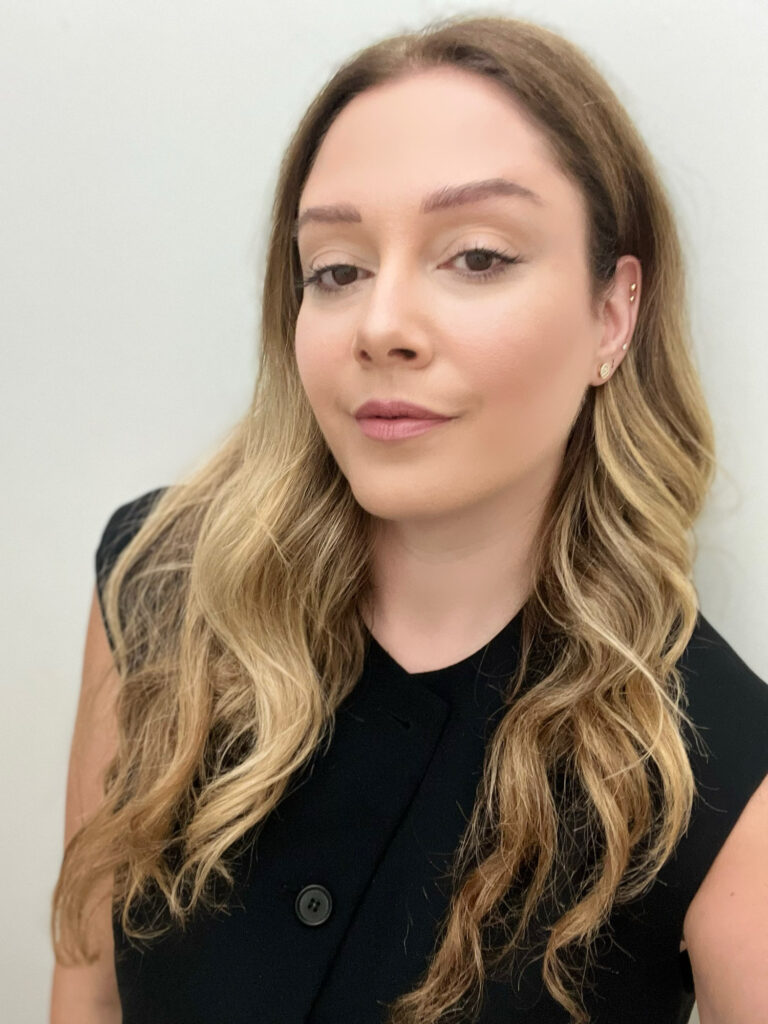
Joanna Rayess
Teaching across borders
Joanna - Lebanese Arabic tutor at Natakallam
Joanna Rayess is a Lebanese educator and language tutor who teaches Arabic while sharing her culture and lived experiences with students around the world.
Bedridden for months due to a car accident, and faced with war and uncertainty, Joanna continues teaching with NaTakallam – supporting her family and building connections across borders.
Her work shows how language, resilience, and human connection can come together as a powerful form of courage.
Courage Through Culture
Women who transformed art into resistance
Art has long been a way for women to resist silence, preserve identity, and share stories that might otherwise be forgotten.
Shamsia Hassani
Art as visibility and resistance
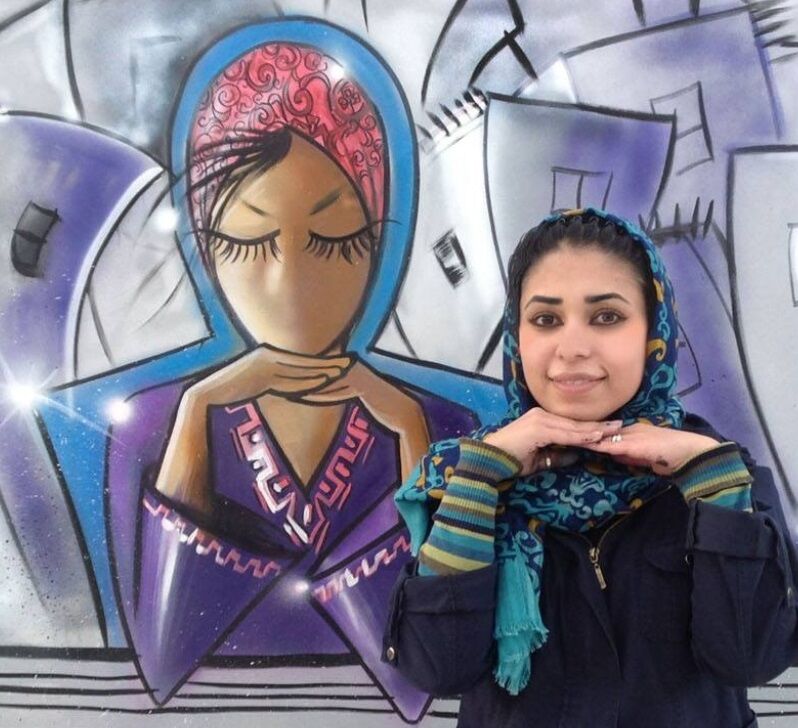
“Secret Series at Kabul, Afghanistan” by Shamsia Hassani
Shamsia Hassani is Afghanistan’s first female graffiti artist, a fine arts lecturer, and associate professor at Kabul University. In a male-dominated society, her murals and public art celebrate the strength and resilience of Afghan women.
Her works have been exhibited in Afghanistan, India, and the USA, and she has inspired hundreds of Afghans through graffiti festivals, classes, and exhibitions worldwide.
Her murals remind us that courage can be expressed through creativity, giving voice to those who might otherwise remain unseen.
Yasmine Hamdan
Music as voice and cultural expression
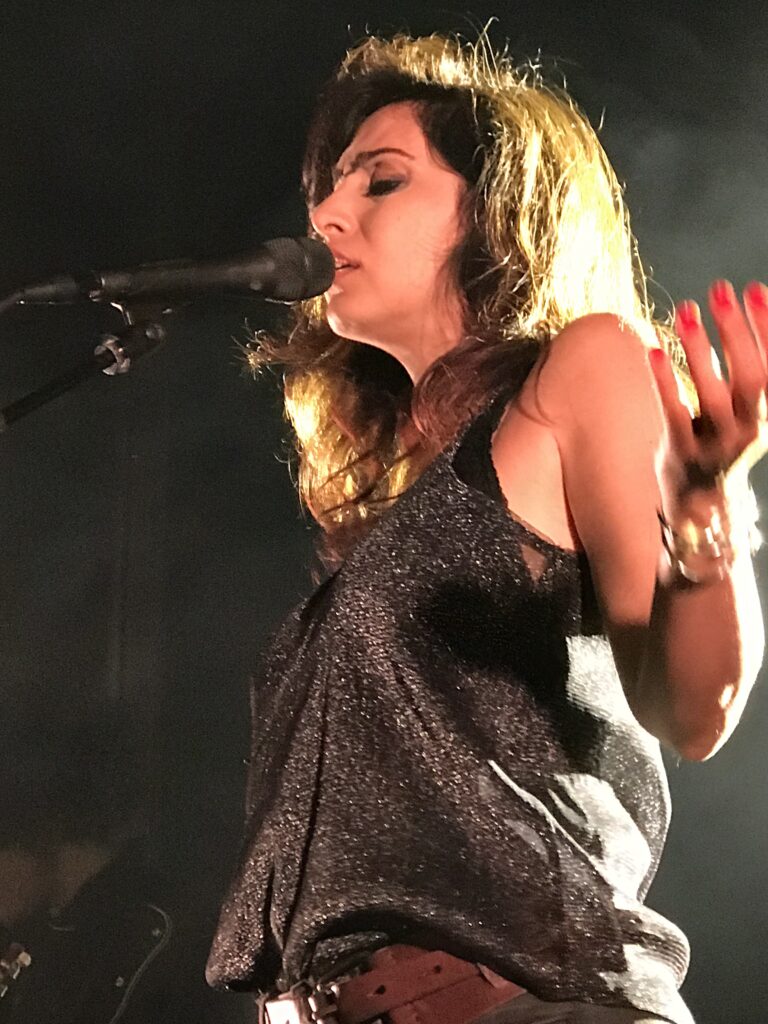
Yasmine Hamdan at a concert in Berlin, 2017” by LutzBruno
Yasmine Hamdan is a Lebanese singer-songwriter and pioneer of the Arab indie music scene, known for blending electronic sounds with Arabic musical traditions. As a founding member of the duo Soap Kills, she helped shape a new wave of independent music in the region and continues to push creative boundaries through her solo work.
Her recent work, including her 2025 album I Remember I Forget, reflects themes of memory, identity, and displacement, resonating with audiences across borders.
Through her music and performances, Hamdan amplifies cultural narratives across a region that continues to endure violence. Her voice reminds us that art can preserve identity, carry memory, and speak even in the face of loss.
Fatima al-Fihri
Education as legacy
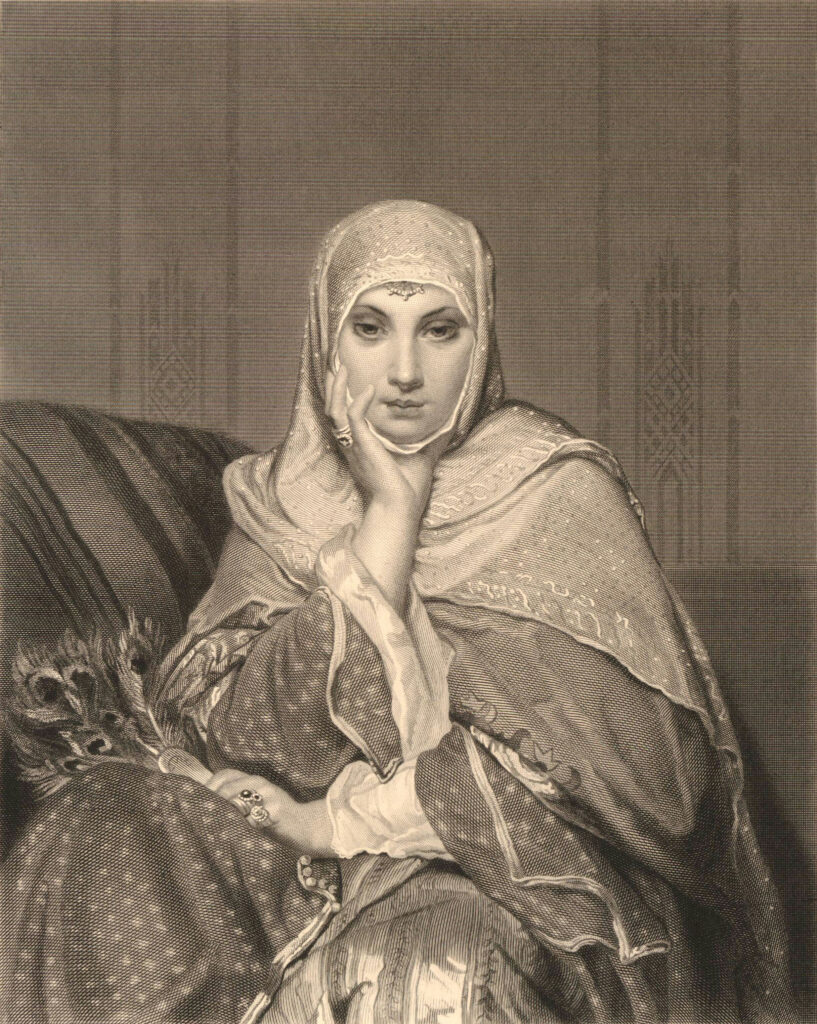
Fatima al-Fihri - A Daughter of the East, 1870, British Museum by Jean-François Portaels
Fatima al-Fihri was a scholar and philanthropist who founded the al-Qarawiyyin Mosque in 857–859 CE, which later developed into the modern University of al-Qarawiyyin. It is recognized as the world’s oldest continuously running university. Known as Umm al-Banīn (“Mother of the Children”), she used her resources to create a lasting center for learning and scholarship.
Her vision and leadership inspired generations, laying the foundation for knowledge-sharing and intellectual growth across Morocco and beyond.
Her work shows how courage and vision can transform resources into lifelong opportunities for communities.
When Courage Connects Us
These stories remind us that courage takes many forms – crossing borders, raising voices, creating art, and building knowledge. From women rebuilding communities to those using language, education, or culture to empower, each shows how determination can shape societies.
At NaTakallam, our Language Partners continue this legacy, connecting people across cultures through teaching and dialogue. We stand with every woman navigating war, conflict and chaos while laying the foundations of better futures for generations to come – proving that courage can thrive in every language.
Support Women Across Borders
Connect with women who are sharing their language, culture, and lived experiences — and be part of a journey that uplifts voices and creates meaningful change.
Asma Siddiqui is a copywriting intern at Natakallam with a background in dentistry, gradually transitioning from healthcare into the world of storytelling and strategy. With a deep interest in language, culture, and meaningful communication, she explores how words can shape understanding across communities. When Asma’s not working, you’ll likely find her planning a trip, trying new food, or reflecting through spontaneous writing.
In an interconnected world, effective communication across languages is no longer optional – it is operationally essential. For international organizations engaged in humanitarian response, diplomacy, development, academia, and global convenings, interpreters do far more than transfer words from one language to another.
Work with Natakallam’s Global Majority Interpreters
Why High-Quality Interpretation Matters for Your Organization
In international humanitarian, diplomatic, and development work, communication is not just about words – it’s about trust, clarity, and inclusion.
Misunderstandings can have serious consequences: broken negotiations, compromised safety, and diminished access to critical services. A 2025 Scoping Review found that displaced populations lose access to healthcare and justice when organizations fail to provide professional interpretation.
High-quality interpretation is an operational and ethical necessity. By investing in professional interpreters, your organization ensures meetings, briefings, and negotiations proceed smoothly and safely, while upholding the highest standards of professionalism.
Preparation is Non-Negotiable
The best outcomes start long before the first word is spoken. Providing interpreters with agendas, reference materials, and glossaries at least three days in advance improves accuracy and efficiency.
Ensures consistency in technical and sector-specific language
For example, humanitarian organizations rely heavily on acronyms like IDP (Internally Displaced Person), WASH (Water, Sanitation, Hygiene), and GBV (Gender-Based Violence). Unexplained terms create obstacles. Developing a shared Interpreter’s Guide to NGO Terminology ensures your message is accurately conveyed every time.
Respect Interpreter Wellbeing and Working Conditions
Interpreting is cognitively demanding, especially in high-stakes contexts. Cutting corners to save costs ultimately harms the quality of your interpretation. Ethical practices – such as fair compensation and ISO-standard compliant working conditions – protect both your interpreters and your organization.
Best practices include:
Rotating interpreters every 15–20 minutes in simultaneous interpretation sessions
Providing multiple interpreters per language for long events
Supplying appropriate equipment (booths, FM or infrared receivers) for secure on-site or virtual meetings
Supporting interpreters with trauma-sensitive training for conflict or crisis-related topics
By prioritizing wellbeing, you reduce fatigue, errors, and stress while fostering a professional environment that enhances collaboration.
Treat Interpreters as Part of Your Team
Interpreters are more than service providers – they are cultural mediators who bridge not only language but context, nuance, and emotion. Including interpreters in pre-event briefings and post-event debriefs builds trust and improves results.
Key considerations:
Maintain confidentiality with NDAs and consent for recordings
Include interpreters in discussions of cultural and sector sensitivities
Recognize the value of their feedback to continuously improve the process
Speak Clearly and Collaborate Effectively
Your delivery directly impacts interpreter performance. Clear, paced speech and prepared materials improve comprehension, particularly in remote or hybrid environments. Small adjustments – avoiding overlaps, using concise phrasing, and sharing materials in advance – enhance accuracy and inclusivity.
Interpreters also facilitate cultural mediation, ensuring your message is not only heard but understood in the appropriate cultural context.
Continuous Feedback and Long-Term Collaboration
High-quality interpretation doesn’t end when the event is over – it thrives on continuous learning and feedback. Organizations that implement structured feedback systems can track:
Terminology usage and glossary effectiveness
Technical challenges and equipment performance
Interpreter team coordination and efficiency
Regular evaluations help maintain smooth operations for online, hybrid, and in-person meetings, ensuring every future event runs more reliably and accurately. Organizations that invest in long-term partnerships with interpreters benefit from consistent results, institutional knowledge, and improved operational efficiency.
Interpretation is not just a service – it is a critical system for equity and inclusion. Without proper language access, social and political processes can break down, leaving participants unheard or misrepresented. Professional interpreters act as cultural mediators, ensuring that every message is accurately conveyed and culturally appropriate. Organizations that respect and invest in interpreters achieve full, respectful voice representation for all participants, creating trust and credibility across languages and borders.
Need tailored interpretation support for your next event?
Explore our Translation & Interpretation FAQs for details on service levels, languages, and delivery timelines. Our team provides personalized guidance to ensure your event’s communication is seamless, secure, and impactful.
Asma Siddiqui is a copywriting intern at Natakallam with a background in dentistry, gradually transitioning from healthcare into the world of storytelling and strategy. With a deep interest in language, culture, and meaningful communication, she explores how words can shape understanding across communities. When Asma’s not working, you’ll likely find her planning a trip, trying new food, or reflecting through spontaneous writing.
Have you ever heard of a "loving ear" or a "dove wearing a ring"?
In the tradition of the Arabian Nights of One Thousand and One Nights, we have a short story for you on the occasion of Valentine’s Day – celebrated around the world.
As Valentine soon will knock at our doors, (valentine 3al-ebwab فالنتاين عالأبواب) I would like to tackle the Love concept in the Arab world, through Arabic poems and culture.
Unfortunately it is a common misconception that Love in the Arab world is prohibited. That Arabs are not allowed to talk about love, show love, have lovers.
We often hear the phrase, “Love doesn’t have a language” because feelings are a part of human being. But I know well… even pets and animals have feelings. Therefore it is a common thing that people also feel and show love. But how we show love may vary from one culture to another and from one person to another.
The Age of Ignorance: a Misnomer
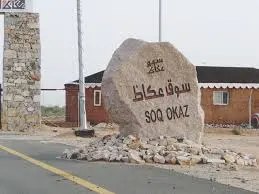
Souq 'ukaz / Okaz was known for its annual fair and poetry contest in pre-Islamic times.
In the tribal era before Islam, as some call it “ 3aSr al Jahiliyah” (Age of Ignorance) but it was never ignorance that characterized this age. Indeed, trade and civilization was advanced in some Arab countries, in addition to poetry. Examples of “ al mou3alaqat” (publications or “hang-ups”) of the best poetry pieces in “Souq ‘ukaz” (the market) were common; here even some female poets were mentioned.
Some of these poems were about the love of the tribe, wars, victories, and very concept of love itself. You may have even heard of Imru’ al Qays – given the title “the King of Poets”.
Lovers, Flirtation & Poetic Influence
Later during the Umayyad era, Umar Ibn Abi Rabia rose to prominence, known for his “Ghazal”(flirtation) poetry.
One of his famous lines is:
قتلننا ثم لم يحيينَ قتلانا
qatalnana thoumma lam youHyina Qatlana
إن العيون التي في طرفها حورٌ
Inn al 3iyoun alti fi tarfiha Hawaraon
"The eyes that are wide and dark killed us, then they didn't revive us."
Other poet names were more obvious in their connection as lovers, such as “Jamil Buthayna” (Jamil, the poet and Buthayna: his lover’s name). Or, “Majnun Layla” (Majnun: Crazy because he was madly in love with Layla). Some of those love poets’ destinies can compete Shakespeare’s Romeo & Juliet in their misery, tragedy and unending quest for love.
Jamil's forced separation from Buthaynah, and his famous refusal to love anyone else, were the template for the fictional career of Majnun Layla and countless tales of lovers that came after.
In the Abbasid era too, although it was considered to be the most strict era of the Arabic Islamic time, we can observe the themes of love as a constant in the poetry of the times – such as Bashar Ibn Burd, great work (and perhaps one of the most romantic poems of all time:
Oh people, my ear has fallen in love with someone.
Sometimes the ear falls in love earlier than the eyes.
Ya Qomou ouzouni li-ba3d el Hayyi asheqaton.
Wal ouzounou ta3shaq qabla al3eini aHyanan.
We can understand this love better when we know that the poet had some vision problems. This is why he said that he fell in love with the charming voice of the lady, before even his eyes fell on her.
Love in action: from definition, to feminism, homeland to politics
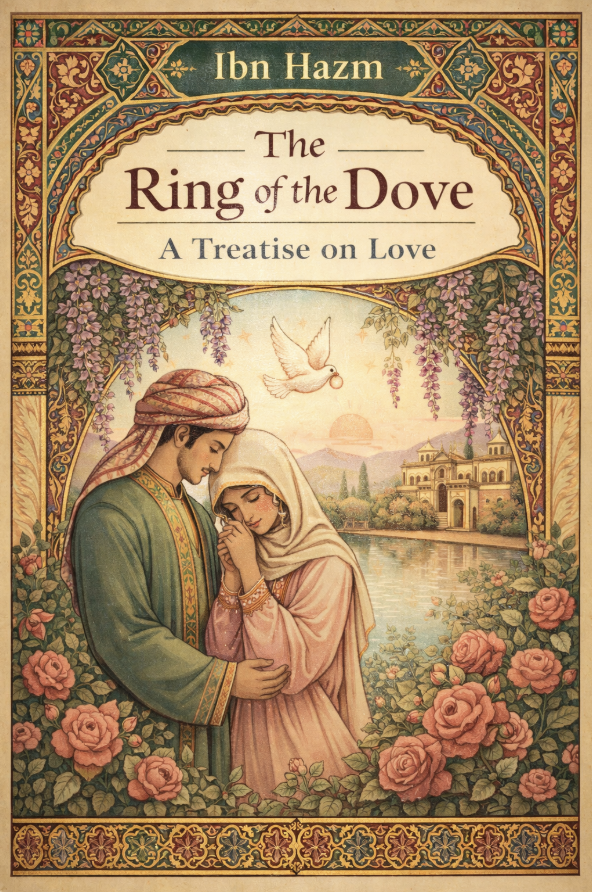
Around this time and in far Andalus, Ibn Hazm wrote the famous love and relations Arabic book “Tawq al Hamamah fil al-oulfi wa al-oullaf (The Ring of Dove) around 1022-1028 CE. In this book, you can find 8 main chapters that the author calls “babs” (doors) starting by the definition of love, passing through the stages of love, the methods of expressing love and concluding by reflection and philosophical insights on love
On the other hand, the modern era has produced poets, but perhaps the most famous was Nizar Qabbani, the Syrian poet who had poems about politics, feminism, homeland and love. The simple style he uses attracted many musicians to add melodies to the poems and sing them too.
You love Oh you with fathomeless eyes, Is extreme, Mystic, Holy. You love, like birth and death, Is impossible to repeat.
حُبّكِ …يا عميقة العينين تطرفٌ تصوفٌ عبادة. حُبُّكِ، مثل الموتِ و الولادة صعبُ بأن يُعادَ مرتين…
Another poet worth looking into the the literary quest toward love is Adonis, and his work, “ If Only the Sea Could Sleep”.
Once I sang: every rose As it tires, is her name As it journeys, is her name Did the road end, has her name changed?
The list goes on of poets who wrote about love – with many put to music and song – including Mahmoud Darwish, Badr Shaker al Sayyab, Fadua Tuqan, and others.
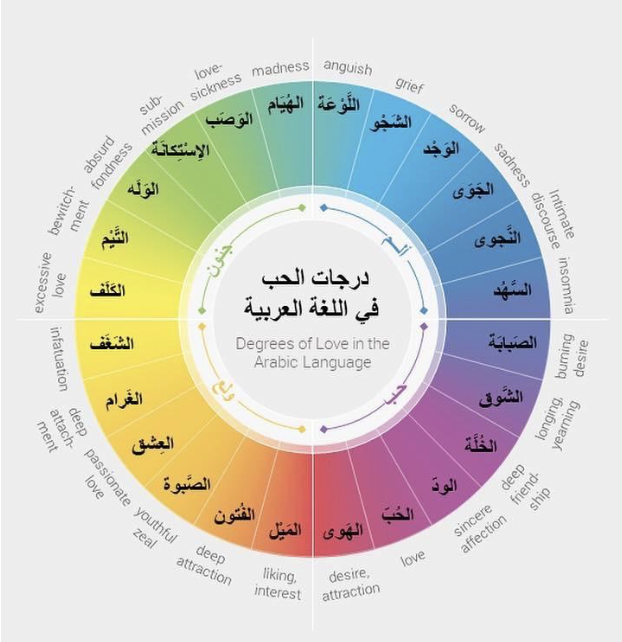
With poetic icons like these embedded into the Arabic literary tradition, it’s no wonder you can find many words for “Love” and its levels in the Arabic language.
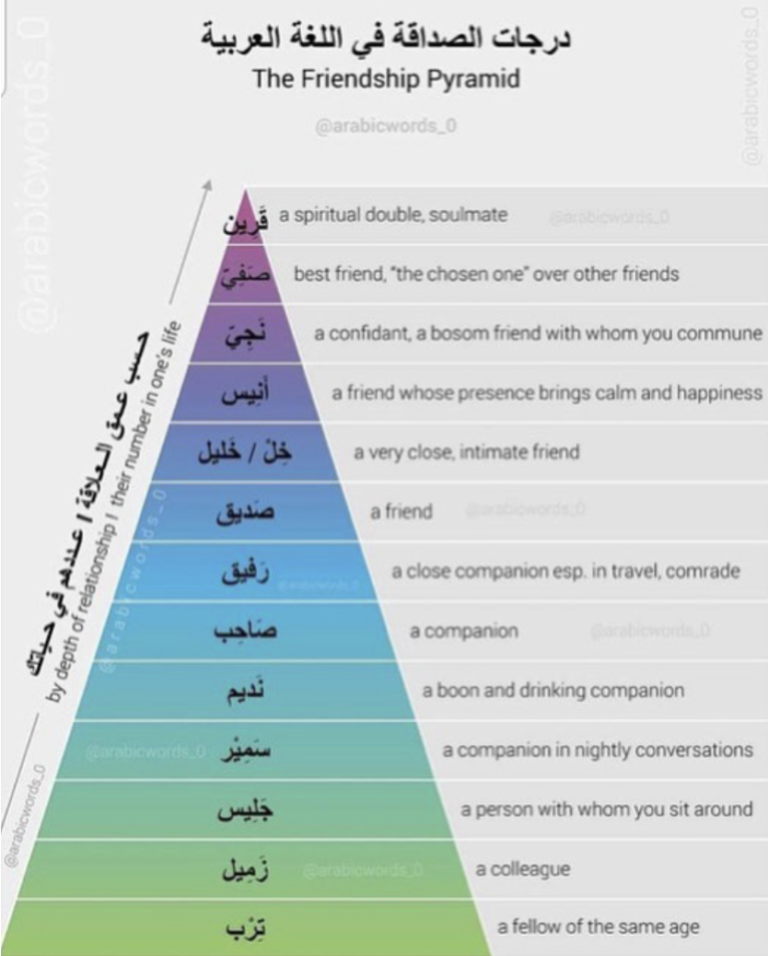
Beyond love in its “Hallmark card” sense, in Arabic, we have many words for the word friend. From a relation that can start as a usual friend to evolve to the relationship where this friend can become a lover. Here are the words used for different types of friends:
The Arab world hasn’t historically celebrated St. Valentine, as obvious from its name, but in the last century as the world becomes more interconnected many celebrate it.
Our world may not have this patron saint, Romeo and Julliet, or Shelley, but we have those who put our vision of love to lyric: Qays and Lubna, Majnoun Layla, Antarah and Abla, and many others.
Wishing you a wonderful moment filled of love – in whatever language and form most speaks to you.
إلى أن يلتقي القدر بنا
(until fate brings us together),
Varty
Start learning with NaTakallam!
Lorem ipsum dolor sit amet, consectetur adipiscing elit. Ut elit tellus, luctus nec ullamcorper mattis, pulvinar dapibus leo.
Varty is an Armenian Syrian from Aleppo – and her name means "Rose" in both languages! She has an extensive background in teaching Arabic in Syria and holds a Bachelor’s degree in English Literature. Varty has also worked as a translator and interpreter for over fourteen years.
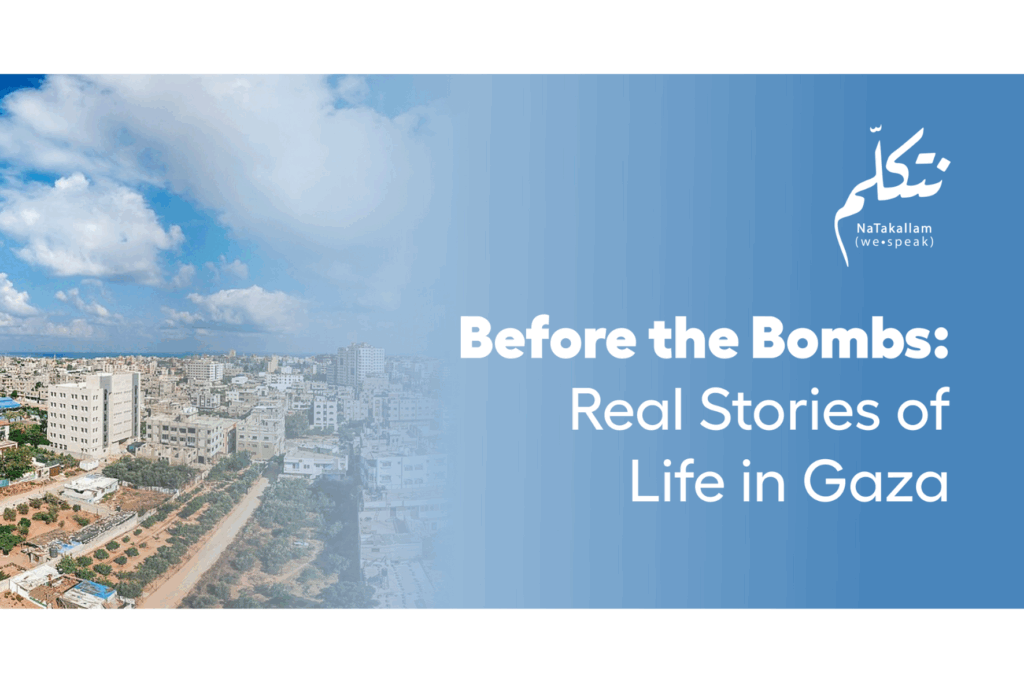
Late March in Khan Younis, Gaza, smells like citrus. You’d only notice it if you were out walking, preferably at night, when the air is cool and the gardens are in bloom. When it rains – just lightly – the blossoms release their oils and the scent intensifies.
“Gaza was always incredibly green; its inhabitants connected to nature,” recalls Dalia, a NaTakallam language partner from Khan Younes who once walked those citrus-lined streets, whose weekends were spent in crowded restaurants, whose Friday mornings began with fresh hummus and ended barefoot by the sea.
Shahd, another woman from Gaza now displaced by war, echoes this connection. For her, the sounds and scents of Gaza live just as vividly in memory: the call of the bouza (ice-cream) trucks, the chaotic laughter of the marketplace, and the salty scent of the Mediterranean Sea, especially down at the port. “Even the drama of the streets,” she says, “the fighting drivers – I miss it all.”
Both women are now far from home – Dalia in Cairo, Shahd having briefly found refuge in Egypt before continuing her journey to the States. They were forced to flee to a new home, but like many Gazans, their hearts live elsewhere.
Croissants, Smoothies and Knafeh
In the heart of Gaza City stood MAZZAG, famous for its croissants – “the best in Gaza,” Dalia says, with a smile that tells you it’s less about the pastry and more about the memories folded into it.
For Shahd, it was Ristretto Coffee Lab – a cozy, eco-conscious café that served up international dishes like tiramisu. “They even reused coffee grounds and materials and had a very sustainable business model” she recalls. It was a place where she saw her city evolving, despite everything. “Even under siege, we had people innovating, succeeding. The owner was lucky enough to be allowed to travel for educational purposes, and brought back ideas. That meant something to all of us.”
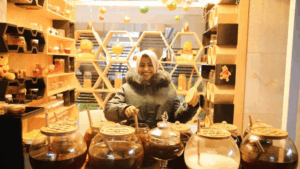
Shahd in a honey shop in Gaza.
After shopping, the ritual was the same for Dalia: a citrusy barrad (smoothie) from Kazem, then dinner at Al Dar – kebabs and mixed grills, always shared. For Shahd, Gaza’s beachfront restaurants were a favorite: Abu Hassira and many more – each serving fresh fish, each with a front-row seat to the sea. One, she noted, sat right next to one of Gaza’s most beautiful mosques, Masjid al-Mina.
This is the Gaza few outsiders knew: full of flavor, full of laughter, full of life.
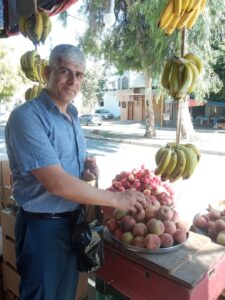
Dalia's husband shopping for fresh fruits at the market in Gaza.
Fridays Were For Family, Food and the Sea
Friday, the only day off from school, was sacred. For Dalia, it meant hummus from Abu Zahran in the quiet morning, then the mosque, then home for a big family meal. The afternoons were for grandparents. The evenings? Always spent at the sea.
Families would stay until midnight, drinking tea brewed over a wood fire, letting the wind carry away the week’s heaviness. “Everyone knew everyone,” she said. “It always felt like you were among family.”
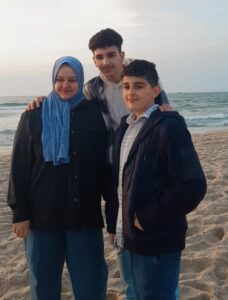
Dalia and her sons at the beach in Gaza.
Shahd remembers the Old Town of Gaza – its mosques and churches, the gold shops buzzing during Ramadan. Places like Masjid al-Omari, Qasr al-Basha, and the Al Qarara Cultural Museum held layers of history and community pride. Now, most of those sites are gone. Still, in her mind, they stand.
What Was Lost
When asked what they miss most, both women give the same answer without hesitation: home.
But not just a house – a home built with your own hands or your father’s, with tiles you chose, trees you planted, stories told across the threshold. “It’s a connection to your fatherland,” says Dalia. “To be deprived of that – of what you built, what you grew up in – it’s a kind of pain you can’t describe.”
Dalia's sons and husband in their beloved Gaza home.
Shahd, too, describes this ache. Once, in America, she found herself paying $6 for a cup of tea at a Palestinian restaurant. “In Gaza, I never would have done that,” she laughs. “But at that moment, it felt like home. Your need for your identity intensifies when you’re far away from it.”
If They Could Go Back
Dalia, despite all the hardship she went through, can still joke. The first thing she would do is ta3zeel – Arabic for deep cleaning the house. The sad reality is that her house probably is not standing anymore. At least, the last update she had was that it was hit by a blast.
In fact, Dalia’s first visit back home would be to the cemetery. She wants to see her father’s grave, to say goodbye – if it’s still there.
“There’s no starting over without closure,” she says. “It will be hard to see the ruins. But it is necessary to end this chapter, start over and move on.”
Shahd’s dream is gentler. “If it were the Gaza I knew, I’d go to the port first,” she says. Then she’d visit her favorite places, call her friends – the ones who are still alive – and gather them for a big meal. “I’d like to apologize to them,” she says softly. “I felt guilty for leaving during such a hard time. So I’d do something meaningful. Teach English. Run activities. Contribute.”
The sense of community in Gaza is unlike what both women have seen anywhere else in the world. A lifeline when things got hard.
“We needed each other. Pain made us closer,” Shahd explains. “In Gaza, when someone suffered, everyone showed up. That kind of unity… it’s rare. It’s probably the reason we are still so strong.”
A Future Build on Survival
“I want to be realistic when talking about my dreams for Gaza.” says Dalia. “Every family has lost so much. I just want people to have the right to survive. To live.”
Shahd adds: “People always romanticize us or reduce us. Either we’re heroes or we’re threats. But we’re human. We’re suffering. We’re also dreaming.”
Dreaming of studying French. Of opening bakeries. Of walking barefoot by the sea. Of tea shared, stories told, waves crashing gently at the port.
Of silence. No bombs, no trauma, no death – just life.
Language, Memory & Survival
At NaTakallam, we connect people like Dalia and Shahd – displaced but not voiceless – with learners around the world. Through conversation, they share not only their language, but their stories, their culture, their memories of home.
When you speak with someone from Gaza, you’re not just learning Arabic. You’re learning what it means to carry identity in exile. You’re learning what resilience sounds like. You’re learning what it means to hold onto hope.
If you’d like to learn Palestinian Arabic – or several other dialects including Modern Standard Arabic – while directly supporting displaced people like Shahd and Dalia, NaTakallam’s Language Partners are waiting! Sign up for a free trial and discover the joys of language learning with a private tutor, on your own schedule.
ABOUT THE AUTHOR: Zeina Abou Taha is an intern at NaTakallam, currently transitioning from a career in IT consulting into journalism. With an academic background in Entrepreneurship & Innovation and a passion about exploring the world, Zeina spends her free time traveling, connecting with people from diverse cultures, and writing for her personal blog.
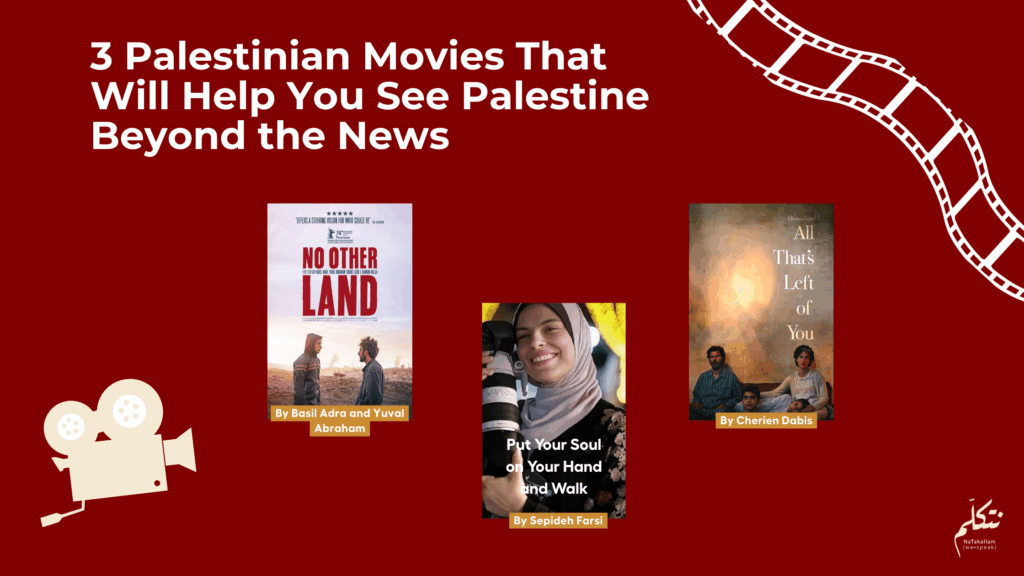
Since the outbreak of the Gaza war, global attention has been rightfully fixed on the immense suffering unfolding across Gaza and the West Bank. But at NaTakallam, we also recognize that a place is never defined solely by its pain. Palestine is a land of deep-rooted tradition, vibrant culture, unforgettable food, and powerful art — stories that often get overshadowed by the news cycle.
With the Cannes Film Festival that happened this week — where Palestinian voices and stories were honored — we want to shift the spotlight for a moment. To center art. To celebrate resilience. To show how cinema can be used not just to tell a story, but to preserve identity, challenge narratives, and inspire connection.
Here are three Palestinian films that have made a difference — each a testament to the strength and creativity that continues to thrive even in the harshest of realities.
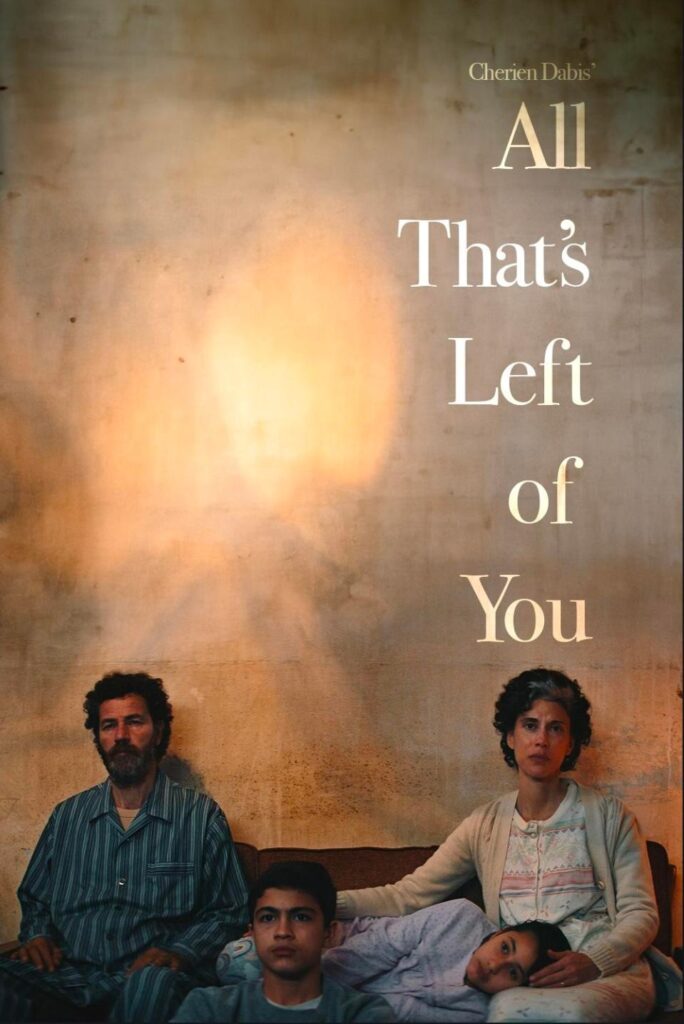
1. All That’s Left of You – Cherien Dabis
Directed by Palestinian-American filmmaker Cherien Dabis, All That’s Left of You is a sweeping intergenerational drama that spans 75 years of Palestinian history — from the Nakba in 1948 to the First Intifada and beyond. The film centers on Noor, a teenager in Nablus, and traces his family’s experiences of displacement, resistance, and resilience. Dabis, known for her earlier works like Amreeka, both directs and stars in the film, which premiered at the 2025 Sundance Film Festival.
Who holds the rights? Cherien Dabis, in collaboration with producers Thanassis Karathanos, Martin Hampel, and Karim Amer. Where to watch? The film premiered at the 2025 Sundance Film Festival and is currently seeking distribution. Follow the official film page here for upcoming screenings and eventual digital release dates.
2. Put Your Soul on Your Hand and Walk – Sepideh Farsi
Premiering at this year’s Cannes Film Festival, this short film honors Fatouma Hassouna, a Palestinian filmmaker and photojournalist who was killed during Israel’s attacks on Gaza. Directed by Iranian filmmaker Sepideh Farsi, it’s a tribute to the life, courage, and creativity of one woman — and by extension, so many others whose stories are being silenced.
Who holds the rights? Sepideh Farsi and her production team, in collaboration with the Cannes Festival’s tribute program. Where to watch? After Cannes in May 2025, the film will likely be available at select festivals and cultural events focusing on Middle Eastern cinema. Keep an eye on Cannes official news for updates.
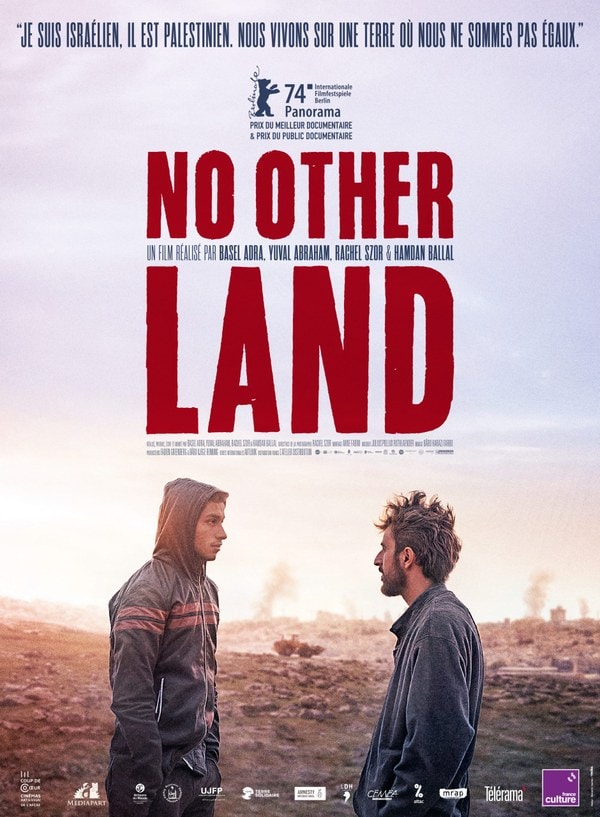
3. No Other Land – Basel Adra, Yuval Abraham, Rachel Szor & Hamdan Ballal
This documentary, co-directed by Palestinian and Israeli filmmakers, showcases the forced displacement of families in Masafer Yatta in the West Bank. It’s raw, personal, and tells the story from the inside — through the eyes of Palestinian Basel Adra, who’s been documenting his community being torn down. The film just won the Panorama Audience Award at Berlinale and is gaining global attention, with an eye on the Oscars.
Who holds the rights? Rights are managed by the filmmakers, with support from the Berlinale Panorama section and associated partners. Where to watch?No Other Land is currently screening at international festivals. Wider release announcements are expected soon — check their official Instagram for updates and future streaming options.
These films aren’t just stories — they’re acts of preservation. They remind us that even under occupation, even in exile, culture keeps breathing.
At NaTakallam, we see that every day in our Language Sessions. They’re not just about grammar or vocabulary — our interactive classes are spaces where you can talk about everything from food and film to daily life and history, directly with people from Palestine and beyond.
It’s one thing to watch a film. It’s another to talk about it with someone who lives that reality. Through language, we open the door to deeper understanding — and to honoring stories that deserve to be heard.
ABOUT THE AUTHOR: Zeina Abou Taha is an intern at NaTakallam, currently transitioning from a career in IT consulting into journalism. With an academic background in Entrepreneurship & Innovation and a passion about exploring the world, Zeina spends her free time traveling, connecting with people from diverse cultures, and writing for her personal blog.
This holiday season, spread love and stand out from the crowd with meaningful gifts that transcend borders and bring the world to your loved ones. Go the extra mile (without breaking the bank) by choosing gifts that speak to their senses, curiosity, and wanderlust. Whether you’re shopping for an aspiring home cook, an avid traveler, or a passionate culture enthusiast, here are some thoughtful ideas to create unforgettable gift experiences.
PLUS: Want to purchase with purpose and open up a new world of language and culture? Discover NaTakallam’s own Gift of Language!
Kitchen Gift Set | Sitti x Darzah – This embroidered apron and olivewood utensils set is an ideal gift for a treasured home cook. It brings together centuries-old Palestinian artistic traditions of tatreez (تطريز) or embroidery, handed down from mother to daughter, and of olivewood carving, documented as a specialty of the region as early as the 16th century. While the apron in this gift set is hand-embroidered by women artisans in Bethlehem with a traditional red tatreez olive branch motif, the utensils are crafted from sustainably -sourced olive wood in Palestine.
This kitchen set is a perfect gift for a seasoned chef, aspiring cook, or somebody who needs an extra push to try new recipes and travel through culture and cuisine – Palestinian or another.
Sitti ships worldwide. Shipping rates and times will vary according to items, courier, and location. Free shipping is offered for orders made within Canada and the USA.
Inaash sells textile products made by Palestinian women in a refugee camp in Lebanon, thus helping them become economically independent. According to their website, “Since its inception in 1969 Inaash has impacted the lives of over 2,500 women refugees by providing training, income and even early education for their children. It currently supports over 350 women in five camps.” Their garments are decorated with a distinct form of hand embroidery, تطريز (toTriiz), original to Palestine.
Tahdiglover pot | Tahdiglover – Share the joys of a perfectly crispy and delicious tahdig with a fellow Persian food lover with this Tahdiglover pot. Traditionally made of rice, tahdig (ته دیگ) , which translates to “bottom of the pot,”, is considered a Persian “soul food.””. Tahdiglover pot ensures that you always get this dish right! A woman-owned business, the company also works with other small businesses in Iran and the UK to help young people showcase their cooking talent and to make Persian and Middle Eastern cooking more accessible and enjoyable.
The Tahdiglover pot is a creative gift for anyone keen on mastering their Tahdig skills, taking up the challenge of cooking a new cuisine, or accessing new worlds through food and culture.
Based in Los Angeles, USA, Quherencia is an immigrant- and woman-owned business creating jewelry (joyería), diffusers (difusores) and soy-wax candles (velas de cera de soja) delicately adorned with floral and seasonal motifs. Original scents include coffee, cucumber and coconut! New designs come up every week, and the shopper can customize them to their preferences.
Nominal offers more than just jewelry; they craft wearable art that tells your story. Whether it’s their personalized Arabic name necklaces, meaningful calligraphy pieces, or sleek modern designs, each item is a perfect blend of elegance and cultural significance. With Nominal, you’re not just accessorizing; you’re celebrating identity, connection, and style.
Perfect for gifting, every piece is carefully designed to make a statement – whether it’s a heartfelt sentiment, a reminder of home, or a touch of everyday luxury. Treat your loved ones (or yourself!) to timeless treasures that are as unique as the stories they carry. Shop Nominal and wear your story with pride.
Hirbawi Kufiya is the last keffiyeh (Arabic كُوفِيَّة, kufiyya) producer and seller in Palestine. The company manufactures traditional Palestinian scarves, and they offer worldwide shipping. Due to high demand, their products are currently only available for pre-order, but you can sign up with your email address to know when the next restock will be.
Wear the Peace is more than just a clothing brand – it’s a movement for change. With every purchase, you’re not only getting stylish, comfortable apparel but also making a direct impact on the lives of those in need. Their bold designs inspire unity and hope, blending meaningful messages with everyday wear that sparks conversation and action.
Every piece is crafted with love and purpose, from cozy hoodies to statement tees. Plus, Wear the Peace donates a portion of every sale to life-changing causes worldwide. When you shop here, you’re spreading compassion, one outfit at a time. Join the movement – wear peace and share love.
Nol, نول, is the Arabic word for “loom,” and in keeping with its name, Nöl Collective connects family-owned businesses, artisans and women-owned workshops in Palestine to create garments produced with traditional Palestinian techniques such as weaving, embroidery and fabric dyeing (using natural pigments, of course!) They offer free shipping to the US on orders with up to two items.
Slow Factory is where style meets sustainability and social justice. This innovative brand creates stunning, high-quality apparel and accessories that are as kind to the planet as they are to the people who make them. Each piece is designed with intention, blending artistry and activism to inspire change and raise awareness about pressing global issues.
By shopping at Slow Factory, you’re supporting a mission that goes beyond fashion – you’re helping to champion climate action, human rights, and the circular economy. Their timeless designs are made to last, empowering you to look great while doing good. Dress consciously and join the movement for a better world with Slow Factory.
Nani Handmade is a small business based in Yerevan, Armenia, selling gorgeous hand-painted silk scarves (մետաքսե շարֆեր, metak’se sharfer) recommended by one of NaTakallam’s own Armenian language partners. The creator is just getting started, so to place an order, simply send a message to their Instagram page.
Made Trade redefines gifting with beautifully crafted, sustainable products that make a difference. From handwoven textiles to artisan-made home goods, their collection is a celebration of ethical craftsmanship and timeless design. Every item is curated to reflect transparency, sustainability, and cultural heritage – so you can shop knowing your purchase supports fair wages and planet-friendly practices.
Whether you’re searching for the perfect holiday gift or a thoughtful treat for yourself, Made Trade offers something extraordinary for everyone. Discover goods that feel as good as they look and make every gift one that gives back. Shop Made Trade for consciously crafted treasures!
Preemptive Love is a US-based non-profit operating in multiple areas of the world that are subjected to conflicts, helping the affected population by giving them food and shelter but also work opportunities. The “Refugee Made” section of their shop offers products hand-crafted by refugees (mostly women) living in camps. These products fund the organization’s peacemaking efforts around the world.
Irik Ceramics is another small business from Armenia, selling ceramics (կերամիկա, keramika) with neutral colors and a minimalistic design that will go well with almost any decorating style. Another language partner recommendation; they accept orders through Instagram direct messaging.
Azmar Jewelry is a small Etsy business creating Kurdish-inspired jewelry traditional motifs. The stones and charms in their creations come from the cities of Slemani and Halabja, in the south of Iraqi Kurdistan, and they ship worldwide. Perfect if you’ve been looking for a new pair of festive-casual earrings (گواره, gwârh) or necklace (ملوانکە, mlwânkeh).
And then, of course, there’s NaTakallam — an award-winning social enterprise that connects language learners with native tutors from refugee backgrounds for personalized online lessons. You can choose from nine languages: Arabic, Armenian, English, French, Kurdish, Persian, Russian, Spanish, and Ukrainian, with language packages to suit any budget. NaTakallam not only offers a unique language and cultural experience for your loved ones but also supports the livelihoods of tutors from displaced backgrounds and their host communities. Find out why this could be the best gift for you.
The final days of August and the approaching end of summer give us all the more reason to savor the remaining warm days with a refreshing drink in hand! Why not take your seasonal sips a step further with NaTakallam? Explore our favorite summer drinks from the Middle East to Latin America and around the world! Each beverage tells a story of history, culture, and the unique flavors of its homeland. So even as your summer travels wind down, let’s take a delicious journey across the globe, one drink at a time!
1. Jallab
Jallab (Arabic: جلاب) is a beloved summer drink across the Levant – that’s Syria, Palestine, Lebanon, and Jordan. With a distinct floral aroma, this refreshing beverage is made from dates, grape molasses, and rose water, a perfect combination for hot summer days. It’s often served with crushed ice, pine nuts and raisins, and also used to add flavor to ice-cream and yogurt!
Jallab is enjoyed year-round but it also a staple for rehydration during Ramadan.
Ingredients (1 serving): 2 cups cold water 1 ½ tablespoon date syrup 1 ½ tablespoon grape molasses 1 teaspoon rose water Pine nuts (optional) Golden raisins (optional) Crushed ice (optional)
Recipe: Mix the date syrup and grape molasses with rose water. Add the cold water and stir well. Pour into glasses over crushed ice. Garnish with pine nuts and raisins for a traditional touch. Serve immediately to enjoy chilled.
Summer is synonymous with seasonal fruits, including our favorite: oranges. Made with the juice of Seville oranges (also known as bitter oranges or sour oranges), Sharab al-Busfeyr literally means “the drink of Seville oranges” in Arabic, and offers a sweet and slightly tart way to cool off as we bid farewell to summer.
Around the Arab world, bitter oranges are harvested in the late winter / early spring season. To enjoy this fruit longer, locals preserve it in this syrup form to savor throughout the summer months. In this way, Sharab al-Busfeyr is a seasonal delight that connects people to their land and its fruits.
Ingredients (4 servings): 2 pounds Seville oranges Sugar (in equal weight to the orange juice)
Recipe: Firstly, juice the oranges, and then add in an equal weight amount of sugar. Stir the sugar and juice together and repeat frequently throughout the day until the sugar is fully dissolved. You can also use a blender for this process. Do not add any water to the mixture. Once the sugar is dissolved, transfer the syrup into a clean bottle. It is best kept in the fridge to increase its shelf-life to one year.
To drink, mix ¼ part syrup to ¾ parts water – serve with ice if desired!
Jus de Bissap, literally “hibiscus juice,” is actually an infusion made of dried Roselle Hibiscus flowers, which are commonly sold in markets across many African countries, from Senegal and Ghana to Egypt and Sudan (where the drink is more commonly known as “كركديه” karkadeh in Arabic). Following migration patterns, Bissap and other hibiscus drinks are also popular in many Caribbean countries.
This vibrant red drink is tangy and sweet, often enjoyed cold to combat the intense heat. Bissap is more than just a drink; it’s a symbol of hospitality and is often served at celebrations and gatherings.
Ingredients (6 servings): 2 cups dried hibiscus flowers 1 ½ cups sugar (increase or reduce according to taste) 1 teaspoon orange blossom water Mint leaves (optional)
Recipe: Boil the hibiscus flowers in water for 10 minutes. Strain the liquid and stir in the sugar and orange blossom water until dissolved. Allow it to cool, then refrigerate. Serve over ice, with mint leaves for an extra refreshing touch.
Ayran is a traditional yogurt-based drink popular amongst Kurdish, Persian, Turkish and more communities spanning from Central Asia to Eastern Europe. This simple yet refreshing beverage is made by mixing yogurt with water and salt, resulting in a hydrating drink perfect for the hottest of summer days. Containing a healthy dose of protein and electrolytes, Ayran is enjoyed both with meals and as a stand-alone drink to quench your thirst.
Ingredients (1 serving): 1 cup plain, whole milk, strained yogurt ½ cup cold water A pinch of salt Mint leaves (optional) Ice cubes (optional)
Recipe: Mix the yogurt with water and a pinch of salt. Shake vigorously to make it as frothy as possible. Pour into a glass over ice cubes if desired. Garnish with mint leaves, and serve chilled for a cooling and nutritious drink.
Now that your glass is (hopefully) full (with Ayran), explore the many flavors, dialects and scripts of the Kurdish language with NaTakallam’s native Language Partners!
5. Doogh
Doogh is a Persian yogurt-based drink similar to Ayran, but unlike Ayran, Doogh is fermented, often carbonated, and can also be infused with additional herbs and flavorings (e.g. mint, dried rose petals, ground black pepper). Known for its cooling properties and as a source of probiotics, it is often paired with kebabs and other rich dishes that have a naturally “heaty” profile (from the use of earthy spices in local food).
While the recipe below offers a simple way to prepare Doogh today, the traditional method of preparation takes multiple days! First, milk and yogurt are mixed in a specific ratio until smooth. This mixture is gently heated until uniformly warm, then salt is stirred in, and the mixture is placed in a closed container to ferment for 3-4 days. It is this fermentation process that gives Doogh its natural savory flavor and fizz!
Ingredients (4 servings): 2 cups plain, whole milk yogurt 2 cups sparkling water ½ cup mint leaves 1 teaspoon salt 1 tablespoon dried rose petals (optional) Ice cubes (optional)
Recipe: Blend the yogurt, mint leaves, salt and rose petals in a blender. Pour in club soda and mix with a wooden spoon, scraping down sides of the blender, until everything is incorporated. Serve Doogh in iced-filled glasses, garnished with mint if desired.
If you’re inspired by these Persian flavors, discover more about the colorful culture through its language. Start learning Persian with NaTakallam’s tutors and uncover the stories behind drinks like Doogh and more.
6. Papelón con Limón
Papelón con Limón is one of the oldest and most popular beverages in Venezuela! Simply made from unrefined sugar cane (also known as “piloncillo” or “panela” in Spanish), lime juice and water, Papelón con Limón is an easy and tasty way to freshen up on a summer day.
Ingredients (4 servings): 8 ounces papelón (unrefined cane sugar) ½ cup freshly squeezed lime juice 4 cups hot water 4 cups cold water Ice cubes (optional)
Recipe: Pour hot water over the unrefined cane sugar. After it has dissolved and cooled off, add the lime juice and cold water, and stir well. Serve with ice cubes. ¡Salud!
As far back as the 18th century, Papelón con Limón was a favorite among field workers for its high nutritional value. This now-classic drink won over the love of successive generations, and is a part of the heart and soul of Venezuelan culinary culture, offering a glimpse into the history and indigenous flavors of the region. Learn more about the rhythms of Venezuelan life through learning Spanish with NaTakallam’s native-speaking tutors.
7. Agua de Limón con Chia
Long before chia seeds became a health trend, they were a staple food for the Mayans and Aztecs. Agua de Limón con Chia is lime juice with chia seeds, which swell in water to create a cooling, slightly gelatinous texture. A perfect thirst-quencher on hot summer days!
Ingredients (5 servings): 3 large limes ¼ cup chia seeds 4 cups water ½ cup sugar (increase or decrease according to taste) Ice cubes (optional)
Recipe: Pre-soak the chia seeds in 2 cups of water until gelatinous. Squeeze the juice from the limes into a pitcher, and whisk in the soaked chia seeds, remaining water, and sugar to taste. Stir well and serve over ice cubes if desired.
Kompot is a traditional drink in Eastern Europe, made by simmering fresh or dried fruits with sugar. It can be enjoyed hot or cold, but in the summer, it’s served chilled, offering a sweet and fruity refreshment. A staple in Slavic households, Kompot is often prepared in large batches and enjoyed throughout the day.
Recipe: Combine the fruits and water in a large pot. Bring to a boil, then simmer for 15 minutes. Turn off the heat and stir in the sugar. Allow the compote to cool for a minimum of 2 hours (or maximum overnight in the fridge). As it cools, the flavors will infuse and intensify. You can then serve chilled, choosing whether or not to strain the fruits! (Strained fruits can be cooked to purées.)
The Kompot drink is related to the broader European concept of fruit “compote,” which is French for “stewed fruit.” This beverage is designed to use any surplus of summer fruit, as well as fruit that may be bruised or overripe, reflecting the creativity of local communities to ensure no food is wasted! Gain insight to native Slavic practices when you connect with NaTakallam’s bilingual Ukrainian–Russian Language Partners.
From the tangy kick of Jallab to the sweet comfort of Kompot, each sip of these summer drinks offers a delicious glimpse into diverse cultures, rich histories and communal traditions. Why not take your cultural exploration one step further? Sign up for NaTakallam’s language sessions today and connect with the communities that make these drinks so special!
Palestine has a long, rich and vibrant tradition of literature with incredible writers who have contributed to Palestinian identity, culture and the quest for freedom through their works. Among the voices that bring these narratives to life, Palestinian women offer unique perspectives, but often get overlooked in conversations about Palestinian literature.
You might already be familiar with Mahmoud Darwish, Edward Said, and Mohammed El-Kurd – here are 15 books by Palestinian women writers to add to your reading list.
A poignant memoir of the daughter of a prominent Palestinian father and a sophisticated Lebanese mother growing up in New York City. Looking for Palestine explores the complexities of identity, belonging and growing up between two worlds. With candid emotion, Said recounts her struggles with self-image, cultural identity, and her quest to find a place where she truly feels at home.
In her debut novel, Alyan humanizes the conflicts you may have heard of in headlines, through the story of a Palestinian family that is uprooted by the Six-Day War of 1967 and Saddam Hussein’s invasion of Kuwait in 1990. Salt Houses follows the Yacoub family over three generations, from Nablus to Kuwait City to Beirut, Paris, Boston, and beyond. As its characters struggle with the meaning of home in the face of perpetual displacement, readers are reminded of the way the Nakba and colonialism more broadly have shaped the history, present and future of the Palestinian people.
A compelling exploration of identity and belonging, Amreekiya tells the story of Isra, a young Palestinian-American woman navigating the challenges between cultures and trying to define herself. The novel is an interesting look at what it means to straddle two worlds, and the journey to find one’s place within them.
Rum’s debut novel A Woman Is No Man takes us inside the lives of an Arab family living in America. The story follows Isra, a Palestinian girl who moves to Brooklyn after an arranged marriage, and her daughter Deya. While separated by a generation, the mother and daughter both navigate the challenging dynamics of identity, autonomy, and gender expectations, revealing the painful sacrifices and silent rebellions of women bound by societal norms.
Mornings in Jenin is a heart-wrenching story of displacement, resilience, and the deep roots of family. Amal is born in the refugee camp of Jenin. Her family is trying to survive the trauma of being forced out of their home in the olive-farming village of Ayn Hawd in 1948, the abduction of her brother as a baby, and forging their place in a world that continually marginalizes them.
Winner of the Arab American Book Award for 2021, Against the Loveless World follows Nahr, a Palestinian woman, who narrates her story from a solitary confinement cell. Tracing her life from Kuwait to Jordan, then to Palestine and finally to an Israeli prison, she navigates the brutalities of living in exile and under occupation. Through Nahr’s eyes, we see the impact of war on individual lives and the unyielding spirit of resistance against oppression.
Arafat’s protagonist is a young Palestinian-American woman caught between cultural, religious, and sexual identities. Through her story the reader is asked to reckon with the similarities between our individual traumas and the divisions of the places that have formed us. You Exist Too Much addresses two of the most human longings: for love, and a place to call home.
“‘Refugees are like seeds that scatter in the wind, and land in different soils that become their reluctant homes’ my mother once told me.”
Mona had only experienced Palestine through her mother’s memories. So when she moved from California to Ramallah for a year of teaching, the journey became one of personal rediscovery. Her memoir is an intimate account of daily life in a militarized, occupied Palestinian town, and the deep-seated ties that bind diasporic Palestinians to their roots.
The women of Ramallah have long played a key role in pioneering feminism, women’s rights and the importance of education within their community.
In the final days of the British Mandate, Nidal returns to her family home in Nablus, where she meets a love she thought she had lost. Exploring themes of nostalgia, national identity, and the enduring power of first love, Khalifeh beautifully captures the intersection of individual stories in historical events with a strong feminist voice.
The book was originally written and published in Arabic with the title “حبي الأول” (Hubbi al-Awal; My First Love).
In the Chicago suburbs, a gunman opens fire at a school. Afaf Rahman, the school principal and daughter of Palestinian immigrants, sees her past and present converge as she reconciles with the impact of violence on personal growth and community. Mustafah pens a story of our shared humanity in one of the New York Times’ 100 Notable Books for 2020.
“those who win by killing fewer children / are losers.”
This collection of poems by Maya Abu Al-Hayyat offers insight to the everyday realities of life in Palestine, woven with themes of love, loss, and longing. Abu Al-Hayyat’s voice is both tender and bold, capturing the human spirit amidst ongoing conflict. This translation of her works by poet Fady Joudah challenges a wider audience to develop a deeper understanding of Palestinian existence.
“What would you do if you grew up seeing your home repeatedly raided? Your parents arrested? Your mother shot? Your uncle killed? Try, for just a moment, to imagine that this was your life. How would you want the world to react?”
Ahed Tamimi is a Palestinian activist who came of age participating in nonviolent demonstrations. She became an international icon when she was jailed at 16 after a confrontation with Israeli soldiers. Co-authored with journalist Dena Takruri, this memoir details the daily indignities of occupation, the powerful role of youth, and the humanity of people struggling for freedom around the world.
Dear God, Dear Bones, Dear Yellow (2022) by Noor Hindi
What does it mean to bear witness through writing? Hindi’s poems explore identity, grief, and survival through the intersections of nationality, colonialism, and personal trauma. Hindi’s poignant verses present a profound commentary on the struggles of being heard in a fragmented world.
Award winning British-Palestinian author Isabella Hammad’s new novel follows actress Sonia Nasir as she returns to her family home of Haifa in Palestine. Initially simply visiting her older sister, she ends up taking the role of Gertrude in an Arabic-language West Bank production of Hamlet. This is an unforgettable story of artistry in the face of conflict.
A workaholic lawyer finds unexpected love; a young college student moves in with her traditional grandparents; a cop returns his estranged father’s body to Palestine for burial. Funny and touching, Behind You Is the Sea gives voice to the diverse residents of a Palestinian-American community in Baltimore. Through the lives of three families – the Baladis, the Salamehs, and the Ammars – Darraj transcends politics to break stereotypes and present the uniquely human experience of Palestinians with nuance.
As a social enterprise led by women, NaTakallam has always made it a point to highlight women’s stories from around the world. It is through these stories that we can forge connections that transcend geographical and cultural boundaries.
As you delve into the stories of Palestinian women, why not further your exploration by learning the language that carries their voices? NaTakallam offers unique Arabic language learning that pairs learners with native-speaking tutors from conflict-affected communities. Sign up for our Integrated Arabic Curriculum or Arabic language sessions (in 6+ dialects, including Palestinian) today.
Want access to the latest cultural and language insights? Sign up below for our newsletter today!
As spring unfolds, the fragrant beauty of the season draws us in. We take walks in nature. For the more ambitious, we plant gardens. For the less ambitious, we carefully select bouquets to brighten our living spaces. But flowers are much more than merely decorative. For centuries, cultures around the world have looked to flowers, and their significance is far-reaching. Flowers are sacred. Flowers are inspiration. Flowers are hope. This spring, let’s take a brief botanical tour and explore the many languages of flowers in different cultures.
The Armenian Genocide of 1915 – known by Armenians as MedzYeghern (the great crime) or Aghet (catastrophe) – resulted in the deaths of as many as 1.2 million Armenians. In 2015, the purple forget-me-not flower or anmoṙuk(անմոռուկ) became the official emblem in observance of the Armenian genocide. The black center of the flower represents the dark past while the light purple petals represent the unity of today’s Armenian communities worldwide. Five dark purple petals paint the future and illustrate the five continents where Armenian genocide survivors resettled. Finally, the golden inner area symbolizes light and hope. And it’s not just flowers that shed light on the hope that runs through Armenian culture – learn more about it and discover the richness of Armenian folk dances to dig deeper.
Once scattered along the shores of the Nile River in Ancient Egypt, the blue lotus is known by many names, including the blue water lily and the sacred lily. The ancient roots of the lotus flower or nilufar (نيلوفر) are unmistakable, as it is frequently depicted on tomb walls and other ancient Egyptian artwork. The blue lotus even appears on King Tutankhamen’s tomb! This flower is also associated with numerous Egyptian deities, such as Osiris and Ra. Additionally, the flower has psychoactive properties and was once used to treat insomnia and anxiety. Truly, many flowers have a special place in the Arabic language. For example, moonflower or ya [q]amar (يا قمر) has long been used as a romantic term of endearment.
Lavender has long been lauded for its homeopathic benefits. The harvesting of lavender in Provence (a region in the south of France, particularly known for its fields of lavender) is a source of regional pride and centuries-long tradition. Small farms harvest the crop for use in perfumes, oils, soaps, and more. If you find yourself in France between mid-June and mid-August, it is well worth your while to visit a lavender field in full bloom. From Les Lavandes de Champelle in the hilltop town of Sault to the sacred silence of Abbaye Notre-Dame de Sénanque, experience une rêverie mémorable.
گل محمدی [gol-e Mohammadi] or گل سرخ [gol-e sorkh]
From perfume to medicine, rose water has many uses. Iran’s annual Rose Water Festival in Kashan attracts visitors from Iran and the world over. Named for the Syrian city of Damascus where Europeans stumbled across the flower during the Middle Ages, this flower is thought to have its origins in central Asia and Iran. Thus, the flower holds a special place in Persian culture. Every spring the Kashan county of Iran is blanketed in soft, velvety roses. During the festival, thousands of pounds of gol Mohammadi (گل محمدی)or Mohammadi rose are picked to distill into rose water. The centuries-old distillery process known as golab-giri involves boiling the rose petals for hours in copper pots. So, whether you wish to soothe a sore throat or sample the Persian sweet faloodeh, this festival is not to be missed. Planning to attend? Learn how to introduce yourself and start with ‘hello’.
A national flower of Palestine, the poppy or shaqeeqah an-nu’mān(شقيقة النعمان)grows abundantly in fields during the springtime. Not surprisingly, it represents the relationship between Palestinians and their land. Additionally, this flower is steeped in history, signifying bloodshed from wars. As a result, the poppy appears frequently in Palestinian art and literature. Flowers and other nature-inspired motifs are also on display in Palestinian embroidery work or تطريز (taTriiz). Now more than ever, the poppy takes on special significance. On December 15th, artists and activists created an installation of more than 20,000 red paper poppies in front of the New York Stock Exchange, each poppy laid in remembrance of a Palestinian life lost.
Lily of the Valley or landysh (Ландыш) was a favorite flower of Tsarina Alexandra Feodorovna. In fact, Feodorovna and Nicholas II once gifted Queen Alexandra a Lily of the Valley Fabergé egg cast in gold, and embedded with diamonds and pearls. The flower is also found in the Russian legend of Sadko when Lilies of the Valley grew out of tears shed by his spurned lover the sea princess Volkhova. This legend is depicted in the 1898 opera Sadko by Rimsky- Korsakov. Want to learn more about Russia’s rich cultural history? Try a language lesson with one of our native instructors for free!
The daffodil or nergiz can be found spilling from the streets of the Kurdistan region every January through April. This cheerful yellow and white flower is a symbol of spring and is an important part of the Kurdish holiday of Newroz, which is the Kurdish New Year. Friends and family enjoy gifting these flowers to their loved ones. In this way, the daffodil, which is also a symbol of Kurdish nationalism, is a token of one’s affection. It’s no wonder that this flower features prominently in traditional Kurdish clothing, as well as traditional Kurdish tattooing or deq.
Sunflowers – or soniashnyk in Ukrainian – have grown in Ukraine since the mid-18th century. The pervasiveness of the sunflower is undeniable. From sunflower seeds as a popular snack to profitable sunflower oil exports, the sunflower has become an unofficial national symbol. Most significantly, it has been a longstanding symbol of peace. When Ukraine gave up nuclear weapons in 1996, sunflowers were planted in celebration at the Pervomaysk missile base.
Also known as Flor de Mayo, the orchid is the national flower of Venezuela. In fact, this flower actually inspired the construction of Venezuela’s pavilion at the 2000 World Fair Expo in Hanover. Venezuelan architect Frutas Vivo designed The Flor de Venezuela or the Flor de Hanover. The structure consists of 16 huge petals that open and close. (Each petal measures at least 33 feet or 10 meters long!) After the Expo, the famed Flor was moved in stages to Barquisimeto in northwest Venezuela. Want to delve deeper? Try a Refugee Voices session with our Venezuelan Language Partners.

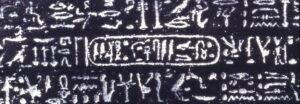

 This is because Egyptian hieroglyphs initially had no separate letter for L. Later on, they used a reclining lion
  (as seen below) to indicate the first letter of Greek ΛΕΩΝ (león).