Purposeful Learning / Social Impact

Courage, In Every Language: Women Who Changed History

Start learning with NaTakallam!​

Learn through guided conversations with native speakers while gaining cultural insight, improving fluency, and connecting with people across borders.

Women have shaped the world through education, art, community-building, and so much more – speaking truths that might otherwise have been lost.

Courage looks different in every context – it can mean insisting on education, painting stories on city walls, founding institutions, or rebuilding life in a new place. This list honors women worldwide – from educators and artists to community leaders and NaTakallam’s own Language Partners – who embody courage in action.

Book a session and learn from women sharing their language and stories across borders

Begin your learning journey through meaningful, one-on-one conversations.

Across borders and generations, women have turned resilience into change.

Courage in Exile

Women who crossed borders and rebuilt voice, identity, and impact

For many women, courage begins far from home. Displacement can silence voices – but for some, it becomes the beginning of advocacy, storytelling, and leadership.

Yusra Mardini

From displacement to global advocacy
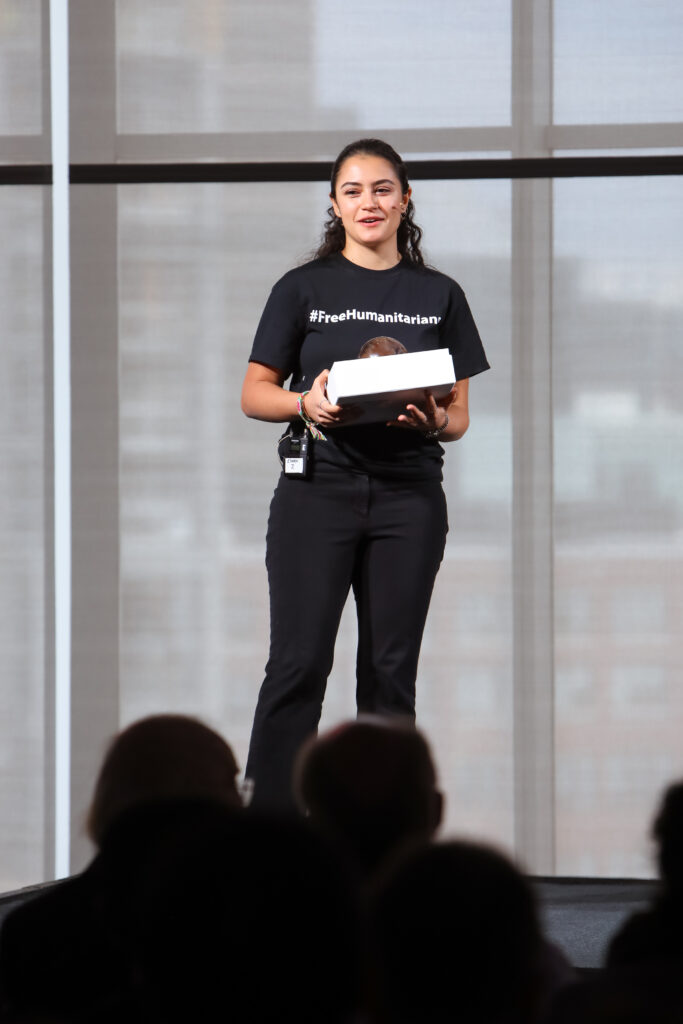
Yusra Mardini - 2018 Disobedience Awards at the MIT Media Lab

Yusra Mardini is a Syrian refugee and Olympic swimmer who competed as part of the first-ever Refugee Olympic Team at the 2016 Summer Olympics. She fled Syria in 2015 and, when the engine of her refugee boat failed mid-journey, she and her sister helped guide it to safety to reach Lesbos.

After eventually settling in Berlin, Yusra continued her swimming career and became the youngest Goodwill Ambassador for the United Nations High Commissioner for Refugees in 2017, advocating for displaced communities worldwide.

Her journey, alongside her sister Sara Mardini, was later portrayed in the Netflix film ‘The Swimmers’.

Yusra Mardini’s journey shows how courage in exile can transform survival into advocacy and global impact.

Waad Al‑Kateab

From displacement to global advocacy
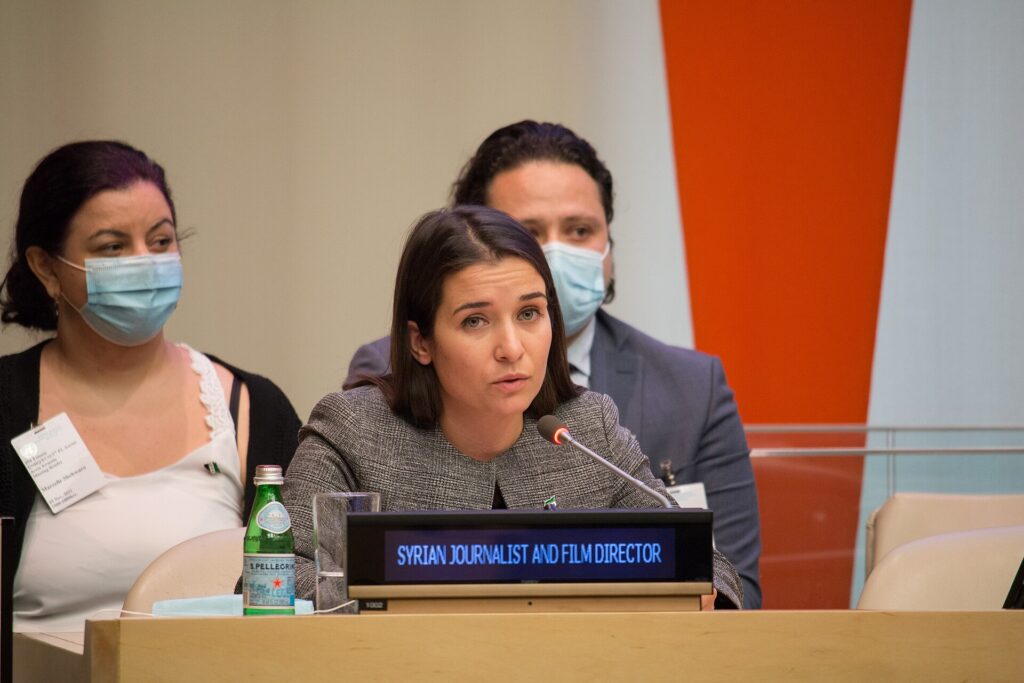
Waad Al-Kateab - Photo by Liisa Toots

Waad Al-Kateab is a Syrian journalist and filmmaker who documented life during the Syrian conflict while living in the besieged city of Aleppo. As violence escalated around her, she began filming daily life, capturing the realities faced by families, hospitals, and communities trying to survive the war

Her footage later became the acclaimed documentary, For Sama, a deeply personal film dedicated to her daughter that brought global attention to the human cost of the conflict.

Through storytelling and film, Waad Al-Kateab ensured that the voices and experiences of civilians in Aleppo would not be forgotten.

Her work reminds us that courage can also mean bearing witness — and telling the stories that history must remember.

Ilhan Omar

Representation and civic participation
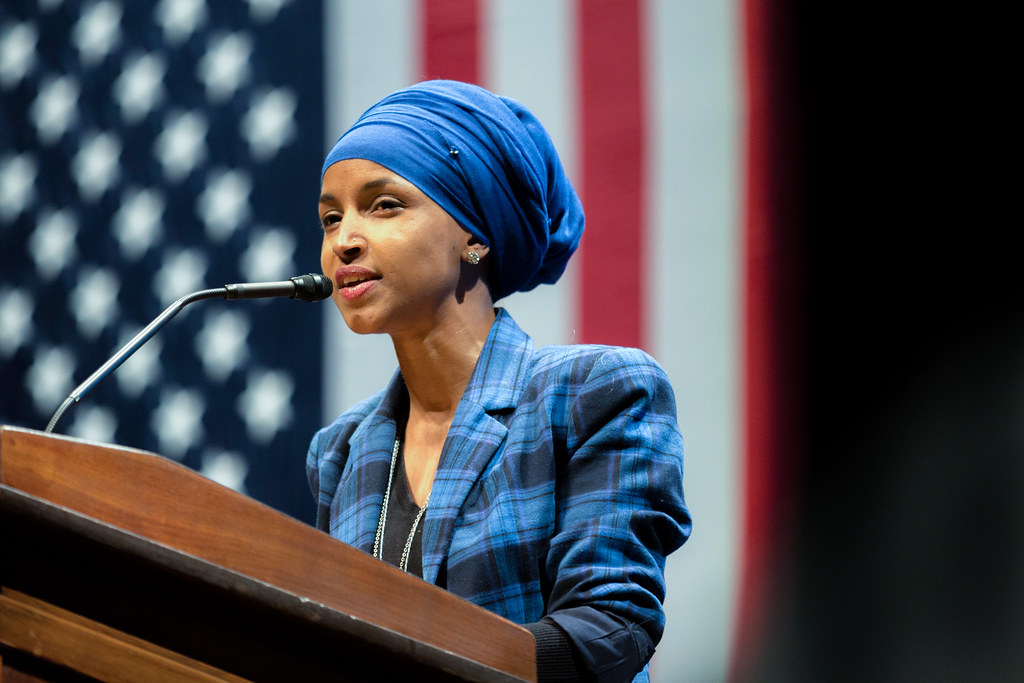
"Ilhan Omar speaking at a Hillary for MN event at the U of MN" by Lorie Shaull is licensed under CC BY-SA 2.0.

Ilhan Omar is a Somali-born American politician who serves as the U.S. Representative for Minnesota’s 5th congressional district. After fleeing the Somali Civil War, she spent four years in a refugee camp in Kenya before immigrating to the United States in the 1990s.

A member of the Democratic Party (United States), Omar became the first Somali-American, the first former refugee, and one of the first Muslim women elected to the U.S. Congress. Throughout her political career, she has advocated for more inclusive immigration policies and greater representation for immigrant and refugee communities.

Her journey reflects how courage in exile can grow into civic leadership and representation on the global stage.

Courage Through Language

Women who used speech, storytelling, and education as power

Language has long been one of the most powerful tools of change, allowing women to educate, preserve stories, and amplify voices across generations.

Malala Yousafzai

Education as courage
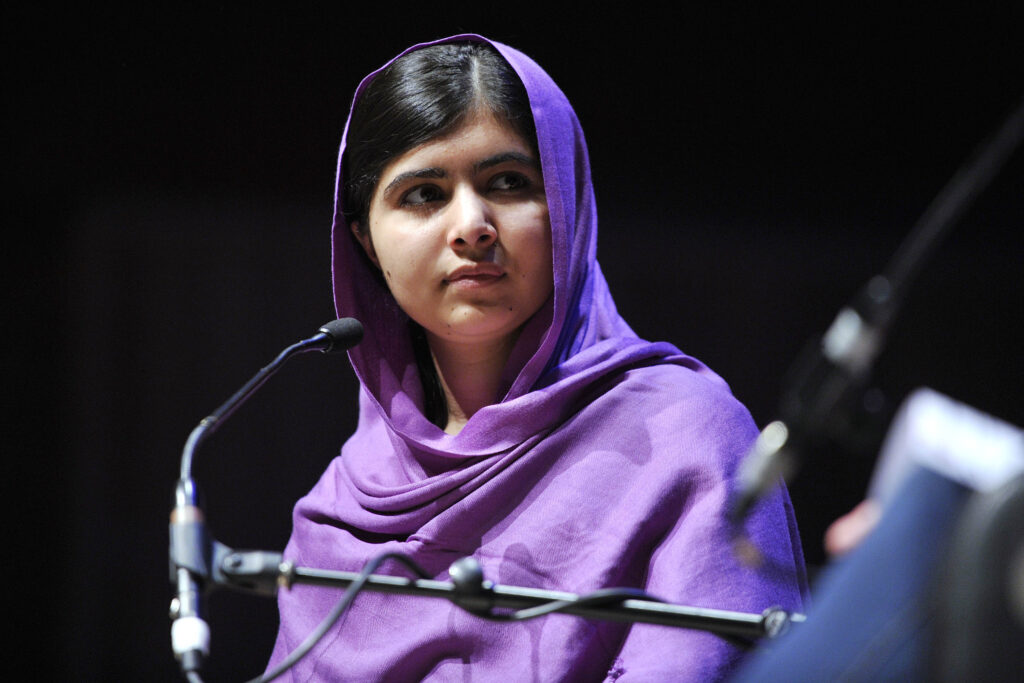
Malala Yousafzai - Photo by Southbank Centre

Malala Yousafzai is a Pakistani education activist who became an international symbol for girls’ education after surviving an attack in 2012 for speaking out against restrictions on girls’ schooling in her hometown of Swat Valley.

Following her recovery, she continued advocating globally for the right of every girl to receive an education. In 2014, Malala became the youngest-ever recipient of the Nobel Peace Prize, recognizing her efforts to defend children’s rights and access to education.

Her story shows just how essential courage is for women and girls seeking education; and how speaking out for education can become one of the most powerful forms of activism.

Yusra Al Barbari

Education and civic leadership
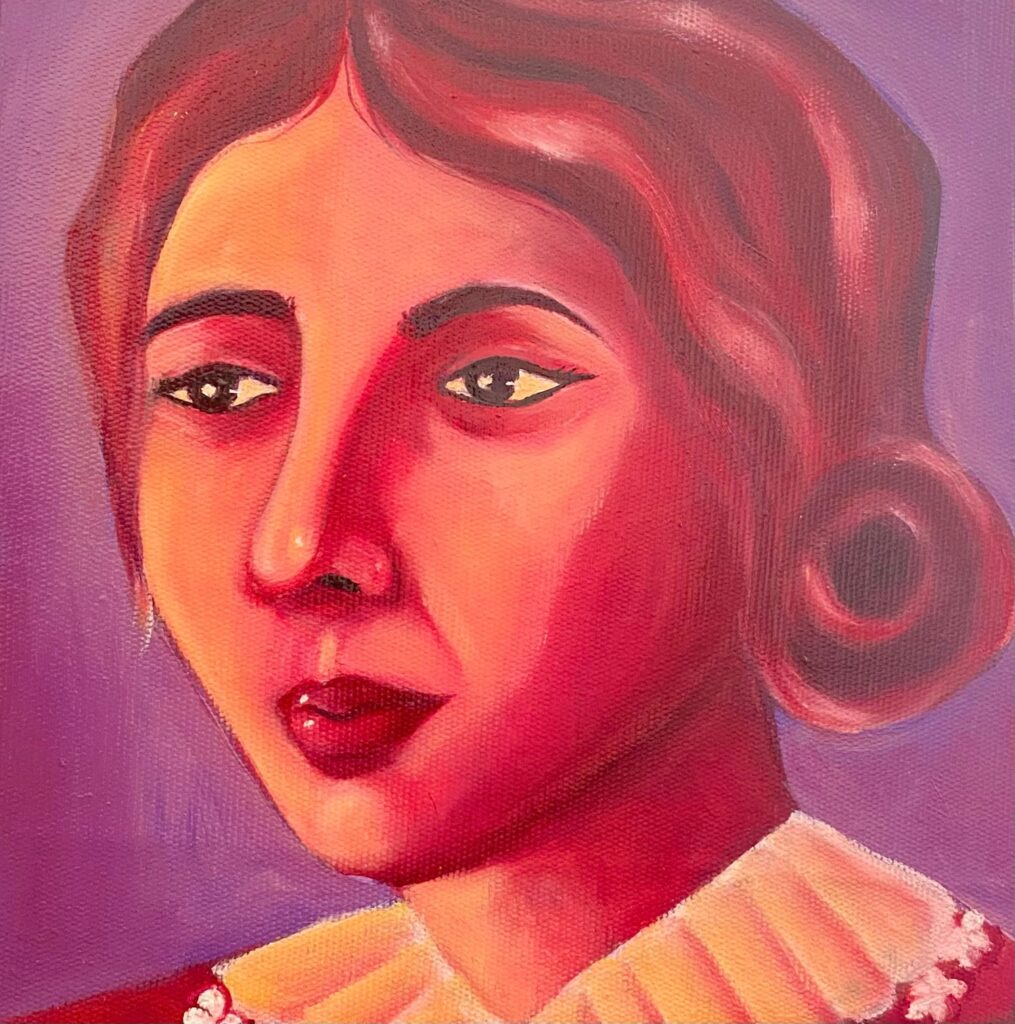
“Yusra al-Barbari” (2023, oil on canvas) by Malak Mattar

Yusra Al Barbari was the first female university graduate in the Gaza Strip. Fluent in English, French and Arabic, Yusra was a teacher at a girls’ school but also a social activist. She was one of the first women to play a leading role in education and civic life in Gaza. She played a prominent role in establishing and heading the Women’s Union in Gaza and served as executive secretary of the Palestinian Red Crescent Society in the Gaza Strip.

In 2005, the Palestine Consultative Council of the Swiss group “League of 1000 Women for the Nobel Peace Prize” (1000 Femmes pour le Prix Nobel de la Paix) nominated her as one of eight Palestinian women candidates for the award.

Her work reflects how education and civic engagement are essential in standing up for justice in the face of occupation and driving change at scale.

Joanna Rayess

Teaching across borders
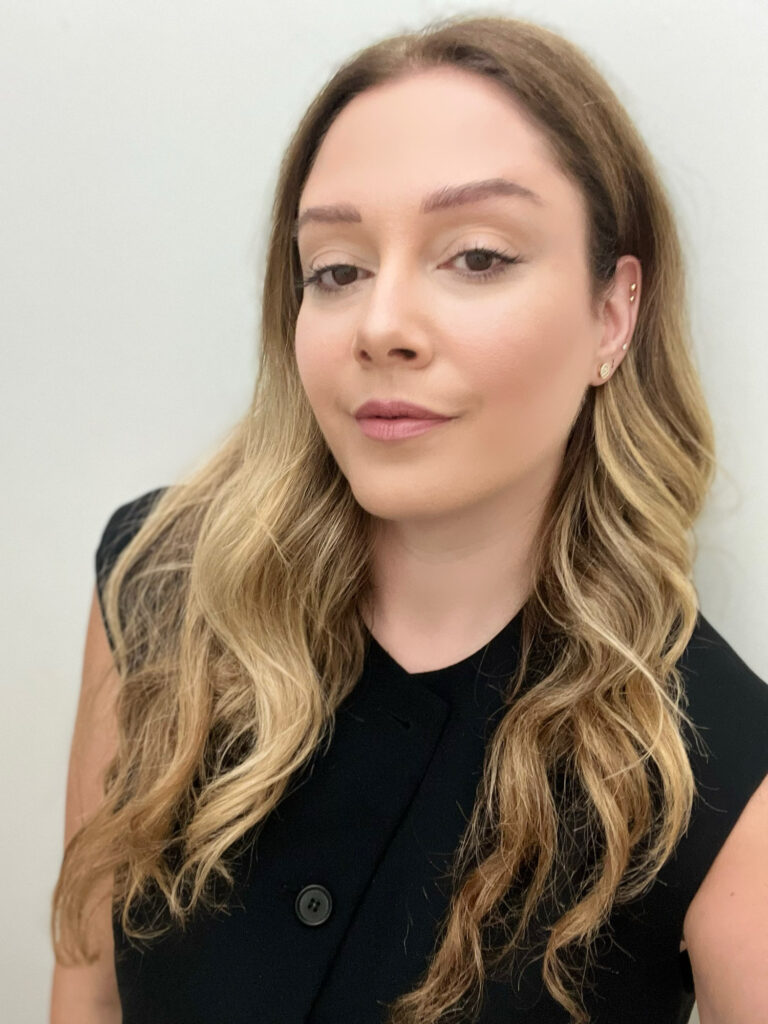
Joanna - Lebanese Arabic tutor at Natakallam

Joanna Rayess is a Lebanese educator and language tutor who teaches Arabic while sharing her culture and lived experiences with students around the world.

Bedridden for months due to a car accident, and faced with war and uncertainty, Joanna continues teaching with NaTakallam – supporting her family and building connections across borders.

With a background in journalism and storytelling, she brings a thoughtful, student-centered approach to her lessons, creating space for meaningful conversations and cultural exchange.

Her work shows how language, resilience, and human connection can come together as a powerful form of courage.

Courage Through Culture

Women who transformed art into resistance

Art has long been a way for women to resist silence, preserve identity, and share stories that might otherwise be forgotten.

Shamsia Hassani

Art as visibility and resistance
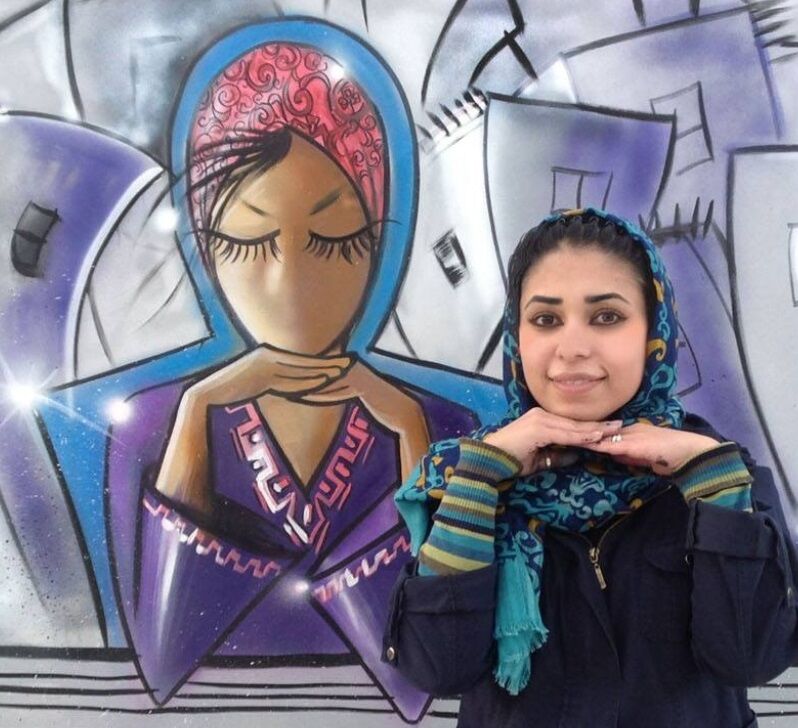
“Secret Series at Kabul, Afghanistan” by Shamsia Hassani

Shamsia Hassani is Afghanistan’s first female graffiti artist, a fine arts lecturer, and associate professor at Kabul University. In a male-dominated society, her murals and public art celebrate the strength and resilience of Afghan women.

Her works have been exhibited in Afghanistan, India, and the USA, and she has inspired hundreds of Afghans through graffiti festivals, classes, and exhibitions worldwide.

Her murals remind us that courage can be expressed through creativity, giving voice to those who might otherwise remain unseen.

Yasmine Hamdan

Music as voice and cultural expression
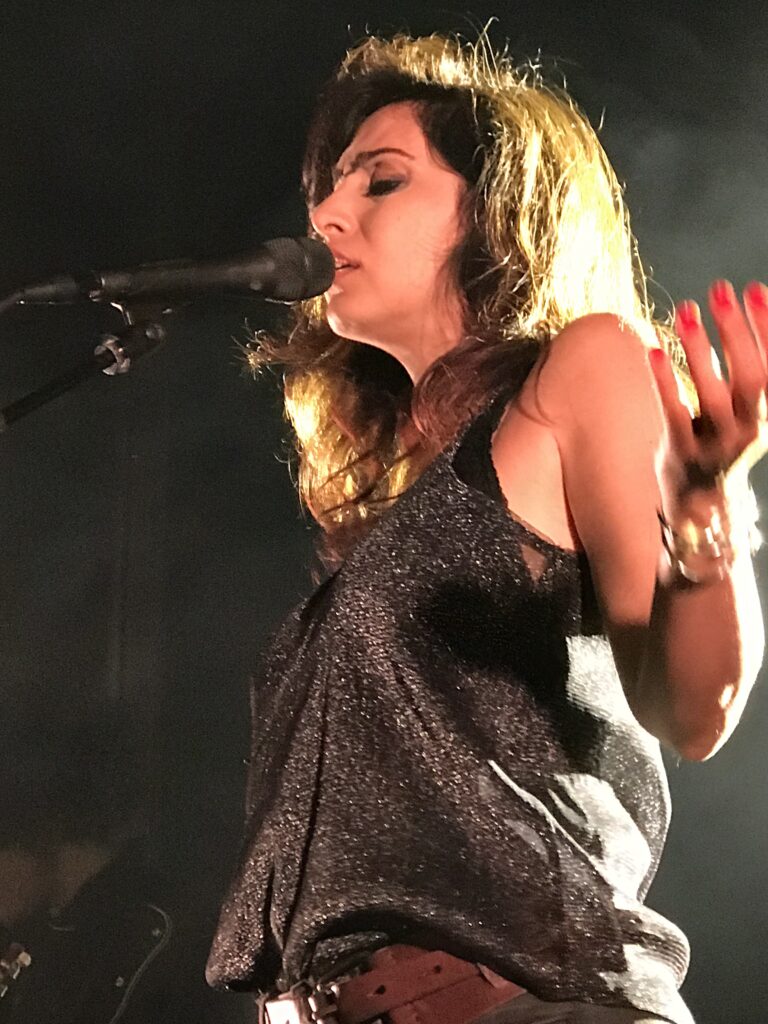
Yasmine Hamdan at a concert in Berlin, 2017” by LutzBruno

Yasmine Hamdan is a Lebanese singer-songwriter and pioneer of the Arab indie music scene, known for blending electronic sounds with Arabic musical traditions. As a founding member of the duo Soap Kills, she helped shape a new wave of independent music in the region and continues to push creative boundaries through her solo work.

Her recent work, including her 2025 album I Remember I Forget, reflects themes of memory, identity, and displacement, resonating with audiences across borders. 

Through her music and performances, Hamdan amplifies cultural narratives across a region that continues to endure violence. Her voice reminds us that art can preserve identity, carry memory, and speak even in the face of loss.

Fatima al-Fihri

Education as legacy

Fatima al-Fihri - A Daughter of the East, 1870, British Museum by Jean-François Portaels

Fatima al-Fihri was a scholar and philanthropist who founded the al-Qarawiyyin Mosque in 857–859 CE, which later developed into the modern University of al-Qarawiyyin. It is recognized as the world’s oldest continuously running university. Known as Umm al-Banīn (“Mother of the Children”), she used her resources to create a lasting center for learning and scholarship.

Her vision and leadership inspired generations, laying the foundation for knowledge-sharing and intellectual growth across Morocco and beyond.

Her work shows how courage and vision can transform resources into lifelong opportunities for communities.

When Courage Connects Us

These stories remind us that courage takes many forms – crossing borders, raising voices, creating art, and building knowledge. From women rebuilding communities to those using language, education, or culture to empower, each shows how determination can shape societies.

At NaTakallam, our Language Partners continue this legacy, connecting people across cultures through teaching and dialogue. We stand with every woman navigating war, conflict and chaos while laying the foundations of better futures for generations to come – proving that courage can thrive in every language.

Support Women Across Borders

Connect with women who are sharing their language, culture, and lived experiences — and be part of a journey that uplifts voices and creates meaningful change.

Asma Siddiqui

Asma Siddiqui is a copywriting intern at Natakallam with a background in dentistry, gradually transitioning from healthcare into the world of storytelling and strategy. With a deep interest in language, culture, and meaningful communication, she explores how words can shape understanding across communities. When Asma’s not working, you’ll likely find her planning a trip, trying new food, or reflecting through spontaneous writing.

Share this article on:
Facebook
X
Threads

Courage, In Every Language: Women Who Changed History Read More »
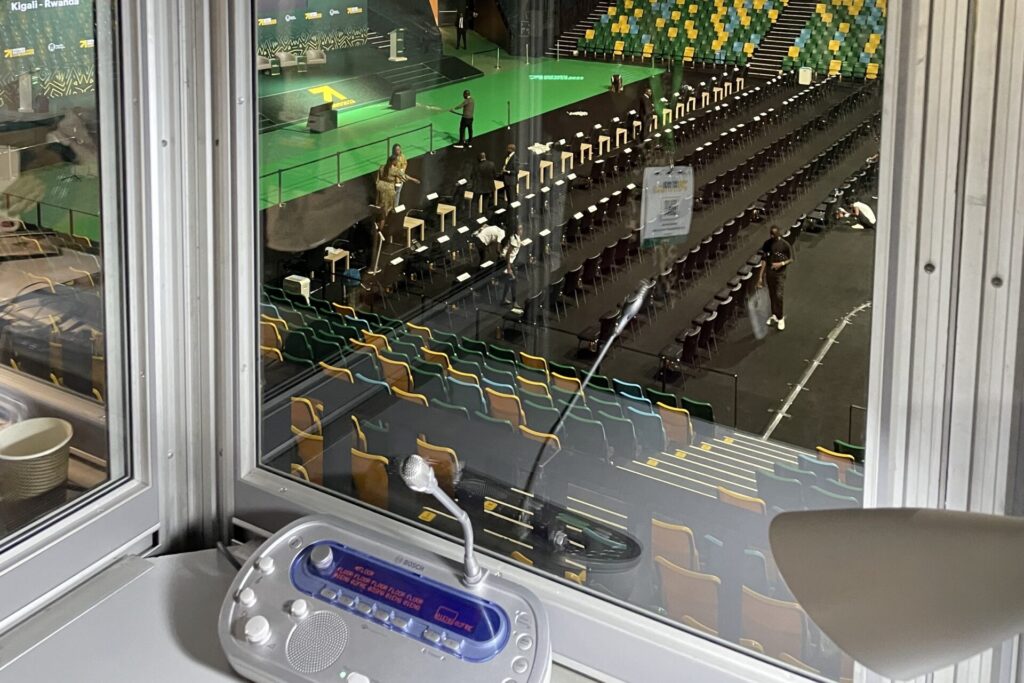
View from the interpretation booth at Women Deliver Kigali, 2023

Language Access as Best Practice: Working with Global Majority Interpreters

Make Language Access Seamless

Partner with Natakallam to deliver expert, culturally informed interpreting – without the logistical headaches.

In an interconnected world, effective communication across languages is no longer optional – it is operationally essential. For international organizations engaged in humanitarian response, diplomacy, development, academia, and global convenings, interpreters do far more than transfer words from one language to another.

Work with Natakallam’s Global Majority Interpreters

Set the standard for inclusive, high-quality multilingual events.

Why High-Quality Interpretation Matters for Your Organization

In international humanitarian, diplomatic, and development work, communication is not just about words – it’s about trust, clarity, and inclusion.

Misunderstandings can have serious consequences: broken negotiations, compromised safety, and diminished access to critical services. A 2025 Scoping Review found that displaced populations lose access to healthcare and justice when organizations fail to provide professional interpretation.

High-quality interpretation is an operational and ethical necessity. By investing in professional interpreters, your organization ensures meetings, briefings, and negotiations proceed smoothly and safely, while upholding the highest standards of professionalism.

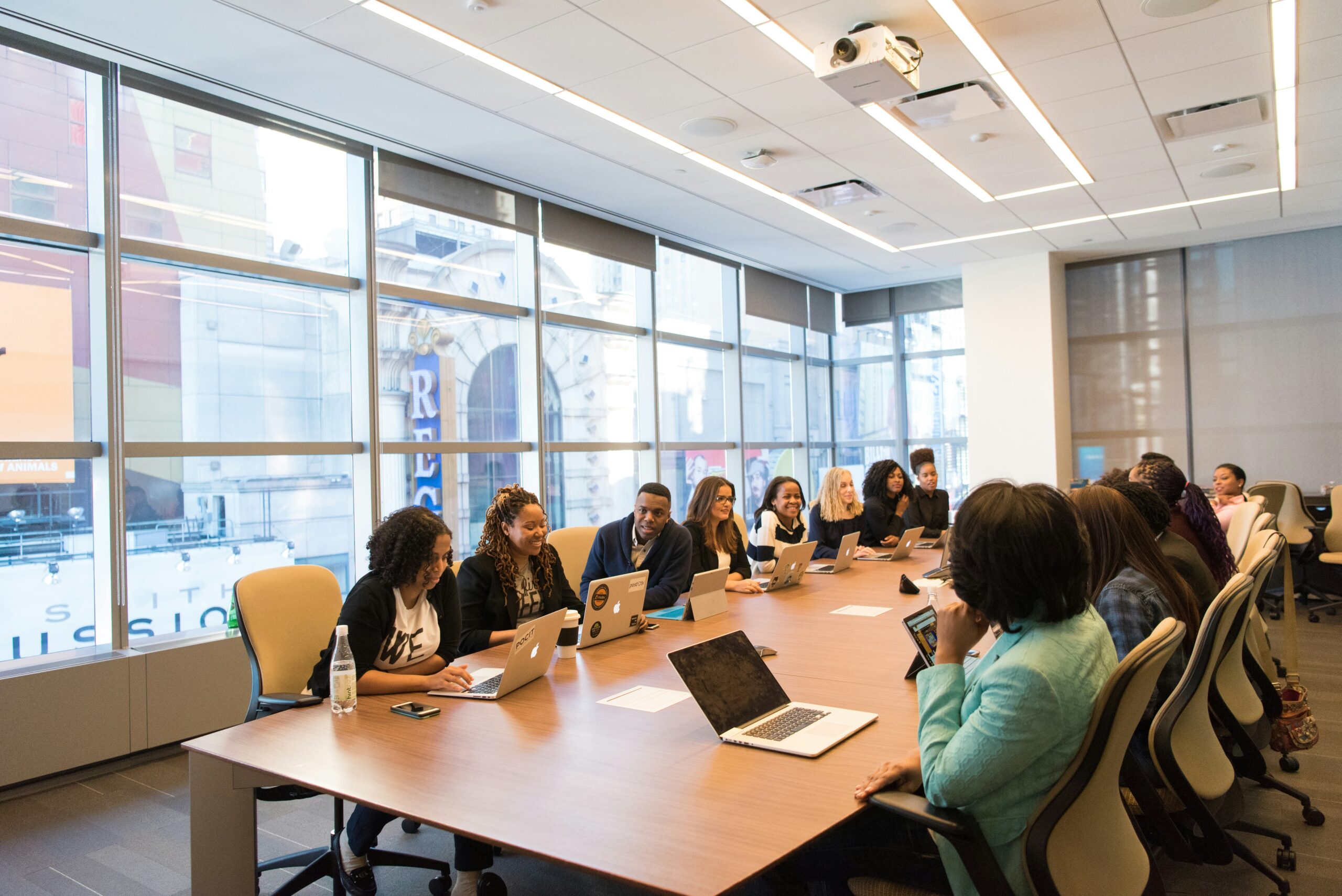
christina-wocintechchat-com-m-faEfWCdOKIg-unsplash

Preparation is Non-Negotiable

The best outcomes start long before the first word is spoken. Providing interpreters with agendas, reference materials, and glossaries at least three days in advance improves accuracy and efficiency.

Why it matters:

  • Reduces errors during live sessions
  • Helps interpreters manage cognitive load
  • Ensures consistency in technical and sector-specific language

For example, humanitarian organizations rely heavily on acronyms like IDP (Internally Displaced Person), WASH (Water, Sanitation, Hygiene), and GBV (Gender-Based Violence). Unexplained terms create obstacles. Developing a shared Interpreter’s Guide to NGO Terminology ensures your message is accurately conveyed every time.

Respect Interpreter Wellbeing and Working Conditions

Interpreting is cognitively demanding, especially in high-stakes contexts. Cutting corners to save costs ultimately harms the quality of your interpretation. Ethical practices – such as fair compensation and ISO-standard compliant working conditions – protect both your interpreters and your organization.

Best practices include:

  • Rotating interpreters every 15–20 minutes in simultaneous interpretation sessions
  • Providing multiple interpreters per language for long events
  • Supplying appropriate equipment (booths, FM or infrared receivers) for secure on-site or virtual meetings
  • Supporting interpreters with trauma-sensitive training for conflict or crisis-related topics

By prioritizing wellbeing, you reduce fatigue, errors, and stress while fostering a professional environment that enhances collaboration.

Treat Interpreters as Part of Your Team

Interpreters are more than service providers – they are cultural mediators who bridge not only language but context, nuance, and emotion. Including interpreters in pre-event briefings and post-event debriefs builds trust and improves results.

Key considerations:

  • Maintain confidentiality with NDAs and consent for recordings
  • Include interpreters in discussions of cultural and sector sensitivities
  • Recognize the value of their feedback to continuously improve the process

Speak Clearly and Collaborate Effectively

Your delivery directly impacts interpreter performance. Clear, paced speech and prepared materials improve comprehension, particularly in remote or hybrid environments. Small adjustments – avoiding overlaps, using concise phrasing, and sharing materials in advance – enhance accuracy and inclusivity.

Interpreters also facilitate cultural mediation, ensuring your message is not only heard but understood in the appropriate cultural context.

Continuous Feedback and Long-Term Collaboration

High-quality interpretation doesn’t end when the event is over – it thrives on continuous learning and feedback. Organizations that implement structured feedback systems can track:

  • Terminology usage and glossary effectiveness
  • Technical challenges and equipment performance
  • Interpreter team coordination and efficiency

Regular evaluations help maintain smooth operations for online, hybrid, and in-person meetings, ensuring every future event runs more reliably and accurately. Organizations that invest in long-term partnerships with interpreters benefit from consistent results, institutional knowledge, and improved operational efficiency.

Interpretation is not just a service – it is a critical system for equity and inclusion. Without proper language access, social and political processes can break down, leaving participants unheard or misrepresented. Professional interpreters act as cultural mediators, ensuring that every message is accurately conveyed and culturally appropriate. Organizations that respect and invest in interpreters achieve full, respectful voice representation for all participants, creating trust and credibility across languages and borders.

Need tailored interpretation support for your next event?

Explore our Translation & Interpretation FAQs for details on service levels, languages, and delivery timelines. Our team provides personalized guidance to ensure your event’s communication is seamless, secure, and impactful.

Asma Siddiqui

Asma Siddiqui is a copywriting intern at Natakallam with a background in dentistry, gradually transitioning from healthcare into the world of storytelling and strategy. With a deep interest in language, culture, and meaningful communication, she explores how words can shape understanding across communities. When Asma’s not working, you’ll likely find her planning a trip, trying new food, or reflecting through spontaneous writing.

Share this article on:
Facebook
X
Threads

Language Access as Best Practice: Working with Global Majority Interpreters Read More »

AI Needs Arabic: The Truth About Language Justice

Start learning with NaTakallam!​

Book a session with a Language Partner today.

Arabic has shaped the world in ways we rarely acknowledge today. Centuries before the digital age, Arabic was a global language of science, philosophy, and innovation. It carries knowledge across continents and cultures. From algebra to astronomy, much of modern thought was preserved and propelled forward thanks to Arabic-speaking scholars.

Want to Support Language Justice in Action?

Bring NaTakallam’s interpretation and translation services to your classroom, clinic, or company.

A Global Language Left Behind by AI

Today, Arabic is still one of the most widely spoken languages in the world. Over 400 million speakers span across more than 25 countries. It’s one of the six official languages of the United Nations. Yet, an increasingly AI-first world continues to digitally sideline and undermine it; it is glaringly underrepresented in the datasets that train most modern AI systems. 

At NaTakallam, we believe that Arabic is not only a heritage language — it’s a living, evolving system, spoken and shaped every day by millions. Its contributions to our daily lives surpass what most imagine, and its legacy and influence must be protected not just by preservation efforts, but through a firm commitment to language justice — the right of all people to communicate, access services, and participate in public life in their preferred language.

What is Language Justice?

Language justice is about power: who is heard, who is understood, and who gets to shape the narrative. In a world increasingly mediated by technology, the absence of linguistic representation becomes another form of exclusion.  Especially for communities already pushed to the margins.

For displaced people, power imbalances exacerbated by language barriers are even more critical to address. From healthcare to education to legal systems, these barriers can mean misinformation, disempowerment, and invisibility. That’s why language justice is foundational to human rights — and to building inclusive technologies.

NaTakallam puts this into practice by offering interpretation and translation services that are trauma-informed, culturally fluent, and community-powered. Whether through dialect-specific support or mental health-sensitive interpretation, our Language Partners do what machines can’t. They listen, they contextualize, and they connect.

Explore our interpretation and translation services here.

Where AI Falls Short

Modern AI systems like Common Crawl or GPT’s corpora are heavily skewed toward English and other dominant languages. Despite the global reach of Arabic. As a result, AI struggles with Arabic — especially when it comes to dialects, context, and nuance. 

According to NaTakallam translators, literal meaning translations often lose the real meaning of sentences :

" One example I've encountered, where AI fell short, was the translation of the verb to navigate in the context of "navigating an issue". In this case, the machine translation suggested was الإبحار في المسألة (literally to sail in this issue), while the accurate translation in Arabic would be التعامل مع هذه المسألة. This is one of many examples that prove that machine translation is rarely a reliable tool in Arabic translation when it is not reviewed by a professional human translator."

The consequences aren't just technical. They're deeply human.

Why AI Misunderstanding Arabic Matters

Poor machine translation. Misinterpreted sentiment. Exclusion from digital platforms and services. For displaced people and marginalized communities, this kind of digital invisibility mirrors and magnifies real-world inequities.
 

Consider another real-world example: a restaurant attempted to transliterate “milkshake” into Arabic as “مِلك شَك”. However, machine translation misread it as “مَلِك شَك” (malik shek), translating back to English as “King Doubt”—a humorous yet telling illustration of AI’s challenges with Arabic transliteration and context .

Further weight is added to this problem due to the complexity of Arab dialects. When we talk about Arabic, we’re talking about a vibrant spectrum of dialects and expressions—Syrian, Iraqi, Egyptian, Palestinian, Lebanese, Sudanese, and many more. Each deeply rooted in specific histories and geographies. Developers rarely train AI on these dialects.

A study evaluating ChatGPT’s performance in Tunisian and Jordanian dialects showed major gaps in understanding, especially on health-related prompts. That kind of inaccuracy isn’t just inconvenient — it’s dangerous.

Last month, one of our Language Partners, Yara Hasan, took to the stage at the Dubai Future Forum to discuss exactly that:

"When using AI to translate, often memories, identity, and history are erased, especially when using Arabic idioms which can be lost. AI should be learning from Arabic, not the other way around. We have to make the system representative of this culture."

NaTakallam’s Model: Language Justice in Action

At NaTakallam, we see every day how systems that fail to reflect lived experience fail to serve real people. Refugees who have already endured loss and trauma often encounter platforms that don’t understand their words — literally.

That’s why we root our work in human-led, refugee-powered solutions. We don’t just offer services — we offer linguistic equity. From Palestinian proverbs to Iraqi idioms, our Language Partners preserve culture while helping people communicate across borders, systems, and trauma.

In this way, language becomes both a livelihood and a lifeline.

Arabic and the AI We Need

There are reasons to be hopeful.

Initiatives like the Abu Dhabi-based CAMeL Lab for Arabic NLP are proving that community-based, linguistically diverse AI can work — and achieve powerful results.

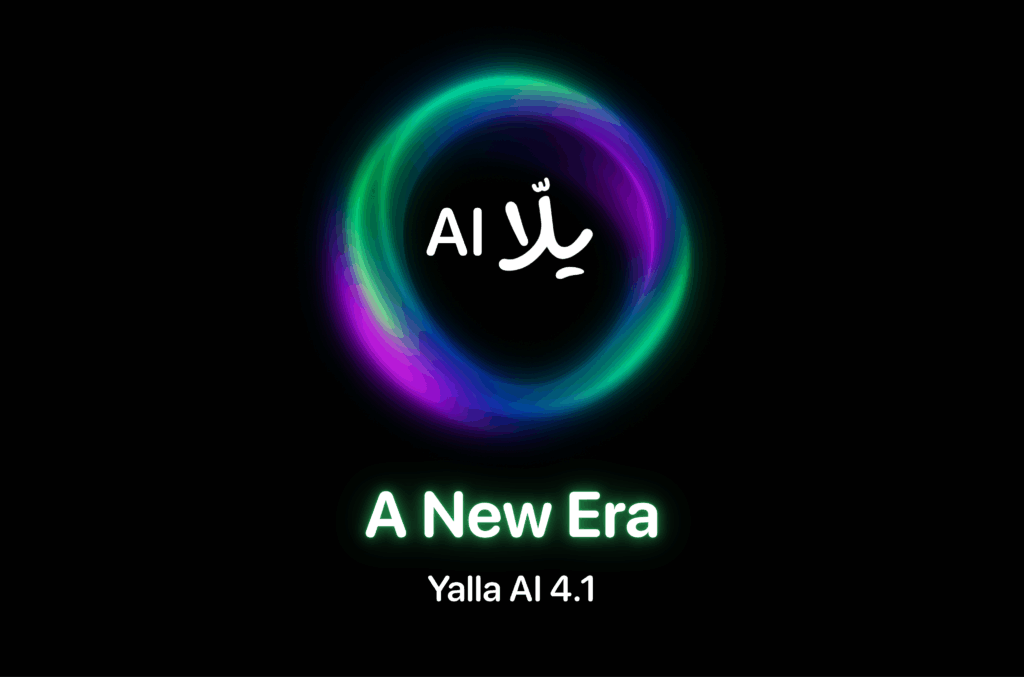
A recent development worth watching is Yalla AI, which Saudi tech company Yalla Plus launched as an Arabic-first platform. Developers in Saudi Arabia fully built, developed and trained it to reflect the linguistic and cultural realities of Arabic-speaking markets. Most global models flatten Arabic into a single formal register. Contrastingly, Yalla AI aims to support both Modern Standard Arabic and regional dialects.

What’s especially notable is its integration into real-world business tools — like point-of-sale systems in retail and F&B — this makes AI accessible even for non-technical users. Early days, yes, but it signals a growing push from the region to define its own digital future, rather than just adapting to someone else’s.

So What’s Next?

If we want AI — and our digital ecosystems — to serve the world equitably, we must:

  • Invest in multilingual corpora
  • Fund refugee- and community-led tech
  • Treat language preservation as innovation, not nostalgia
  • Center language justice in design and policy

At NaTakallam, we’re proud to be part of this broader shift. Our work sits at the intersection of technology, language, and lived experience. We offer not just services, but insight — real-world data, dialect-specific use cases, and ethical frameworks centered on dignity and inclusion.

This is what Thaura AI is already trying to achieve. This ethical alternative to ChatGPT was built by two Syrian engineers who experienced displacement and witnessed first hand how big techs profit from these models. Thaura AI’s ethical approach relies on data privacy, environmental sustainability – by using 94% less energy than ChatGPT – and amplifying marginalized communities.

At NaTakallam, we’re proud to be part of this broader shift. Our work sits at the intersection of technology, language, and lived experience. We offer not just services, but insight — real-world data, dialect-specific use cases, and ethical frameworks centered on dignity and inclusion.

Want to Support Language Justice in Action?

Language justice doesn’t happen by accident — it’s built through deliberate choices. Whether you’re designing technology, shaping policy, teaching, or learning, your decisions matter. Partnering with NaTakallam is one way to turn values into impact by advocating for AI systems that reflect the world’s true linguistic diversity — not just a fraction of it.

Arabic has always been a language of futures: of possibility, invention, and exchange. In an AI-driven world, ensuring it thrives isn’t optional. It’s a responsibility that will define whose voices shape the future.

Partner with NaTakallam to advance language justice across 100+ languages

Make an impact as an organization or individual:

Support linguistic diversity, empower communities, and help languages like Arabic thrive in an AI-driven world.

Zeina Abou Taha 

Zeina Abou Taha is an intern at NaTakallam, currently transitioning from a career in IT consulting into journalism. With an academic background in Entrepreneurship & Innovation and a passion about exploring the world, Zeina spends her free time traveling, connecting with people from diverse cultures, and writing for her personal blog.

Share this article on:
Facebook
X
Threads
LinkedIn
Reddit

AI Needs Arabic: The Truth About Language Justice Read More »

Image showing a young woman smiling while taking an online language lesson with NaTakallam on her laptop, with text overlay: "A Different Kind of Duo: Meet our tutors and students."

How Learning a New Language Builds Community Across Cultures

Start learning with NaTakallam!​

Choose from our 9+ languages: Arabic Spanish, Persian, Armenian, Kurdish, and more – taught by displaced tutors worldwide.

Start your learning journey with a free trial.

Behind every NaTakallam lesson is a powerful story of connection. Meet the Language Partners (and their students) bringing learning – and impact – to life!

Behind every NaTakallam session is a story, a connection, and a chance to make a real impact.

 Join a global community. Start a conversation today with a free trial session.

A Different Kind of Duo: Meet Our Language Partners

In an age when social media and the internet promise to connect us all, many of us – whether refugees, displaced individuals or more privileged ones in stable homes – feel more isolated than ever. Displacement, conflict and misunderstanding leave the world fragmented. 

A 2023 study on the relationship between language learning and empathy argues that learning another language is crucial in building empathy and “acquiring another person’s perspective”, especially in intercultural communications. Learning remains one of the most helpful tools – not just to pick up a new language, but to stand against dehumanization and “othering” of those with different languages, cultural contexts or backgrounds than what is familiar.

For many learner-tutor duos at NaTakallam, language sessions have turned into much more than a grammar or vocabulary lesson. Each session is an opportunity to connect beyond cultural, linguistic and personal differences, and discover what they share. Together they learn from one another while directly contributing to the improvement of the tutors’ livelihoods – proving that empathy through language learning can improve intercultural understanding and create a meaningful impact at the same time. 

By connecting through NaTakallam, learners and their tutors have built friendships, identified commonalities and differences through culture and turned language into a tool of resilience.

Join a community of connection, one conversation at a time and book a free trial session today.

Pick from any of our 9+ languages and dialects and book a FREE trial!

From Conversation to Friendship: Shahd & Kari

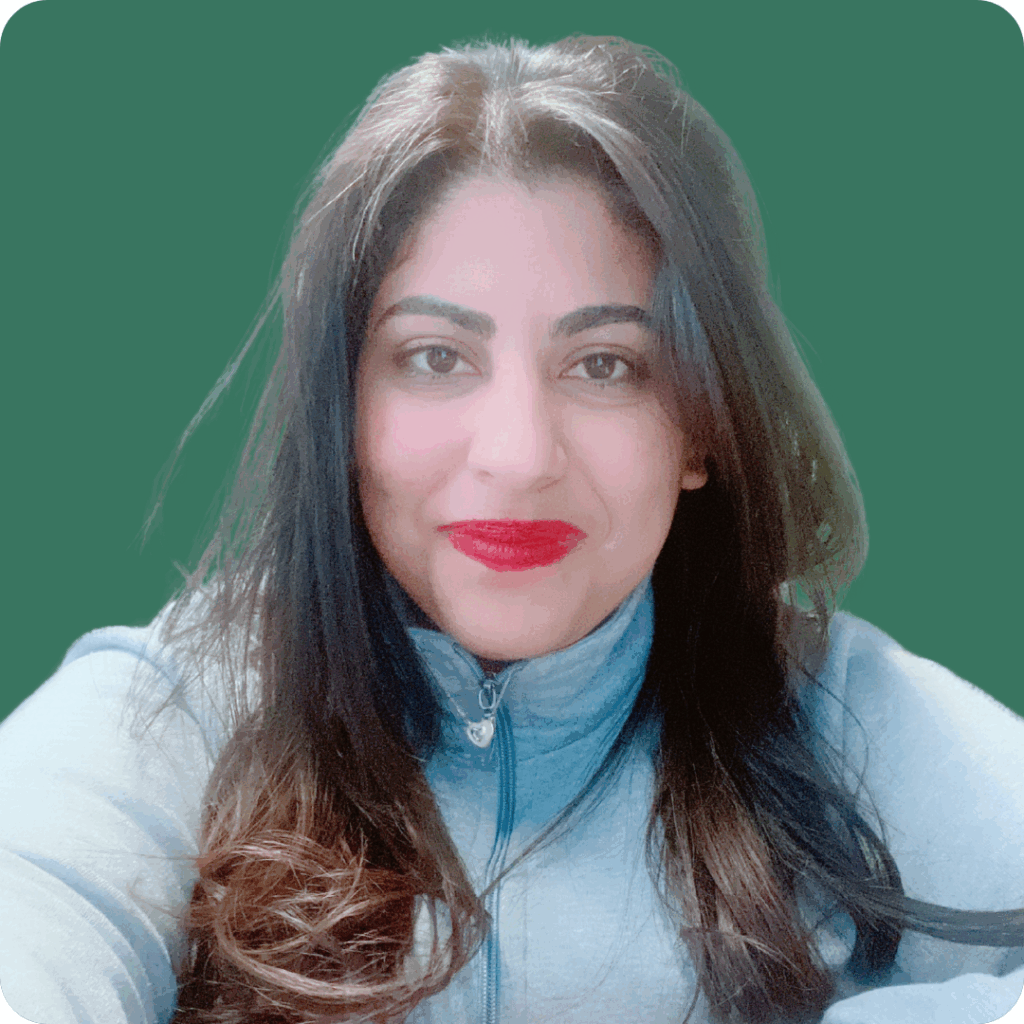
Profile photo of Shahd smiling, on a solid dark green background.

Shahd has been a Language Partner with NaTakallam for more than 3 years. She fled the Gaza strip for Egypt early 2024 along with her mother and some of her siblings, thanks in part to fundraising initiatives from her NaTakallam students. Through a scholarship, she was able to move to the U.S. to pursue a joint degree in Human Rights and Written Arts.

She finds education to be a tool to navigate ongoing challenges. Having studied English literature and education methods, she believes her writing ensures that the voices of marginalized and displaced individuals are being heard. Her academic experience reinforces her commitment to human rights and cross-cultural understanding. 

As a Language Partner, she tailors her lessons based on her students’ needs by using a combination of visual aids, fun activities and cultural discussions to make each session enjoyable and impactful. Her professionalism enabled her and her students to become a trusting community.

Her connection to her students goes beyond teaching. Shahd claims her students have challenged her, taught her and helped her grow. NaTakallam has become more than work, it has turned into a community. 

Kari initially booked NaTakallam lessons with Shahd to “practice more conversational Arabic to be able to speak to my aunts and uncles”. What she found went beyond conversation. Over time, they became friends and built trust. This eventually resulted in Kari initiating the GoFundMe campaign that enabled Shahd Safi to flee from Gaza. The fundraising was made possible by the students who knew and trusted her.

For both Shahd and Kari, what started as a simple language lesson has become something much more impactful: a powerful bridge of understanding and support. 

Their language sessions at NaTakallam have exceeded the purpose of learning and teaching to become a true, human experience, making meaningful connections along the way.

Start a conversation, find a friend.

Book a FREE trial today!

Finding Connection through Culture: Pavel, Anna & Graham

Profile photo of Pavel smiling, on a solid dark green background.

Anna and Graham both meet with Pavel on a weekly basis to brush up on their Spanish skills. 

Anna declares “I really love my sessions with Pavel. It’s so amazing to me that I can actually have a conversation in Spanish”.

Pavel rejoices in these victories.

Having fled political turmoil in Venezuela, Pavel reconstructed his life in La Plata, Argentina. Since he became a Language Partner at NaTakallam, he built his sessions around empathy, personal connections and helping the students through patience and cultural exchange. He believes this kind of approach “will change your view about how a language can be learned”.

Graham finds Pavel very responsive to his needs and extremely knowledgeable. Beyond Pavel’s professionalism, Graham also praises his open-mindedness and his great sense of humor. 

The many hardships Pavel has overcome as a refugee with a disability – from being unable to complete his degree in Modern Languages and Psychology, to rebuilding an entirely new life in an unfamiliar place – serve as the foundation for his love for teaching and the many stories he has to share. His experiences also highlight how intersecting factors – such as disability, forced displacement, and cultural adaptation – can amplify challenges, shaping the resilience and perspectives of individuals around the world.

One of Pavel’s favorite aspects of teaching at NaTakallam is getting to share the “real aspects” of his culture, not what the news or the books say, but the real, authentic stories of lived experiences.

Learn about the real nuances of Spanish, Arabic, or Persian cultures with one of NaTakallam’s Language Partners.

Pick from any of our 9+ languages and dialects and book a FREE trial!

Language as Resilience: Leila & Meg

Profile photo of Leila smiling, on a solid blue background.

Leila joined NaTakallam to make up for her difficulty to find employment in Iran despite her extensive academic career. An accomplished scholar, she obtained her university degrees and PhD in archeology from Tehran University, and later completed an additional degree at Berlin University.

As an outspoken woman, her experience has not always been smooth which made her value education and its power even more. She is committed to making a difference in her students’ lives. She believes education to be a means of fostering resilience and hope. This approach has led her to work with marginalized communities and young students. 

An advocate for change, equality, and education, she personalizes each session to her students’ needs. Through games, conversation, and interactive exercises she wants to connect her students to the broader world and shared experiences.  

“Teaching is not just about sharing knowledge, it’s about connecting hearts and minds across cultures”. –  Leila

Leila claims engagement is a “two-way street”. She particularly enjoyed teaching Meg, a dedicated Farsi student. For them, NaTakallam provides the platform to bring together individuals who – in Leila’s own words – “remind us of the warmth of humanity, especially in these challenging dark times”.

Meg also reflects on her lessons with Leila:

"I am forever grateful to have stumbled upon NaTakallam online. I get to work with a remarkable human being who is my teacher, while supporting an important cause. I never thought I’d be able to make as much progress as I have and, even though I have so far to go, I always feel excited and motivated to use what I’ve learned."
Meg
Farsi student

Leila’s approach to teaching students such as Meg is built on her desire to empower future generations of scholars and intellectuals, especially as she believes language to be a tool to bridge gaps between cultures helping young people build better futures.

Book a session in any of our 9+ languages!

Behind the Scenes

Whether it is Arabic, Persian, or Spanish, here is how your language learning journey starts – and how we ensure tailor-made learning that drives impact and connection. 

It all starts with you – and your drive to learn and make a difference. Our matching process involves really getting to know you – not only your availability or your current language level, but also your goals, passions, purpose and any other interests you’re looking to spark conversations around.

With this information, the NaTakallam pairing team understands you, your pace and aspirations. The goal is to find a real partner, not just a time slot.

Why It Matters

At NaTakallam, we believe language is more than just a way to express basic needs. It’s a bridge to connection, to better understanding and to tighter communities. Through our tailored language courses, we offer a different kind of learning. 

While supporting our learners’ goals, every lesson also supports our tutors. By connecting displaced individuals through the very language you’re learning, you’re contributing to their livelihoods and building meaningful social connections – not to mention engaging in important linguistic and cultural preservation efforts that expand your mind and worldview.

Learning at NaTakallam is realizing how powerful and transformative language is. 

Many of our tutors and learners have found connections beyond learning to create real, long-lasting human bonds. 

For Shahd, this was life changing as support from her students enabled her and parts of a family to flee.  

“My entire economic survival depends on my job with NaTakallam” Pavel shares this as he explains how his language sessions help him with rent, food, expenses, and family support.

Leila found employment, both Shahd and Pavel were able to relocate, sustain themselves, and build their life in part thanks to the financial support that NaTakallam gave them. 

Learning with NaTakallam takes you beyond the classroom. It makes a real impact on our Language Partners’ lives – and on yours.

What are you waiting for?

Learn a language. Make a friend. Try a language session in one of our 9+ languages.

Kenza Lavallard Fadlane

Kenza is an intern at NaTakallam, currently completing her Master's Degree in International Affairs from the University of Saint Gallen, Switzerland. She is passionate about human rights and media.

Share this article on:
LinkedIn
Facebook
Threads
X

How Learning a New Language Builds Community Across Cultures Read More »

Language Justice in global conversation

How Language Justice Can Unlock Fairer Global Solutions

Make Language Access Seamless

Partner with Natakallam to deliver expert, culturally informed interpreting – without the logistical headaches.

Language justice goes beyond communication – it’s about dignity, access, and equitable participation. Explore the global challenges surrounding linguistic exclusion and discover community-centered approaches that prioritize multilingual access and empower displaced individuals.

If today’s global challenges affect us all, why are so many voices still absent from the very conversations meant to solve them?

The UN documented more than 304 million international migrants in 2024, with 123.2 million people forcibly displaced worldwide in the same year. Everyone who takes part in international dialogue arrives with their own story, worldview and cultural background, often shaped by the language they speak. These perspectives, with all the nuances, are what enrich global conversations.

Language Barriers Block Solutions

But can we really claim to tackle the root causes of global crises when entire communities are excluded from the dialogue – often because of the language they speak? International forums may celebrate diversity, yet by relying on only a handful of official languages they miss a critical opportunity to build a truly inclusive and equitable future. This practice mirrors broader patterns of exclusion in global governance: when communication is constrained to the languages of former colonial powers, countless voices are left unheard. Such reliance reflects colonial legacies, where languages of former colonial powers continue to dictate who participates and whose knowledge counts.

When entire communities are silenced, we don’t just lose fairness – we lose the possibility of more innovative, lasting solutions to today’s challenges.

Language is Power

Language is not a technical detail. It is a matter of dignity, justice and care. The United Nations High Commissioner for Refugees (UNHCR) highlights that language differences prevent people from obtaining protection services and reduce their ability to make decisions. Similarly, The World Health Organization (WHO) supports multilingual communication as a vital method to distribute health information fairly while building up worldwide healthcare systems. Studies in humanitarian and medical environments demonstrate that interpreters function as essential professionals who protect fairness in both healthcare teams and humanitarian operations.

The denial of language access results in the denial of power.

Inside Organizations, the Problem Persists

Exclusion does not only occur in global forums or field operations; it also happens within organizations themselves. Bilingual staff members at international NGOs and agencies must perform interpretation duties during meetings while doing their standard work without receiving payment or acknowledgment. The practice diminishes professional value while creating workplace power imbalances, undermining the quality of communication. Organizations should support their staff dignity by using trained interpreters and  professional services to achieve both quality communication and fair labor practices.

Language Access as Core Infrastructure

Solutions exist. NaTakallam proves that language access needs to be treated as an integrated and holistic element of core infrastructure which organizations should integrate into their fundamental operations instead of treating it as an extra service. International development and policy settings frequently handle translation and interpretation as secondary considerations which results in reduced equity and effectiveness. 

By providing tailored translations and interpretation services to NGOs and institutions, NaTakallam enables organizations to communicate more effectively. Its professional experts combine the translation and interpretation services with professional experts who possess both linguistic skills and cultural understanding, rooted in the Global South and crisis-affected communities. This approach to language justice enhances development initiatives while restoring community control, recognizing local wisdom and enabling meaningful participation in decision-making, as illustrated by UNHCR’s Valencia initiatives where refugee families have been welcomed and integrated through community sponsorship. 

This principle must be applied to global convenings through their actual operational practices. The Human Rights Council at Geneva forces civil society representatives to speak in one of six official languages limiting the ability of community voices to be heard. Such practices reinforce colonial power dynamics, privileging dominant language speakers, while marginalizing local activists and displaced people.

The Power of Removing Language Barriers

The Global Refugee Forum along with other international platforms aim to create stronger partnerships between governments, NGOs, private sector entities and refugees, committing to ensure all voices are represented at decision-making tables. To fulfill that vision, they must treat language justice as fundamental to participation.

Localization as a Pathway

Localization offers a practical pathway forward. The Overseas Development Institute (ODI)’s research shows localization functions as a strategic approach for local practice leadership that operates through power relations while requiring inclusive communication channels. The New Humanitarian warns that external control will continue when international organizations fail to give actual decision-making power to local actors as true empowerment requires them to surrender control to local stakeholders. 

NaTakallam enables NGOs to transition from Anglo-centric methods while removing language obstacles which creates space for local voices to evolve from token participation into authentic partnerships.

Language Justice in Action

This is not theoretical. Multiple international organizations and academic institutions have started implementing language justice through their adoption of inclusive language practices. Columbia, Yale and Georgetown universities integrate NaTakallam to provide multilingual learning and cultural exchange programs through refugee language experts who receive proper payment for their work. 

The Women Deliver 2023 global conference in Kigali received its interpretation services through NaTakallam which provided both spoken language and International Sign Language support. Organizations such as  UNHCR, Save the Children, and OECD, along with NGOs, use NaTakallam for their translation and interpretation and cultural mediation requirements.

A Global Call to Action

Through its model, NaTakallam shows how language justice can materialize with dual impact:  by providing displaced individuals with fair compensation as tutors, translators and interpreters, and by supporting organizations in championing meaningful stakeholder participation from grassroots activism and humanitarian aid to high level stakeholder and executive convenings. NaTakallam demonstrates that language inclusion should be both policy and practice through its partnerships with more than 110 countries which serve hundreds of organizations and academic institutions. It´s proof of the transformative power of removing language access barriers to decision-making.

The ability of all voices to participate in meaningful dialogue depends on their ability to be heard. The fight for language access in international meetings serves as a critical test to determine if global governance delivers on its commitment to inclusivity and justice. 

NaTakallam partners with NGOs, international organizations and universities to turn this commitment into practice.

Learn More About NaTakallam's Interepretation Services

Are you ready to embed language justice into your convening approach? Discover how our translation, interpretation, and cultural mediation services can ensure that every voice is heard.

Cintia Franco

Cintia Franco is an intern at NaTakallam, currently completing her Bachelor’s degree in International Relations and Business Management in Geneva. She is passionate about cultural exchange.

Share this article on:
Facebook
X
Threads

How Language Justice Can Unlock Fairer Global Solutions Read More »

Help Refugees Through Language: Why Supporting NaTakallam Makes A Difference

In Los Angeles, demonstrators have taken to the streets – chanting, painting murals, raising their voices in protest of Immigration and Customs Enforcement (ICE) raids ripping families apart. Activists are blocking intersections, holding vigils, painting banners that read: No human being is illegal. 

Hard-working people who once sought refuge and stability in the United States are now being deported – along with their stories, languages, and communities.

Meanwhile, in a quiet apartment somewhere else in L.A., a student logs on to Zoom for an Arabic session with NaTakallam.

They think they’ve signed up for a language class. What they find is something much deeper: a living connection to displacement and survival, to Palestine, to Afghanistan, to Iran, to Venezuelato the stories behind the headlines. Their tutor? A refugee who has lost a homeland, but never their voice.

Learn more about our urgent crowdfunding campaign to support displaced language workers.

This is where protest meets purpose. Where conversation becomes solidarity. And where your support becomes essential.

Why We’re Asking for Your Help – Now

NaTakallam is facing a serious, unexpected funding gap. Grants that sustained us have disappeared. Partners whose programs brought revenue have lost their own funding. Demand is growing – but our resources aren’t.

We’ve always run lean and stretched every dollar.

But today, we’re at risk of having to scale back – just as crises multiply and demand for our work grows.

Without urgent support, we face the unimaginable: cutting back on opportunities at the very moment they are most needed.

Let’s be clear – this isn’t just about us. This is about whether we let bureaucracies and borders continue to dictate who is seen, who is heard, and who gets to work. And we’re turning to you – our global community – to keep this work alive.

Here’s how we’re responding – and why your help is critical right now.

What We Do – and Why It Matters

At NaTakallam (Arabic for “we speak”), we believe that language is more than grammar and vocabulary. It’s a livelihood. It’s dignity. It’s human connection in a world of forced separation.

We connect displaced people – refugees, asylum seekers, individuals in conflict zones – with paid, remote work as online language tutors, translators, and cultural exchange partners.

To date, we’ve hired over 850 displaced individuals, and reached 37,000+ learners in 110+ countries. But more than numbers, this is about names and faces. Lives transformed. Borders bridged.

Meet the Language Partners

Globally, over 120 million people are forcibly displaced. But that number tells you nothing about who they are. Meet some of our Language Partners.

Marianela, displaced from Venezuela, calls NaTakallam her “financial and social salvation” after months of being offered only cleaning jobs in Costa Rica.

Shahd, a student from Gaza, evacuated from Gaza in 2024 thanks in part to the fundraising efforts of her NaTakallam students – and is now rebuilding her life as a university student in the U.S., where she is pursuing a joint major in Human Rights and Written Arts.

Abir, displaced in 2024 due to conflict in Lebanon, she was able to continue teaching Arabic with NaTakallam throughout her displacement.
“Four years ago, NaTakallam provided me with the opportunity to work from home while raising my two young children. This arrangement proved invaluable, particularly during the economic challenges in Lebanon, as it also provided me with additional income during the pandemic.”

What You Can Do

This is why your donation isn’t just helpful. It’s urgent.

You don’t need to be on the frontlines to make a difference. If you’ve ever wondered how to support refugees or take action that’s more than symbolic, here’s how:

1. Donate to our emergency campaign.

Help us bridge the gap and keep language partners teaching, learning, and earning. Your support provides immediate, meaningful income.

2. Book a language session.

Support a displaced tutor while learning Arabic, Spanish, Persian, French and more. It’s activism through connection.
➡️ Book now!

3. Share This Article.

Spread the word. Tag us on Instagram or LinkedIn. The more people know, the more impact we can create together.

Your support:

  • Is what allows a Palestinian tutor in Egypt to keep teaching while bombs fall in his home in Gaza.

  • Is what allows a Venezuelan mother to feed her kids in Buenos Aires.

  • Is what allows a student in Los Angeles to show up to a language session and leave with a global awakening.

If you’ve ever felt helpless in the face of global crises – this is your moment to act.

Donate now – because language is a lifeline, and every voice deserves to be heard.

Thank you for standing with us.

ABOUT THE AUTHOR:  Zeina Abou Taha is an intern at NaTakallam, currently transitioning from a career in IT consulting to journalism. With an academic background in entrepreneurship and innovation, and a passion for exploring the world, Zeina spends her free time traveling, connecting with people from diverse cultures, and writing for her personal blog.

Help Refugees Through Language: Why Supporting NaTakallam Makes A Difference Read More »

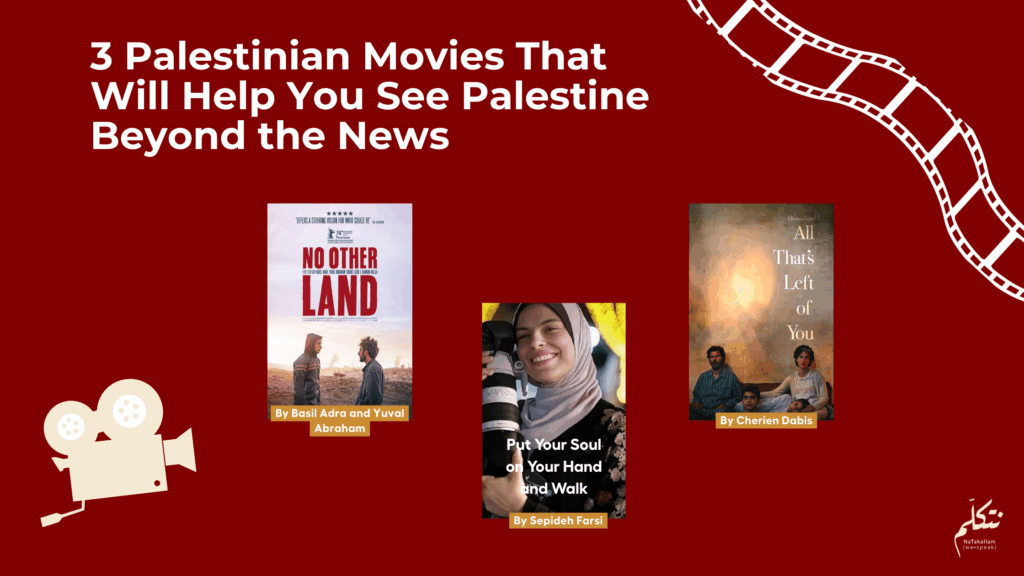
3 Palestinian Movies to Help You See Beyond the Headlines

Since the outbreak of the Gaza war, global attention has been rightfully fixed on the immense suffering unfolding across Gaza and the West Bank. But at NaTakallam, we also recognize that a place is never defined solely by its pain. Palestine is a land of deep-rooted tradition, vibrant culture, unforgettable food, and powerful art — stories that often get overshadowed by the news cycle.

With the Cannes Film Festival that happened this week — where Palestinian voices and stories were honored — we want to shift the spotlight for a moment. To center art. To celebrate resilience. To show how cinema can be used not just to tell a story, but to preserve identity, challenge narratives, and inspire connection.

Here are three Palestinian films that have made a difference — each a testament to the strength and creativity that continues to thrive even in the harshest of realities.

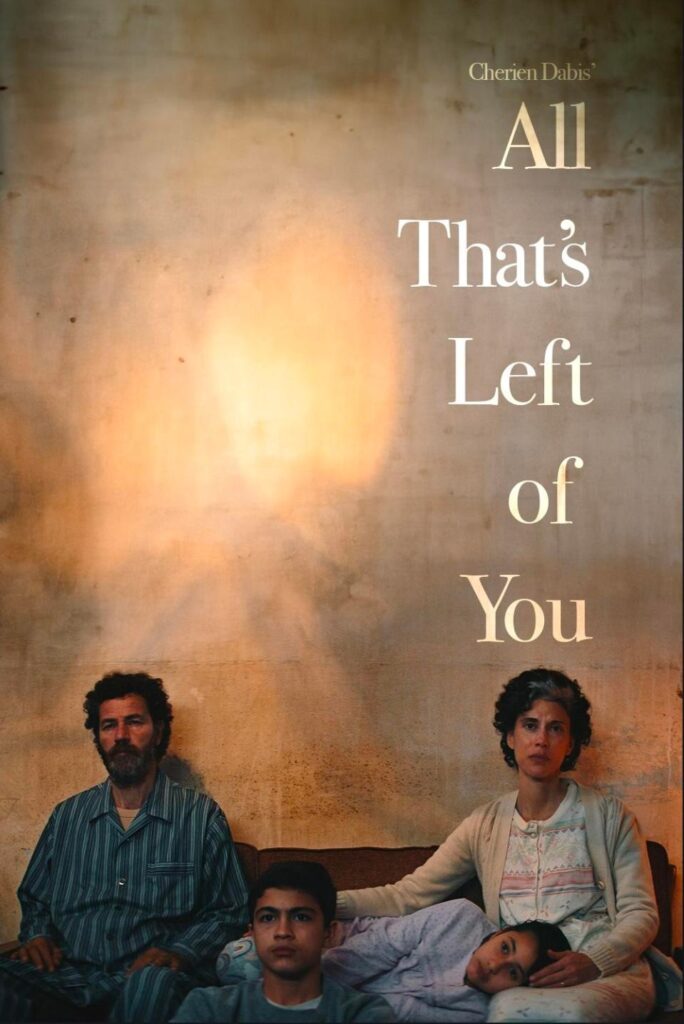
1. All That’s Left of You – Cherien Dabis

Directed by Palestinian-American filmmaker Cherien Dabis, All That’s Left of You is a sweeping intergenerational drama that spans 75 years of Palestinian history — from the Nakba in 1948 to the First Intifada and beyond. The film centers on Noor, a teenager in Nablus, and traces his family’s experiences of displacement, resistance, and resilience. Dabis, known for her earlier works like Amreeka, both directs and stars in the film, which premiered at the 2025 Sundance Film Festival.

Who holds the rights? Cherien Dabis, in collaboration with producers Thanassis Karathanos, Martin Hampel, and Karim Amer.
Where to watch? The film premiered at the 2025 Sundance Film Festival and is currently seeking distribution. Follow the official film page here for upcoming screenings and eventual digital release dates.

2. Put Your Soul on Your Hand and Walk – Sepideh Farsi

Premiering at this year’s Cannes Film Festival, this short film honors Fatouma Hassouna, a Palestinian filmmaker and photojournalist who was killed during Israel’s attacks on Gaza. Directed by Iranian filmmaker Sepideh Farsi, it’s a tribute to the life, courage, and creativity of one woman — and by extension, so many others whose stories are being silenced.

Who holds the rights? Sepideh Farsi and her production team, in collaboration with the Cannes Festival’s tribute program.
Where to watch? After Cannes in May 2025, the film will likely be available at select festivals and cultural events focusing on Middle Eastern cinema. Keep an eye on Cannes official news for updates.

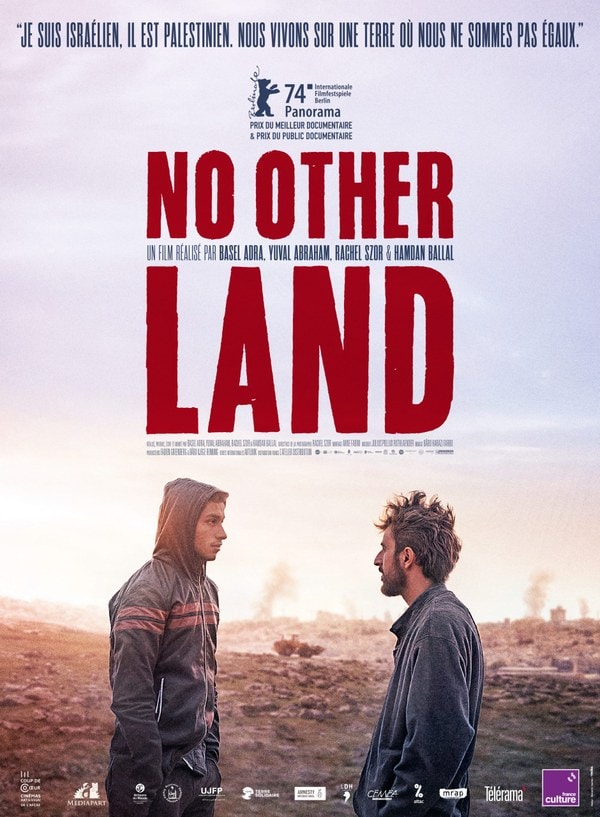
3. No Other LandBasel Adra, Yuval Abraham, Rachel Szor & Hamdan Ballal

This documentary, co-directed by Palestinian and Israeli filmmakers, showcases the forced displacement of families in Masafer Yatta in the West Bank. It’s raw, personal, and tells the story from the inside — through the eyes of Palestinian Basel Adra, who’s been documenting his community being torn down. The film just won the Panorama Audience Award at Berlinale and is gaining global attention, with an eye on the Oscars.

Who holds the rights? Rights are managed by the filmmakers, with support from the Berlinale Panorama section and associated partners.
Where to watch? No Other Land is currently screening at international festivals. Wider release announcements are expected soon — check their official Instagram for updates and future streaming options.

These films aren’t just stories — they’re acts of preservation. They remind us that even under occupation, even in exile, culture keeps breathing.

At NaTakallam, we see that every day in our Language Sessions. They’re not just about grammar or vocabulary — our interactive classes are spaces where you can talk about everything from food and film to daily life and history, directly with people from Palestine and beyond.

It’s one thing to watch a film. It’s another to talk about it with someone who lives that reality. Through language, we open the door to deeper understanding — and to honoring stories that deserve to be heard.

ABOUT THE AUTHOR: Zeina Abou Taha is an intern at NaTakallam, currently transitioning from a career in IT consulting into journalism. With an academic background in Entrepreneurship & Innovation and a passion about exploring the world, Zeina spends her free time traveling, connecting with people from diverse cultures, and writing for her personal blog.

3 Palestinian Movies to Help You See Beyond the Headlines Read More »

Graphic with bold text reading “Refugee Misconceptions” over a torn paper design in red and white. NaTakallam’s logo appears in the top left corner.

Breaking Through Media Bias: The Truth About Refugees and Deportation

“We are facing the biggest global migration crisis of our time, and the current global resettlement and humanitarian systems are broken.”

These words from Aline Sara, CEO and co-founder of NaTakallam, reflect a troubling truth. In just over a decade, the global refugee population has tripled. Today, 1 in every 69 people worldwide is forcibly displaced.

But becoming a refugee is not a choice. It’s a last resort.

Leaving your home, your family, your memories behind – often with little more than a bag and a name – is never an easy decision. Yet, refugees are often reduced to numbers and treated as liabilities, stripped of their stories and humanity.

At NaTakallam, we believe in telling a different story. One that centers dignity, potential, and shared humanity.

This article addresses two prevalent media biases and offers facts, context, and lived experiences to challenge these misconceptions. Because shifting the narrative doesn’t just help refugees – it helps build stronger, more empathetic societies for all.

Media Bias #1: “Refugees are a burden to society.”

What we say: Refugees and displaced individuals are not only human beings worthy of dignity and respect, but also active contributors to our societies – bringing skills, knowledge, languages, and cultures that enrich our communities.

Too often, media and political discourse dehumanize refugees, portraying them as threats or burdens. But research shows that the real problem is perception, not reality.

Between 2005-2019 alone, refugees in the U.S. have contributed more in taxes than they received in public assistanceamounting to a net fiscal benefit of over $120 billion.

Yet more than half of the 36.4 million refugees registered by UNHCR in 2023 live in countries that restrict access to legal work. This is a missed opportunity, especially at a time when labor shortages are hitting many economies hard. 

Mainstream media often fails to highlight refugees’ positive impact or amplify their voices – instead, it reinforces dominant narratives rooted in fear and misinformation. For instance, a study by Columbia University analyzing refugee-related media coverage found a strong focus on perceived threats, whether to cultural identity or national security.

This skewed portrayal drives division and populism: In fact, the strongest support for anti-immigration policies in countries like the USA and across Europe often comes from areas with the least contact with refugees. The less we know, the easier it is to dehumanize.

But understanding starts on a personal level. Refugees aren’t a monolith. They’re educators, builders, parents, students, and dreamers. And most of them never wanted to leave in the first place. A study highlighted by The Jordan Times, for instance, found that over 80% of surveyed Syriansa group among the largest displaced populations globally – expressed a desire to return home when it’s safe.

NaTakallam was born from this understanding in 2015. As more Syrians sought refuge in Lebanon, they faced impossible barriers to participation: no legal work, no path to inclusion. Our social enterprise offered a solution – allowing them to earn income by teaching languages and sharing their culture with learners around the world.

We’ve since worked with 850+ Language Partners from conflict-affected regions who, beyond their hardships, bring resilience, insight, and skills. They contribute meaningfully to global classrooms and companies. And they reshape perceptions every day.

We need to stop seeing refugees as a single, faceless group. Each individual brings unique experiences and strengths that can enrich our societies. And the data is clear: diverse teams perform better.

Media Bias #2: “Deportations must be executed at all costs.”

What we say: Mass deportations are neither sustainable – nor humane.

In the name of national security and economic stability, some political voices push for sweeping deportation measures. But the reality is far more complex.

Because deportations aren’t just policies on paper. They are people, pulled from their communities, from jobs they’ve held for years, from children they’ve raised. In the U.S. alone, 5.1 million American children live with at least one undocumented parent. For these families, every knock on the door can mean the start of a nightmare: a breadwinner gone, a family torn apart, a future thrown into uncertainty.

Studies show that this limbo – the fear of deportation – causes profound mental health impacts: anxiety, depression, PTSD, and self-harm, also among children.

And while the emotional cost is immeasurable, the financial one isn’t far behind. A CBS investigation estimated it would cost the country $88 billion to deport just 1 million people a year. In addition to that, around $1.7 trillion in projected GDP loss are expected due to the removal of essential workers in industries like construction, agriculture, and hospitality.

Despite these facts, the imagined security threat behind these policies has never been consistently backed by evidence. What it does create is trauma, loss, and social fragmentation. 

And the execution and effectiveness of deportations is far from functional: countries often refuse to receive returnees. Enforcement personnel lack adequate language and cultural training. Detention conditions are frequently inhumane, especially for pregnant women, LGBTQ+ individuals, and other vulnerable groups.

At NaTakallam, we see the impact of displacement every day. That’s why we launched our Refugee Voices sessionslive, online conversations that connect displaced individuals with classrooms, workplaces, and communities around the world. These sessions don’t just educate – they humanize. They replace fear with connection, and stereotypes with understanding.

Because a society without immigrants doesn’t mean more safety. It means less exchange and understanding, less innovation, and less of the humanity that makes us whole.

So, how can you support?

In a world where the protection of vulnerable people and the strength of diverse, welcoming communities can no longer be taken for granted, each of us has a role to play.

Whether it’s:

•  Welcoming newcomers into your community,
• 
Challenging media bias and misinformation,
• 
Supporting refugee-led organizations,

…every action matters.

And if you want to directly support refugee livelihoods, consider bringing NaTakallam into your classroom, office, or home. Through language learning, cultural exchange, and professional translation services, you can help create meaningful opportunities and connection.

Whether you’re interested in Arabic, Armenian, French, Kurdish, Persian, Russian, Spanish, or Ukrainian, our native-speaking Language Partners are here to guide you on your linguistic journey. Book your free trial here.

Looking for group options? Explore our Refugee Voices language learning and cultural competency sessions for your community, classroom or workplace. 

ABOUT THE AUTHOR:  Zeina Abou Taha is an intern at NaTakallam, currently transitioning from a career in IT consulting to journalism. With an academic background in entrepreneurship and innovation, and a passion for exploring the world, Zeina spends her free time traveling, connecting with people from diverse cultures, and writing for her personal blog.

Breaking Through Media Bias: The Truth About Refugees and Deportation Read More »

Three people engaged in conversation while entering a building through a glass door, with one person holding a maroon NaTakallam tote bag displaying the organization's logo and tagline 'We Speak.' The background setting is an urban street, with parked cars.

Top Ways Language Training & Cultural Exchange Boost Enterprise Growth

In today’s interconnected global economy, workplaces thrive when they integrate diverse perspectives, leverage multilingual skills, and promote cultural exchange. As companies compete internationally, initiatives like language training and cultural exchange not only enhance employees’ capabilities but also foster inclusivity, supporting broader Corporate Social Responsibility (CSR) and Diversity, Equity, and Inclusion (DEI) efforts.

NaTakallam’s programs provide organizations with the opportunity to make a broader social impact by supporting displaced individuals. By integrating cultural and language learning into workplace development, businesses can promote inclusivity and global understanding

Language Training: Empowering a Global Workforce

In a global environment, employees are often required to navigate multilingual and multicultural landscapes. Offering language training equips employees with the tools to reach their full potential, collaborate across cultures, and boost revenues. Additionally, research shows that over 70% of employees say workplace learning opportunities increase their engagement and productivity. Multilingual employees can help companies enter new markets, strengthen relationships with international clients, and improve internal communication within global teams.

NaTakallam builds customizable language training in over nine languages – including Arabic, Armenian, English, French, Kurdish, Persian, Russian, Spanish and Ukrainian – all delivered by expert instructors with native knowledge. Our language teaching integrates real-time feedback with asynchronous learning options, allowing students to study effectively at their own pace. NaTakallam’s programs also address all skill levels as well as industry-tailored content, ensuring that every team member, from sales to technical staff, receives relevant language training.

Join organizations like Ben & Jerry’s in bringing NaTakallam’s language learning to your workforce and build more globally competent teams while supporting conflict-affected communities.

Cultural Exchange: Driving Inclusion and Innovation

Cultural exchange drives innovation in the workplace by breaking down stereotypes, introducing new perspectives and cultivating competencies for problem-solving harmoniously across differences.

NaTakallam’s Refugee Voices sessions offer teams the chance to engage in meaningful dialogue with individuals who have firsthand experience of displacement and resilience. These sessions open the door to a deeper understanding of global issues, providing insights into topics such as:

      • Personal stories of life on the move and starting anew

      • How refugees are leveraging technology for humanitarian impact

      • The role of art, music, food, and poetry in preserving culture across borders

      • Career rebuilding after displacement

      • The experiences of women, girls, and gender minorities in navigating displacement

      • Unique perspectives on social justice, human rights, and refugee activism

    For companies committed to DEI and CSR goals, these cultural learning sessions offer valuable opportunities for personal and professional growth, while also contributing to social impact by directly supporting displaced communities.

    Join organizations like UNHCR and Business Council for International Understanding in bringing NaTakallam’s Refugee Voices to your workforce and build more inclusive teams while supporting displaced communities.

    Building Inclusive Teams through Global Perspectives

    Diversity, multilingualism, and cultural exchange are no longer optional; they are essential to building a successful enterprise in today’s interconnected world. As businesses increasingly operate across borders, the need for culturally competent and globally-minded teams is critical. By fostering understanding across cultures and languages, companies can strengthen collaboration, boost innovation, and improve employee engagement.

    Why Invest in Global Competence?

    Language training and cultural exchange are more than just tools for individual growth – they drive company-wide success by fostering cohesive teamwork, enhancing cross-border collaboration, and opening a world of new opportunities.

    NaTakallam’s language training and Refugee Voices sessions are designed to build inclusive, globally adept teams while supporting a mission-driven enterprise model. By equipping employees with the tools to communicate across cultures and languages, organizations position themselves to thrive in today’s global economy and achieve lasting success.

    If you are interested in exploring new linguistic and cultural opportunities for your team, whilst also making a social impact, discover the breadth of NaTakallam’s services for enterprises. Work alongside our highly qualified instructors from displaced and conflict-affected communities. Book a session today!

    ABOUT THE AUTHOR: Lenora Dsouza is an intern at NaTakallam and is currently pursuing her Masters degree in International Security at Sciences Po Paris. She is passionate about learning new cultures through travelling and language.

    Top Ways Language Training & Cultural Exchange Boost Enterprise Growth Read More »

    Language: A Critical Tool to Unlock Peace and Understanding

    Learning a new language can be daunting.

    The inevitable mistakes – mispronunciations, misunderstandings – can be embarrassing, but they signify a step toward deeper connection.

    When I lived in Lebanon and was new to Arabic, every conversation felt harder than it needed to be. I often mispronounced words or got lost when the dialogue moved beyond the few phrases I knew. Yet, something beautiful emerged. An older man who ran a nearby umbrella stand would often strike up a conversation. Despite moments of misunderstanding, we both made an effort. I spoke Arabic; he replied in English. Every day, we sat together over coffee and practiced each other’s language.

    These daily conversations didn’t just improve my Arabic—they created a connection that went beyond words. Each mistake, each shared laugh, was a step toward mutual understanding. This simple exchange revealed a deeper truth: language is not just about communication. It’s a bridge that connects people, cultures, and perspectives, allowing us to break down barriers and foster empathy. And in the larger context of global peacebuilding, these connections become even more vital.

    The Role of Language in Peacebuilding

    Language is how we communicate; how we share our thoughts, ideas, and feelings. In peacebuilding, clear communication is key to resolving conflicts. The United Nations has long recognized this, as in their 1999 ‘Declaration and Programme for Action on a Culture of Peace’ which affirms peace “not only is the absence of conflict, but also requires a positive, dynamic participatory process where dialogue is encouraged and conflicts are solved in a spirit of mutual understanding and cooperation.”

    This idea expanded in the 2015 HIPPO Report, which highlights the needs for strategic communication to build trust in peacebuilding and peacekeeping. It’s about more than just communication; it’s about understanding the other side – literally and figuratively. 

    Learning to speak someone else’s language is an act of empathy and shows a willingness to connect with “the other,” which is the essence of peacebuilding.

    In conflict resolution, this can be incredibly powerful. Take international diplomacy as an example. Multilingual diplomats often have a greater capacity to negotiate and build relationships across divisions because they can communicate in the native languages of their counterparts. 

    For example, Nelson Mandela’s knowledge of Afrikaans, the language of the ruling white minority during apartheid in South Africa, helped him engage with the Afrikaner community. His ability to speak Afrikaans (in addition to his mother tongue Xhosa and English) enabled him to establish a rapport with those who were initially resistant to his leadership. Mandela’s linguistic versatility helped bridge the deep racial divide in South Africa. His approach showed the importance of language in reconciliation and peacebuilding.

    When we learn another language, we are not just memorizing vocabulary or grammar rules, we are gaining insight into their worldview, culture, and experiences.

    "If you talk to a man in a language he understands, that goes to his head. If you talk to him in his language, that goes to his heart."

    When we learn another language, we are not just memorizing vocabulary or grammar rules, we are gaining insight into their worldview, culture, and experiences.

    Breaking Down Barriers With Dialogue

    Language learning is about more than just words or clear communication—it’s deeply connected to culture, identity, and perspective, all of which are embedded in the structure of language itself. By learning a language, we gain insights into these elements, which fosters peacebuilding, mutual understanding, respect, and an appreciation for diverse ways of thinking and seeing the world. Thoughtful communication can heal, acknowledge suffering, and affirm dignity.

    Dialogue facilitated in a shared language or through translation helps to break down barriers of misunderstanding. By bridging language gaps, multilingualism helps break down barriers that can lead to exclusion or miscommunication, ensuring that everyone’s voice is heard and reducing the risk of misunderstandings that could escalate into conflict.

    At the grassroots level, language exchange initiatives have become tools of reconciliation. NaTakallam connects displaced persons with language learners across the globe, showcasing how language can foster mutual understanding. When people from different backgrounds and countries engage in conversation, they humanize each other. This simple act of learning and sharing creates bonds that can dissolve stereotypes and build a culture of peace and justice, one word at a time.

    Partnering with NaTakallam is not only an investment in language education but also in global peacebuilding. By providing platforms for displaced persons to share their knowledge and stories, these programs foster cultural exchange, empathy, and the kind of mutual respect that is essential for building a more peaceful world.

    Language as a Bridge Through Education​

    Educating individuals in multiple languages contributes to long-term peacebuilding, and NaTakallam’s programs are a testament to that. By connecting students to conflict-affected individuals, NaTakallam integrates language learning with refugee experiences, fostering meaningful dialogue across borders that promotes understanding and collaboration.

    As one Arabic student from the University of Georgia noted after participating in a NaTakallam program:

    For so long I thought there was a huge difference between us and them...I wonder what would have happened if I had gone on with the same ideas. Would I have lived my life hating other people? Would I have built up so much hatred that I would have retaliated or attacked one of these groups? If people would just sit down and talk, they would realize how misled they've been. Speaking with and getting to know my Language Partner has been an absolute privilege.

    Bridging Divides and Fostering Global Understanding

    Language is more than just a tool for communication – it’s a powerful medium for peacebuilding. Whether through simple language exchanges in the street, like my daily conversations at the umbrella stand in Lebanon, or through multilingual diplomacy at the highest levels, language opens the door to understanding, empathy, and reconciliation.

    In a world of growing divisions, organisations like NaTakallam remind us that fostering human connection through language can help break down barriers. By learning to communicate across cultures, we create spaces for mutual respect and deeper understanding. Together, we can build a more empathetic, inclusive world where every person’s skills and stories are valued.

    Harness the power of language with NaTakallam’s diverse services. Whether you’re interested in academic programs, 1-on-1 sessions, translation and interpretation, or Refugee Voices, explore our solutions and see how we can help you build a more inclusive and connected world.

    ABOUT THE AUTHOR: Lenora Dsouza is an intern at NaTakallam and is currently pursuing her Masters degree in International Security at Sciences Po Paris. She is passionate about learning new cultures through travelling and language.

    Language: A Critical Tool to Unlock Peace and Understanding Read More »

    loading gif

    Available Coupon

    X