Make Language Access Seamless
Partner with Natakallam to deliver expert, culturally informed interpreting – without the logistical headaches.
In an interconnected world, effective communication across languages is no longer optional – it is operationally essential. For international organizations engaged in humanitarian response, diplomacy, development, academia, and global convenings, interpreters do far more than transfer words from one language to another.
Work with Natakallam’s Global Majority Interpreters
Set the standard for inclusive, high-quality multilingual events.
Why High-Quality Interpretation Matters for Your Organization
In international humanitarian, diplomatic, and development work, communication is not just about words – it’s about trust, clarity, and inclusion.
Misunderstandings can have serious consequences: broken negotiations, compromised safety, and diminished access to critical services. A 2025 Scoping Review found that displaced populations lose access to healthcare and justice when organizations fail to provide professional interpretation.
High-quality interpretation is an operational and ethical necessity. By investing in professional interpreters, your organization ensures meetings, briefings, and negotiations proceed smoothly and safely, while upholding the highest standards of professionalism.

Preparation is Non-Negotiable
The best outcomes start long before the first word is spoken. Providing interpreters with agendas, reference materials, and glossaries at least three days in advance improves accuracy and efficiency.
Why it matters:
- Reduces errors during live sessions
- Helps interpreters manage cognitive load
- Ensures consistency in technical and sector-specific language
For example, humanitarian organizations rely heavily on acronyms like IDP (Internally Displaced Person), WASH (Water, Sanitation, Hygiene), and GBV (Gender-Based Violence). Unexplained terms create obstacles. Developing a shared Interpreter’s Guide to NGO Terminology ensures your message is accurately conveyed every time.
Respect Interpreter Wellbeing and Working Conditions
Interpreting is cognitively demanding, especially in high-stakes contexts. Cutting corners to save costs ultimately harms the quality of your interpretation. Ethical practices – such as fair compensation and ISO-standard compliant working conditions – protect both your interpreters and your organization.
Best practices include:
- Rotating interpreters every 15–20 minutes in simultaneous interpretation sessions
- Providing multiple interpreters per language for long events
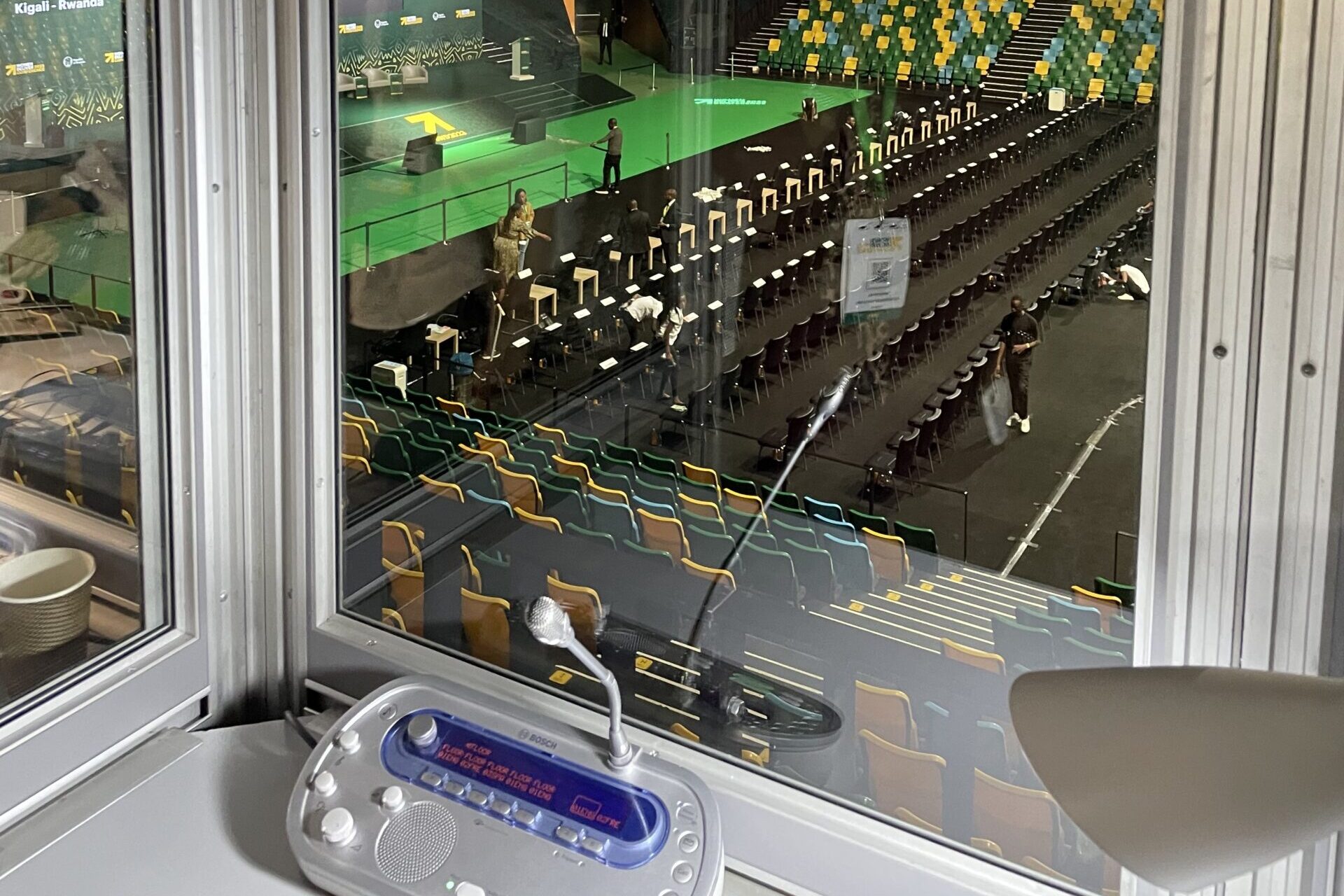
- Supplying appropriate equipment (booths, FM or infrared receivers) for secure on-site or virtual meetings
- Supporting interpreters with trauma-sensitive training for conflict or crisis-related topics
By prioritizing wellbeing, you reduce fatigue, errors, and stress while fostering a professional environment that enhances collaboration.
Treat Interpreters as Part of Your Team
Interpreters are more than service providers – they are cultural mediators who bridge not only language but context, nuance, and emotion. Including interpreters in pre-event briefings and post-event debriefs builds trust and improves results.
Key considerations:
- Maintain confidentiality with NDAs and consent for recordings
- Include interpreters in discussions of cultural and sector sensitivities
- Recognize the value of their feedback to continuously improve the process
Speak Clearly and Collaborate Effectively
Your delivery directly impacts interpreter performance. Clear, paced speech and prepared materials improve comprehension, particularly in remote or hybrid environments. Small adjustments – avoiding overlaps, using concise phrasing, and sharing materials in advance – enhance accuracy and inclusivity.
Interpreters also facilitate cultural mediation, ensuring your message is not only heard but understood in the appropriate cultural context.
Continuous Feedback and Long-Term Collaboration
High-quality interpretation doesn’t end when the event is over – it thrives on continuous learning and feedback. Organizations that implement structured feedback systems can track:
- Terminology usage and glossary effectiveness
- Technical challenges and equipment performance
- Interpreter team coordination and efficiency
Regular evaluations help maintain smooth operations for online, hybrid, and in-person meetings, ensuring every future event runs more reliably and accurately. Organizations that invest in long-term partnerships with interpreters benefit from consistent results, institutional knowledge, and improved operational efficiency.
Interpretation is not just a service – it is a critical system for equity and inclusion. Without proper language access, social and political processes can break down, leaving participants unheard or misrepresented. Professional interpreters act as cultural mediators, ensuring that every message is accurately conveyed and culturally appropriate. Organizations that respect and invest in interpreters achieve full, respectful voice representation for all participants, creating trust and credibility across languages and borders.
Need tailored interpretation support for your next event?
Explore our Translation & Interpretation FAQs for details on service levels, languages, and delivery timelines. Our team provides personalized guidance to ensure your event’s communication is seamless, secure, and impactful.
Asma Siddiqui
Asma Siddiqui is a copywriting intern at Natakallam with a background in dentistry, gradually transitioning from healthcare into the world of storytelling and strategy. With a deep interest in language, culture, and meaningful communication, she explores how words can shape understanding across communities. When Asma’s not working, you’ll likely find her planning a trip, trying new food, or reflecting through spontaneous writing.