Getting Started with Language Learning

The Rosetta Stone: Unlocking the Secrets of Ancient Egypt

Dive into etymology, history, and more with a NaTakallam language partner

Start learning for FREE!

Discover how a 2000-year-old granite slab in the Egyptian desert opened the world of ancient Egypt to us –and learn how to read a bit of the stélé yourself.

Start learning with a NaTakallam Language Partner in Arabic, Armenian, English, French, Kurdish, Persian, Russian, Spanish or Ukrainian!

Book your 1-on-1 session to start your multilingual journey today.

A Testament in Stone

In 1799, a French soldier digging fortifications near the Egyptian town of Rashid (known by the French as Rosetta) pulled a dark granite stélé from the rubble. Although many stélé had been found, this one was different because it was a bilingual, Egyptian-Greek inscription written in three scripts: Hieroglyphics, Demotic Egyptian, and Greek. 

The Rosetta Stone

Consequently, it proved to be the key to three thousand years of untranslated Egyptian civilization, unlocking the meaning of the Egyptian hieroglyphs. From texts like the Egyptian Book of the Dead to numerous temple inscriptions, the Rosetta Stone was the key to understanding all of them. In addition, the archaeological work that resulted from this text still continues to form the basis of modern Egyptology, with far-reaching ramifications in the fields of history and linguistics.  

It should be noted that for all its fame, the text of the Rosetta Stone was just a government memo: Carved in 196 BCE during the reign of Ptolemy V, it records a priestly decree granting tax exemptions and honors to the king. That is, it’s the ancient world’s equivalent of an official press release. However, what made it a crucial find was that the same text was written in three different scripts, providing a means of decoding the then-lost meaning of Egyptian hieroglyphs. 

Hieroglyphs were the royal, priestly script found in temple walls and royal inscriptions. Note that the terms “hieroglyphs” and “hieroglyphics” are used interchangeably, but generally, hieroglyphics refer to the writing system at large, whereas hieroglyphs refer to the actual symbols used. 

Demotic was the cursive Egyptian script used in everyday handwritten documents, from marketplace transactions to legal documents. Its predecessor was Hieratic, famously used in the Egyptian Book of the Dead

Lastly, the transcription in Ancient Greek reflected the political power ruling Egypt at the time, the Ptolemaic dynasty.

Here’s a summary tracing the stélé’s origins in Memphis to its current housing in the British Museum:

Timeline of the Stélé

196 BCE The stone is carved at Memphis, Egypt, during the reign of Ptolemy V Epiphanes. It is a copy of a decree issued by Egyptian priests who supported the Ptolemaic dynasty. There have been three other nearly identical stelae found since the initial discovery in 1799.
1799 The stone was rediscovered at Rashid (Rosetta), when French soldiers under Napoleon's Egyptian campaign excavated the stone from ancient fort walls near the Nile Delta. Officer Pierre-François Bouchard recognizes its significance.
1801 The British seize the stone after defeating Napoleon's forces. Under the Treaty of Alexandria, it is transferred to London, where it has remained in the British Museum ever since.
1822 Jean-François Champollion cracks the code, working from the Greek text as a guide, and building on earlier work by Thomas Young. The French scholar fully deciphers Egyptian hieroglyphics through the Coptic he learned from the priest Youhanna Chiftichi.

Insight Born of Dedication

"Je me livre entièrement au copte. Je veux savoir l’égyptien comme mon français…"


Jean-François Champollion, the father of modern Egyptology, said in one of his letters: “I devote myself entirely to Coptic. I want to know Egyptian like my French…” The key insight Champollion had was understanding that hieroglyphics were not purely symbolic, as scholars had previously assumed. Employing his knowledge of both Greek and Coptic (the last stage of the Egyptian language), and using the Rosetta Stone as a guide, he was able to understand the hieroglyphic inscriptions.

To illustrate, let’s go through a simplified version of this process, starting with the Greek name of the monarch responsible for the stélé: 

Reading left-to-right, this reads as PTOLEMAIOS, similar to English. Then, in the Demotic part of the stele, this word below corresponds to the above Greek text. The first thing you note is that the left-most and right-most characters seem to bracket the text in between, like cartouches encircle names in hieroglyphs.

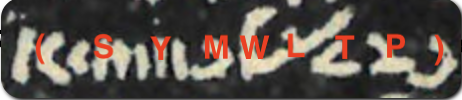
Note that in Demotic Egyptian, like in Arabic, not all vowels are written, and words are also written right-to-left. The spelling of Ptolemy can vary in Demotic, so let’s assume it’s ptlwmys. Mapping this to the text would look like: 

So this would be Ptolemy/Ptolemaios in Demotic, with the special brackets that indicate a name. Further, note that Demotic L looks like a modified version of the R character: This is because Egyptian hieroglyphs initially had no separate letter for L. Later on, they used a reclining lion l  (as seen below) to indicate the first letter of Greek ΛΕΩΝ (león). 

Through this method of assigning phonetics to characters, scholars now know that these sounds map onto hieroglyphs in this way:

Another thing to note is that hieroglyphs can be written left-to-right or right-to-left, and you can tell where to begin by following the heads of the animals depicted! In this case, the lion for L faces right, so we read right-to-left.

Connecting Past and Present

Thus, the Rosetta Stone revealed the world behind Egyptian hieroglyphs, and showed the connections between civilizations both remembered and forgotten. For instance, the Demotic Egyptian language on the stone was the direct ancestor of Coptic, a language still used liturgically by the Copts of Egypt. Because Coptic preserved the sounds of ancient Egyptian, Champollion figured out how the old hieroglyphs actually sounded by cross-referencing his work with Coptic.

A Coptic manuscript from Wadi Natrun.

And this work would not have been possible without one of the unsung heroes of this story: The priest Yuhanna Chiftichi, whose Coptic lessons made Champollion’s work possible.

With NaTakallam, you can learn Egyptian Arabic from our native language partners, and likewise open the doors into this fascinating civilization for yourself. Every session is also an act of solidarity, as many of our language partners are displaced, and by booking sessions with NaTakallam, you are supporting their livelihood.

Whether you want to trace the living echo of the ancient world through Egyptian Arabic, other Arabic dialects, French, Spanish, and more, there is a tutor waiting to help you uncover the world behind their language.

Start learning with NaTakallam!

Learn from a wide selection of languages to open up to new worlds, cultures, and histories to explore—all while making a tangible impact.

Daniel Diaz

Share this article on:
Facebook
X
Threads
A Timeline of its Discovery and Decipherment

The Rosetta Stone: Unlocking the Secrets of Ancient Egypt Read More »

What Changes When You Learn a Language From a Native Speaker

Start learning with NaTakallam!​

Learn through guided conversations with native speakers while gaining cultural insight, improving fluency, and connecting with people across borders.

Language learning doesn’t truly come alive through apps or exercises alone. It happens in conversation — in the pauses, the accents, the shared understanding between people. This piece explores how learning from native speakers transforms language from something you study into something you experience, connecting you not just to words, but to culture, stories, and real human perspectives.

Learn a language with a real human and discover the story beyond the screen.

Meet your Language Partner today. Start for Free.

You decide to learn a new language. Maybe it’s for a career opportunity. Maybe it’s to reconnect with your heritage. Maybe it’s simple curiosity.

At first, you feel motivated. You download an app. You commit to daily lessons. You tell yourself you’ll stay consistent this time.

But after a few days, the excitement fades. The exercises start to feel repetitive. You’re memorizing words, completing quizzes — yet real conversation still feels out of reach.

You’re doing everything right. So why does it feel so disconnected?

Because somewhere along the way, language learning became something to complete — instead of something to experience.

Language Learning is Treated as a Task

You’ve downloaded the most popular app. You follow the templates, the checklists, the daily lessons.

The first week is all vocabulary. The second week is grammar and short sentences. It’s structured and measurable, it should feel fun.

And yet, somehow, it doesn’t. Motivation slips quietly, and the exercises start to feel like something to complete — rather than something to live.

After a few weeks, you realize: you’re learning words, but not conversations. You’re checking boxes, but not connecting.

Why Apps and AI Can’t Teach Real Conversation

Your app helped you stay on track, learn words, and practice sentences. Your AI companion was there the whole time.

But when you speak with a native speaker, it feels different. Words slip away. Understanding their accent, fluency, and expressions is harder than you imagined.

Language is more than words. It’s tone, rhythm, and connection — the human element that technology can’t replicate.

What Happens When You Learn From A Native Speaker

When you learn with a native speaker, the language stops being a checklist. You don’t just study vocabulary or grammar — you hear how it is actually spoken.

You begin to understand the person behind the words: their culture, their daily life, the small expressions that don’t exist in textbooks.

The world that once felt distant becomes more familiar. Different places, different routines, different ways of seeing things — all through conversation.

You’re no longer only learning how to ask, “How are you?”
You’re learning what that question really means, and how it’s answered.

And slowly, the accent, the rhythm, the flow of the language start to stay with you — because they’re connected to a real human experience.

NaTakallam One-on-One Learning Session

Language as connection, not performance

Language learning is often measured through tests, timelines, and the pressure to “get it right.” But real communication doesn’t happen in perfect sentences.

When you learn with a native speaker, the focus shifts. You’re not trying to perform fluency — you’re building understanding. Not only of words, but of experiences, emotions, and perspectives.

The conversation becomes mutual. Two people meeting, listening, and sharing — each bringing their own story, their own way of seeing the world.

At NaTakallam, this is what language learning looks like. It moves beyond vocabulary lists and short exercises and becomes a lived, human exchange.

Not a race toward perfection, but a connection that exists across borders.

Learning language through people, stories, and culture

At NaTakallam, conversations take you far beyond vocabulary.

Palestinian Keffiyeh

You may learn how the black-and-white keffiyeh, once part of rural Bedouin dress, came to be understood as a symbol of Palestinian identity — not from a history book, but from someone for whom it carries personal meaning.

You might hear how the name Spain traces back to the Phoenician term I-shaphan-im, “land of rabbits,” and how that story has traveled across centuries and languages.

Spain History
La Dama de las Catedrales - The last great Gothic cathedral in Spain
olive harvesting
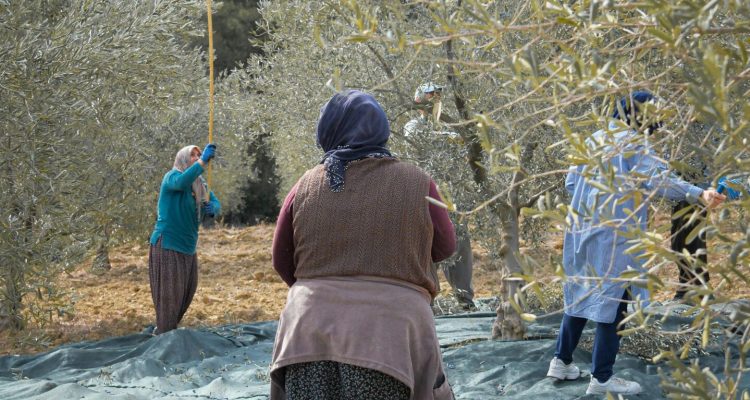
Palestinian women harvesting olives

Or you may learn why olive trees in Palestine are spoken about with such care — how they endure, regenerate, and live for generations, becoming connected to ideas of patience, survival, and dignity.

These are not just cultural facts. They are lived knowledge.

When you learn with a native speaker, language is shaped through real people — through their memories, their values, and the stories they choose to share.

You don’t only discover how they live. You begin to understand why.

The Human Purpose of Language

Long before formal classrooms or language apps existed, people still needed to understand one another. Communities traded tools, shared knowledge, and built relationships across linguistic differences. Sometimes they relied on gestures. Sometimes they created shared trade languages. And sometimes, they learned each other’s language — the most lasting form of connection.

That hasn’t changed.

Language remains one of the most powerful ways to bridge distance. When you learn how someone speaks, you begin to understand how they see the world — their references, their humor, their values, their everyday realities.

This kind of learning goes far beyond personal progress. It creates space for empathy. It brings cultures closer. It turns communication into a human relationship rather than a transaction.

The NaTakallam Approach to Language Learning

At NaTakallam, every lesson is also an exchange. As you learn a new language, you are meeting someone with their own story, their own experience, and their own knowledge to share. The impact moves in both directions.

Language learning becomes more than a goal to achieve.
It becomes a lived experience — one that connects people across borders in a deeply human way.

Start Learning a New Language With a Native Speaker on NaTakallam

Book a session with one of our native language partners and experience what language learning feels like in real conversation. Move beyond apps and exercises, and start connecting through stories, culture, and lived experience with a one-on-one conversation.

Asma Siddiqui

Asma Siddiqui is a copywriting intern at Natakallam with a background in dentistry, gradually transitioning from healthcare into the world of storytelling and strategy. With a deep interest in language, culture, and meaningful communication, she explores how words can shape understanding across communities. When Asma’s not working, you’ll likely find her planning a trip, trying new food, or reflecting through spontaneous writing.

Share this article on:
Facebook
X
Threads

What Changes When You Learn a Language From a Native Speaker Read More »

Love Through the Lens of Arab Culture

Start learning with NaTakallam!​

Unlock the beauty of language and culture with a NaTakallam Language Partner.

Arabic Language Partner, Varty, uses the beauty of Arabic poetry to unpack the ideas central to Love in the Arab world.

Interested in diving deeper into language and culture with a Language Partner?

Learn with NaTakallam. 

Have you ever heard of a "loving ear" or a "dove wearing a ring"?

In the tradition of the Arabian Nights of One Thousand and One Nights, we have a short story for you on the occasion of Valentine’s Day – celebrated around the world.

As Valentine soon will knock at our doors, (valentine 3al-ebwab فالنتاين عالأبواب) I would like to tackle the Love concept in the Arab world, through Arabic poems and culture. 

Unfortunately it is a common misconception that Love in the Arab world is prohibited. That Arabs are not allowed to talk about love, show love, have lovers. 

We often hear the phrase, “Love doesn’t have a language” because feelings are a part of human being. But I know well… even pets and animals have feelings. Therefore it is a common thing that people also feel and show love. But how we show love may vary from one culture to another and from one person to another.

The Age of Ignorance: a Misnomer

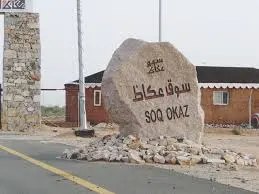
Souq 'ukaz / Okaz was known for its annual fair and poetry contest in pre-Islamic times.

In the tribal era before Islam, as some call it “ 3aSr al Jahiliyah” (Age of Ignorance) but it was never ignorance that characterized this age. Indeed, trade and civilization was advanced in some Arab countries, in addition to poetry. Examples of “ al mou3alaqat” (publications or “hang-ups”) of the best poetry pieces in “Souq ‘ukaz” (the market) were common; here even some female poets were mentioned.

Some of these poems were about the love of the tribe, wars, victories, and very concept of love itself. You may have even heard of Imru’ al Qays – given the title “the King of Poets”.

Lovers, Flirtation & Poetic Influence

Later during the Umayyad era, Umar Ibn Abi Rabia rose to prominence, known for his “Ghazal”(flirtation) poetry.

One of his famous lines is:

قتلننا ثم لم يحيينَ قتلانا

qatalnana thoumma lam youHyina Qatlana

إن العيون التي في طرفها حورٌ

Inn al 3iyoun alti fi tarfiha Hawaraon

"The eyes that are wide and dark killed us, then they didn't revive us."

Other poet names were more obvious in their connection as lovers, such as “Jamil Buthayna” (Jamil, the poet and Buthayna: his lover’s name). Or, “Majnun Layla” (Majnun: Crazy because he was madly in love with Layla). Some of those love poets’ destinies can compete Shakespeare’s Romeo & Juliet in their misery, tragedy and unending quest for love.

Jamil's forced separation from Buthaynah, and his famous refusal to love anyone else, were the template for the fictional career of Majnun Layla and countless tales of lovers that came after.

In the Abbasid era too, although it was considered to be the most strict era of the Arabic Islamic time, we can observe the themes of love as a constant in the poetry of the times – such as Bashar Ibn Burd, great work (and perhaps one of the most romantic poems of all time:

Oh people, my ear has fallen in love with someone.

Sometimes the ear falls in love earlier than the eyes.

Ya Qomou ouzouni li-ba3d el Hayyi asheqaton.

Wal ouzounou ta3shaq qabla al3eini aHyanan.

We can understand this love better when we know that the poet had some vision problems. This is why he said that he fell in love with the charming voice of the lady, before even his eyes fell on her.

Love in action: from definition, to feminism, homeland to politics

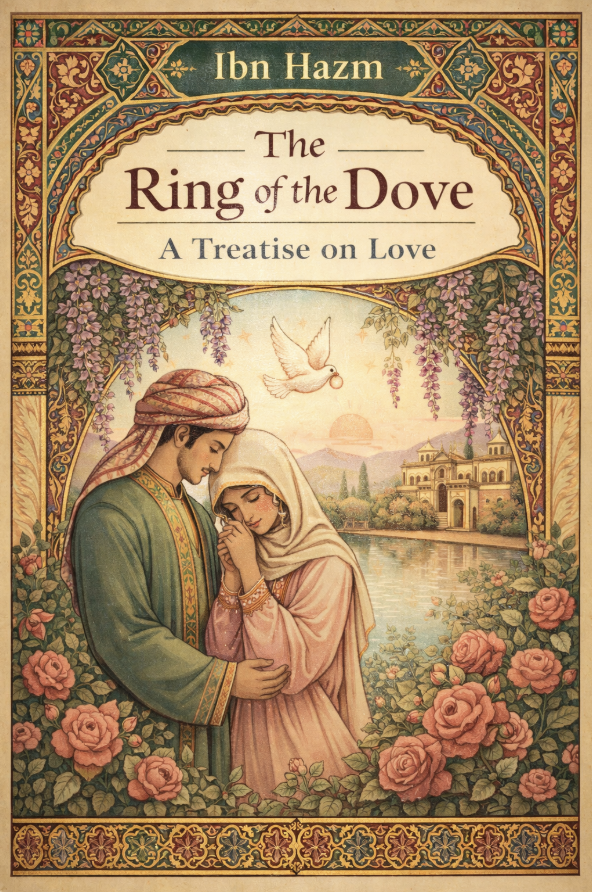
Around this time and in far Andalus, Ibn Hazm wrote the famous love and relations Arabic book “Tawq al Hamamah fil al-oulfi wa al-oullaf (The Ring of Dove) around 1022-1028 CE. In this book, you can find 8 main chapters that the author calls “babs” (doors) starting by the definition of love, passing through the stages of love, the methods of expressing love and concluding by reflection and philosophical insights on love

On the other hand, the modern era has produced poets, but perhaps the most famous was Nizar Qabbani, the Syrian poet who had poems about politics, feminism, homeland and love. The simple style he uses attracted many musicians to add melodies to the poems and sing them too.

You love
Oh you with fathomeless eyes,
Is extreme,
Mystic,
Holy.
You love, like birth and death,
Is impossible to repeat.

حُبّكِ …يا عميقة العينين
تطرفٌ
تصوفٌ
عبادة.
حُبُّكِ، مثل الموتِ و الولادة
صعبُ بأن يُعادَ مرتين…

Another poet worth looking into the the literary quest toward love is Adonis, and his work, “ If Only the Sea Could Sleep”.

Once I sang: every rose
As it tires, is her name
As it journeys, is her name
Did the road end, has her name changed?

The list goes on of poets who wrote about love – with many put to music and song – including Mahmoud Darwish, Badr Shaker al Sayyab, Fadua Tuqan, and others.

With poetic icons like these embedded into the Arabic literary tradition, it’s no wonder you can find many words for “Love” and its levels in the Arabic language.

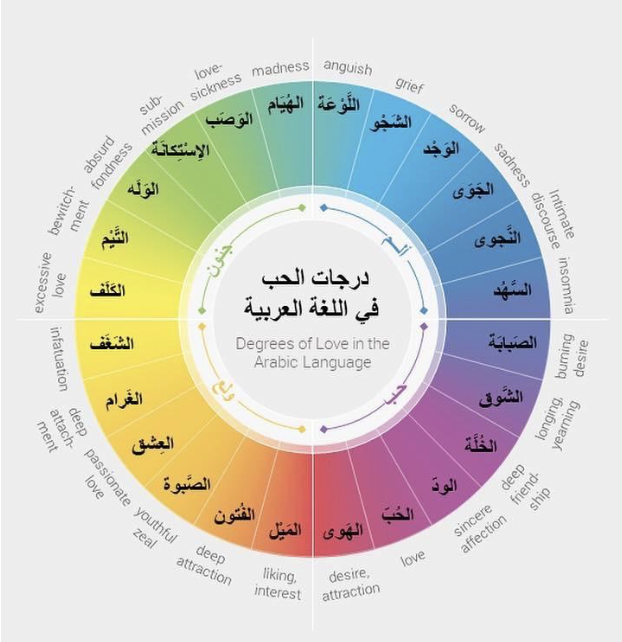
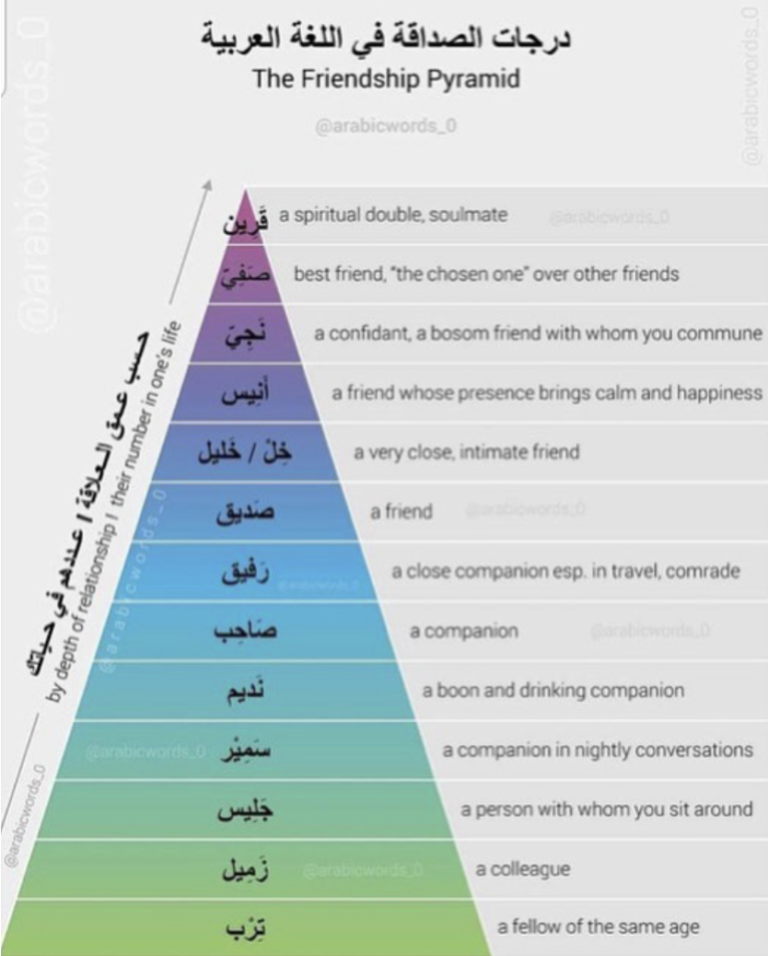
Beyond love in its “Hallmark card” sense, in Arabic, we have many words for the word friend. From a relation that can start as a usual friend to evolve to the relationship where this friend can become a lover. Here are the words used for different types of friends:

The Arab world hasn’t historically celebrated St. Valentine, as obvious from its name, but in the last century as the world becomes more interconnected many celebrate it.

Our world may not have this patron saint, Romeo and Julliet, or Shelley, but we have those who put our vision of love to lyric: Qays and Lubna, Majnoun Layla, Antarah and Abla, and many others.

Wishing you a wonderful moment filled of love – in whatever language and form most speaks to you. 

إلى أن يلتقي القدر بنا

(until fate brings us together),

Varty

Start learning with NaTakallam!

Lorem ipsum dolor sit amet, consectetur adipiscing elit. Ut elit tellus, luctus nec ullamcorper mattis, pulvinar dapibus leo.

Varty

Varty is an Armenian Syrian from Aleppo – and her name means "Rose" in both languages! She has an extensive background in teaching Arabic in Syria and holds a Bachelor’s degree in English Literature. Varty has also worked as a translator and interpreter for over fourteen years.

Share this article on:
Facebook
X
Threads

Love Through the Lens of Arab Culture Read More »

Discover NaTakallam’s New Features: Smarter Language Learning

Start learning with NaTakallam!​

Learning with NaTakallam is easier than ever on our new platform. Check it out and start with a free trial today!

Learning languages just got easier! Our Natakallam platform now offers more flexibility, smoother navigation, and new ways to connect with native speakers – all designed to help you practice and grow confidently.

Ready to explore? Start learning with Natakallam today →

Start my journey.

Let’s deep dive into all the features you can now access as a NaTakallam learner on our new platform:

1. Intuitive Dashboard

The moment you log in, your dashboard gives you a clear overview of your progress, upcoming sessions, and recommended activities. It’s your command center for personalized language learning.

2. Smart Notifications – Stay On Track

Never miss a lesson or conversation! Custom alerts remind you about scheduled conversations with tutors and upcoming learning goals – so you stay motivated and consistent.

3. Language Customization

Learn more than one language and broaden your horizons! Depending on your bundle, you can add new languages. Explore Arabic, French, Spanish or any of our 9+ languages in one account and take your skills to the next level.

4. Auto-Matching & Multiple Language Partner Scheduling

NaTakallam’s strength is in our human approach. Now, we’ve made the experience even more seamless to help ensure you get the most out of your learning. Easily schedule sessions with different native speakers. Our auto-matching helps you find the best partner for your level and goals.

5. Easy Resource Library Access

Explore articles, vocabulary lists, and practice materials right within the platform. Everything you need to support your learning journey is at your fingertips.

6. Recurring Sessions

Book multiple sessions at once or set up recurring lessons. Build a consistent routine and make real progress over time.

7. Reschedule or Cancel Anytime

Life can be unpredictable – now you can reschedule or cancel your sessions up to 24 hours in advance. Keep your learning on track without the stress.

8. Mobile-Optimized Learning

Learn anytime, anywhere – on iOS or Android. Practice on the go without missing a beat.

9. Security & Privacy

Your data is safe with us. End-to-end encryption and full control over your profile make learning online worry-free.

10. And More!

We’re constantly updating Natakallam to better serve teams, educators, and learners with new features and improvements.

With these features, the Natakallam platform elevates your language learning experience – making it more intuitive, interactive, and effective. Whether you’re practicing Arabic, French, or another language, every tool is built with your success in mind.

Start Exploring Today!

Start learning with NaTakallam!

Ready to unlock your potential? Get started learning with us in 9+ languages: Arabic, Armenian, English, French, Kurdish, Persian, Russian, Spanish or Ukrainian

Share this article on:
Facebook
X
Threads

Discover NaTakallam’s New Features: Smarter Language Learning Read More »

Image showing a young woman smiling while taking an online language lesson with NaTakallam on her laptop, with text overlay: "A Different Kind of Duo: Meet our tutors and students."

How Learning a New Language Builds Community Across Cultures

Start learning with NaTakallam!​

Choose from our 9+ languages: Arabic Spanish, Persian, Armenian, Kurdish, and more – taught by displaced tutors worldwide.

Start your learning journey with a free trial.

Behind every NaTakallam lesson is a powerful story of connection. Meet the Language Partners (and their students) bringing learning – and impact – to life!

Behind every NaTakallam session is a story, a connection, and a chance to make a real impact.

 Join a global community. Start a conversation today with a free trial session.

A Different Kind of Duo: Meet Our Language Partners

In an age when social media and the internet promise to connect us all, many of us – whether refugees, displaced individuals or more privileged ones in stable homes – feel more isolated than ever. Displacement, conflict and misunderstanding leave the world fragmented. 

A 2023 study on the relationship between language learning and empathy argues that learning another language is crucial in building empathy and “acquiring another person’s perspective”, especially in intercultural communications. Learning remains one of the most helpful tools – not just to pick up a new language, but to stand against dehumanization and “othering” of those with different languages, cultural contexts or backgrounds than what is familiar.

For many learner-tutor duos at NaTakallam, language sessions have turned into much more than a grammar or vocabulary lesson. Each session is an opportunity to connect beyond cultural, linguistic and personal differences, and discover what they share. Together they learn from one another while directly contributing to the improvement of the tutors’ livelihoods – proving that empathy through language learning can improve intercultural understanding and create a meaningful impact at the same time. 

By connecting through NaTakallam, learners and their tutors have built friendships, identified commonalities and differences through culture and turned language into a tool of resilience.

Join a community of connection, one conversation at a time and book a free trial session today.

Pick from any of our 9+ languages and dialects and book a FREE trial!

From Conversation to Friendship: Shahd & Kari

Profile photo of Shahd smiling, on a solid dark green background.

Shahd has been a Language Partner with NaTakallam for more than 3 years. She fled the Gaza strip for Egypt early 2024 along with her mother and some of her siblings, thanks in part to fundraising initiatives from her NaTakallam students. Through a scholarship, she was able to move to the U.S. to pursue a joint degree in Human Rights and Written Arts.

She finds education to be a tool to navigate ongoing challenges. Having studied English literature and education methods, she believes her writing ensures that the voices of marginalized and displaced individuals are being heard. Her academic experience reinforces her commitment to human rights and cross-cultural understanding. 

As a Language Partner, she tailors her lessons based on her students’ needs by using a combination of visual aids, fun activities and cultural discussions to make each session enjoyable and impactful. Her professionalism enabled her and her students to become a trusting community.

Her connection to her students goes beyond teaching. Shahd claims her students have challenged her, taught her and helped her grow. NaTakallam has become more than work, it has turned into a community. 

Kari initially booked NaTakallam lessons with Shahd to “practice more conversational Arabic to be able to speak to my aunts and uncles”. What she found went beyond conversation. Over time, they became friends and built trust. This eventually resulted in Kari initiating the GoFundMe campaign that enabled Shahd Safi to flee from Gaza. The fundraising was made possible by the students who knew and trusted her.

For both Shahd and Kari, what started as a simple language lesson has become something much more impactful: a powerful bridge of understanding and support. 

Their language sessions at NaTakallam have exceeded the purpose of learning and teaching to become a true, human experience, making meaningful connections along the way.

Start a conversation, find a friend.

Book a FREE trial today!

Finding Connection through Culture: Pavel, Anna & Graham

Profile photo of Pavel smiling, on a solid dark green background.

Anna and Graham both meet with Pavel on a weekly basis to brush up on their Spanish skills. 

Anna declares “I really love my sessions with Pavel. It’s so amazing to me that I can actually have a conversation in Spanish”.

Pavel rejoices in these victories.

Having fled political turmoil in Venezuela, Pavel reconstructed his life in La Plata, Argentina. Since he became a Language Partner at NaTakallam, he built his sessions around empathy, personal connections and helping the students through patience and cultural exchange. He believes this kind of approach “will change your view about how a language can be learned”.

Graham finds Pavel very responsive to his needs and extremely knowledgeable. Beyond Pavel’s professionalism, Graham also praises his open-mindedness and his great sense of humor. 

The many hardships Pavel has overcome as a refugee with a disability – from being unable to complete his degree in Modern Languages and Psychology, to rebuilding an entirely new life in an unfamiliar place – serve as the foundation for his love for teaching and the many stories he has to share. His experiences also highlight how intersecting factors – such as disability, forced displacement, and cultural adaptation – can amplify challenges, shaping the resilience and perspectives of individuals around the world.

One of Pavel’s favorite aspects of teaching at NaTakallam is getting to share the “real aspects” of his culture, not what the news or the books say, but the real, authentic stories of lived experiences.

Learn about the real nuances of Spanish, Arabic, or Persian cultures with one of NaTakallam’s Language Partners.

Pick from any of our 9+ languages and dialects and book a FREE trial!

Language as Resilience: Leila & Meg

Profile photo of Leila smiling, on a solid blue background.

Leila joined NaTakallam to make up for her difficulty to find employment in Iran despite her extensive academic career. An accomplished scholar, she obtained her university degrees and PhD in archeology from Tehran University, and later completed an additional degree at Berlin University.

As an outspoken woman, her experience has not always been smooth which made her value education and its power even more. She is committed to making a difference in her students’ lives. She believes education to be a means of fostering resilience and hope. This approach has led her to work with marginalized communities and young students. 

An advocate for change, equality, and education, she personalizes each session to her students’ needs. Through games, conversation, and interactive exercises she wants to connect her students to the broader world and shared experiences.  

“Teaching is not just about sharing knowledge, it’s about connecting hearts and minds across cultures”. –  Leila

Leila claims engagement is a “two-way street”. She particularly enjoyed teaching Meg, a dedicated Farsi student. For them, NaTakallam provides the platform to bring together individuals who – in Leila’s own words – “remind us of the warmth of humanity, especially in these challenging dark times”.

Meg also reflects on her lessons with Leila:

"I am forever grateful to have stumbled upon NaTakallam online. I get to work with a remarkable human being who is my teacher, while supporting an important cause. I never thought I’d be able to make as much progress as I have and, even though I have so far to go, I always feel excited and motivated to use what I’ve learned."
Meg
Farsi student

Leila’s approach to teaching students such as Meg is built on her desire to empower future generations of scholars and intellectuals, especially as she believes language to be a tool to bridge gaps between cultures helping young people build better futures.

Book a session in any of our 9+ languages!

Behind the Scenes

Whether it is Arabic, Persian, or Spanish, here is how your language learning journey starts – and how we ensure tailor-made learning that drives impact and connection. 

It all starts with you – and your drive to learn and make a difference. Our matching process involves really getting to know you – not only your availability or your current language level, but also your goals, passions, purpose and any other interests you’re looking to spark conversations around.

With this information, the NaTakallam pairing team understands you, your pace and aspirations. The goal is to find a real partner, not just a time slot.

Why It Matters

At NaTakallam, we believe language is more than just a way to express basic needs. It’s a bridge to connection, to better understanding and to tighter communities. Through our tailored language courses, we offer a different kind of learning. 

While supporting our learners’ goals, every lesson also supports our tutors. By connecting displaced individuals through the very language you’re learning, you’re contributing to their livelihoods and building meaningful social connections – not to mention engaging in important linguistic and cultural preservation efforts that expand your mind and worldview.

Learning at NaTakallam is realizing how powerful and transformative language is. 

Many of our tutors and learners have found connections beyond learning to create real, long-lasting human bonds. 

For Shahd, this was life changing as support from her students enabled her and parts of a family to flee.  

“My entire economic survival depends on my job with NaTakallam” Pavel shares this as he explains how his language sessions help him with rent, food, expenses, and family support.

Leila found employment, both Shahd and Pavel were able to relocate, sustain themselves, and build their life in part thanks to the financial support that NaTakallam gave them. 

Learning with NaTakallam takes you beyond the classroom. It makes a real impact on our Language Partners’ lives – and on yours.

What are you waiting for?

Learn a language. Make a friend. Try a language session in one of our 9+ languages.

Kenza Lavallard Fadlane

Kenza is an intern at NaTakallam, currently completing her Master's Degree in International Affairs from the University of Saint Gallen, Switzerland. She is passionate about human rights and media.

Share this article on:
LinkedIn
Facebook
Threads
X

How Learning a New Language Builds Community Across Cultures Read More »

Naguará: Learn Spanish to Connect to Venezuela’s Heart and Soul

At NaTakallam, we connect you with talented language tutors from around the world, offering not just top-quality online language learning but also deep cultural insights. In this letter, Marije, a NaTakallam Language Partner, welcomes you into the heart of Venezuela, inviting you to learn Spanish along the way. Dive into her story and discover how learning Spanish online opens doors to new cultural perspectives and connections.

I come from a place where the yellow of the sun is as beautiful as the gold that we mined.

I come from a place where the blue of the sky is as beautiful as blue as of the beaches of our coast. 

I come from a place where your friend’s children are your nephews and nieces; a place where every time you enter and leave the room you ask for your parents’ blessing. 

I come from a place where every time you pass in front of a church you make the signs of the cross.

The Land of Joy and Happiness

Even on bad days, here you can find joy in people.

This is a land of joy and happiness.

Where we have the nicest climate – the eternal summer as I call it.

We have beaches, mountains with snow lakes, forests, jungles, one of the biggest mountain ranges (the Tepuys) around the world, the world’s highest waterfall, El Salto Ángel, and so much more to be grateful for.

Learn Spanish with native tutors from displaced & conflict-affected backgrounds like Marije.

Marije, Spanish Language Partner with NaTakallam since 2019

The Emotional Power of a Single Word

One of the nicest words that we have in Venezuela is naguará (nawara); an expression packed with emotion. Naguará means a lot of things. It can be used in an exciting situation, a sad situation or an angry one. When you see the El Salto Ángel or you’re exhausted from hiking the Tepuys or your favorite football team is losing: “naguará, wow”. Its meaning depends on the tone of your voice or  the context of the conversation. It is a word widely used in the regional dialects at the center and on the coast of the country.

Venezuela is a place, with a people, a language, and a culture I want to share. Working with NaTakallam has given me the opportunity to meet people all around the world. I’m able to teach my students the great things about my country and my culture; my language is a blessing.

Connection Made Possible Through Language

When I share with my students, I realize that they can identify with me. When they learn Spanish and the deeper meaning behind the linguistics, they become more familiar with my language and culture, even when they’re in their own countries. I see them seek out new experiences, like trying out a Venezuelan restaurant to discover more and taste our food.

I think I cannot explain in words how excited and happy I feel about what it means to me, to be able to touch my students’ hearts and make them love my language and identity. To listen to them using the expression naguará to tell a story of their own is an amazing feeling. In every “naguará” spoken, my language and culture come alive, bridging the gap between worlds, and reminding us that joy, identity, and connection know no borders.

This post is part of the “Letters from our Language Partners” series, where NaTakallam Language Partners share their unique stories, cultures and experiences through the lens of language learning and connection. Want to immerse yourself in a new culture or learn a new language from native speakers? Book a session with one of NaTakallam’s expert tutors and connect with a community that brings language and culture to life.

ABOUT THE AUTHOR: Marije, a 40-year-old economist and mother of two, transitioned from her career to motherhood in Venezuela before moving to Bogotá, Colombia, where she became a Spanish Language Partner with NaTakallam. Now back in Venezuela, she advocates for empathy, shaped by her experiences as an immigrant.

Naguará: Learn Spanish to Connect to Venezuela’s Heart and Soul Read More »

5 Reasons Why Language Learning Boosts Your Mental Health

May is Mental Health Awareness Month, a time to highlight the profound impact of mental well-being practices. We know that #mentalhealthmatters  – the hashtag has over 13 million posts on Instagram! As a language learning and cultural exchange social enterprise, powered by the talents of displaced and conflict-affected individuals, we believe in the transformative power of language learning — not just as a cognitive exercise but as a vital tool for enhancing mental health. Let’s explore how learning and teaching languages can benefit both learners and educators.

The Mental Health Benefits of Language Learning

Language learning offers numerous mental health advantages. It can significantly reduce stress, alleviate social anxiety, boost self-esteem, and improve problem-solving skills. According to research, it even delays the onset of dementia, making it a powerful tool for cognitive health.

1. Enhancing Focus and Reducing Stress & Anxiety

When you’re focusing on a specific task, it relaxes the nervous system. Learning a new skill gives us a sense of purpose and growth. A team of Harvard researchers found evidence that active learning is actually a more effective stress management technique than passive relaxation.

 2. Combating Depression

Practicing a new language can help distract from negative thoughts and help you feel less isolated. The practice enables you to build social connections, and provide manageable goals, all of which are crucial in combating symptoms of depression.

3. Overcoming Social Anxiety

Language learning helps individuals deal with mistakes and learn how to respond to feedback. By practicing speaking with a language partner, you develop and strengthen social skills. In time, you will become more comfortable meeting new people. Still afraid to speak your target language? Try some of these tips

4. Boosting Self-Esteem

Achieving proficiency in a new language provides a sense of accomplishment that enhances self-worth.

5. Delaying Cognitive Decline

Language learning helps delay mental decline like Alzheimer’s and dementia. Studies suggest that it can delay the onset of Alzheimer’s by up to four years!

“A different language is a different vision of life.”

Frederico Fellini

The Unique Role of Refugee Teachers

NaTakallam’s refugee tutors play a crucial role, not only in educating others but also in benefiting themselves through the process of teaching. Here’s how language teaching aids their mental health and integration:

1. Self-Confidence and Empowerment

Teaching their native language allows refugee tutors to regain a sense of agency and self-worth. They feel empowered as they share their knowledge and cultural heritage with others.

2. Building Social Connections

By engaging with learners, refugee teachers build meaningful relationships, reducing feelings of isolation and fostering a sense of community.

3. Easier Emotional Expression & More Accurate Diagnosis

Teaching offers a structured way for refugees to process their experiences and traumas, which can be therapeutic. Afaf Doumani, a behavioral health navigator, emphasizes the importance of communication in mental health. She notes that speaking in one’s mother tongue allows for better articulation of emotions and more accurate diagnoses.

4. Cultural Exchange and Integration

Teaching their language helps refugees integrate into their new communities by bridging cultural gaps and promoting mutual understanding.

5. Gainful employment and a Dignified Income

Through NaTakallam, displaced and conflict-affected individuals are able to gain economic and social access regardless of location and status. 60% of our Language Partners report NaTakallam as their sole source of income.

“Language at its core is centered around people. Language learning by its nature is opening doors to new experiences.”

Kinda, Arabic Language Partner from Syria with NaTakallam since 2021

A Conversation with Afaf Doumani

Afaf Doumani, a Palestinian mental health professional with extensive experience working with refugees, underscores the critical role of language in mental health. With a master’s degree in social work and a background in developmental studies, Afaf has dedicated her career to supporting displaced individuals. She recalls her motivation to study mental health after witnessing the trauma of refugees following the Syrian conflict’s influx into Toledo, Ohio in the United States.

Afaf highlights several challenges refugees face, including the stigma around mental health in their native regions and the significant language barriers that prevent them from seeking help. “Mental health relies heavily on communication—more than physical health. Articulating emotions and sharing personal experiences are crucial for accurate diagnoses,” Afaf explains.

“Language is the essence of mental health. Explaining your feelings in your mother tongue is always easier—you can speak your heart. It’s about having someone who understands your culture and can help you articulate your emotions accurately.”

Afaf Doumani

Working with the National Alliance on Mental Illness (NAMI) Afaf focuses on MENA populations, emphasizing the need for mental health professionals who speak the native languages of their clients. She points out that the lack of such professionals often leads to mistrust in therapy interpretation sessions, where unfamiliarity with the interpreter can hinder effective communication. “Deprivation of communication undermines their wellbeing. I’m often the only Arabic-speaking person in the mental health field helping navigate and connect them to services,” she says. 

Afaf’s efforts extend to facilitating support groups for women and children, addressing cultural barriers, and promoting the importance of seeking help. “It’s about breaking the barriers and reminding people that it’s okay to ask for help. We meet them where they are, socializing and building trust,” she emphasizes.

Restoring Dignity & Celebrating Expression Builds Trust

Language learning is a powerful tool for mental health, offering numerous benefits for learners and refugee teachers alike. As we celebrate Mental Health Awareness Month, let’s recognize and embrace the dual impact of language learning: fostering cognitive and emotional well-being for learners while enabling displaced and conflict-affected teachers to express themselves, become more integrated in their communities, maintain and reaffirm their sense of dignity and unique cultural identity and build trust. 

Gain more insights and learn how to Stop Being Afraid to Speak and overcome your fear of utilizing your new language skills in our blog.

NaTakallam also offers Arabic for Professionals. This unique program created in-house by qualified Language Partners from conflict-affected backgrounds is a curriculum designed specifically for students looking to apply their Arabic language skills to their careers – from medical and humanitarian work, to journalism and business – and beyond.

Learn a language, make a friend and support the livelihoods of forcibly displaced persons – from the comfort of your home.

5 Reasons Why Language Learning Boosts Your Mental Health Read More »

the Swiss Alps, the Eiffel Tower, and a gorilla

French Slang Around the World

the Swiss Alps, the Eiffel tower, and a gorilla--French slang around the world

In any French lesson, you’ll mostly be learning standardized French — including with NaTakallam. But one of the advantages of learning from native speakers is that you also have access to all the fun, hip expressions that rarely make it into textbooks. Here’s a smattering for your enjoyment!

 🦁 Belgium 🦁

While you might have learned that the French word for “lunch” is le déjeuner and “dinner” is le dîner, the Belgians call “lunch” le dîner and “dinner” is le souper (you might recognize the English word “supper” here). They also have different words for a couple of important numbers: “seventy” is septante instead of soixante-dix and “ninety” is nonante instead of quatre-vingt-dix.

 🍁 Canada 🍁

When a French Canadian wants to tell you to “hold on tight” — whether literally or figuratively — they might tell you to attache ta tuque! A tuque being a knitted winter hat, a rather important garment in Canada!

 🦍 Democratic Republic of Congo 🦍

Want to visit Congo’s famous wildlife parks? You’ll get extra brownie points if you remember to tell your guide merci mingi instead of merci beaucoup.

 🐘 Côte d’Ivoire 🐘

You might know the standard French word maquis, which means a kind of shrubland and, by extension, a guerilla fighter. (French Resistance fighters in World War II were often called Maquis.) However, in Côte d’Ivoire, this term has come to mean a kind of local fast eatery serving African food.

🥐 France 🥐

If you’ve spent much time in France, you probably came across some examples of verlan, a collection of French slang words characterized by swapping the letters or syllables of the standard French word they’re formed from. Examples include meuf (from femme, woman, but carrying more the sense of a “chick”); relou (from lourd, heavy, and meaning emotionally heavy or irritating); and kanri (from américain).

⚜️ French Guiana ⚜️

French Guiana is officially an overseas department of France, but being located across the ocean in South America, it understandably has developed its own vernacular! One example is djal, which means copain or copine, the French words for “boyfriend” and “girlfriend.”

🐝 French Reunion 🐝

Another overseas French department, Reunion is located in the Indian ocean and is the original source of the famed French vanilla. It too has its own unique version of French, and one lovely word you’ll hear here is dalon, which means ami — “friend.”

⛰️ Switzerland ⛰️

We’ll wrap up this world tour with Switzerland, where French is one of four official languages. Swiss French uses the same numbers as Belgium along with huitante for quatre-vingt (“eighty.”) But a more casual expression you’ll hear is Ça joue ? Which means “Is it playing?” and is the Swiss version of Ça va ? or “How’s it going?”

ABOUT THE AUTHOR: Mikaela Bell is a freelance editor and content writer with a background in anthropology and linguistics. An American based in France, she is also fond of reading, cooking, studying languages, fibercrafts and Irish stepdance.

French Slang Around the World Read More »

woman afraid to speak, hiding face in sweater

How to Stop Being Afraid to Speak a New Language

When you’ve just started learning a new language, speaking to other people might be the skill you struggle with the most. You’re afraid that you won’t understand what the other person is saying, or that you’ll make mistakes or embarrass yourself. You’re not alone in this; in fact, it’s actually a really common fear. Luckily, it can be overcome.

First and foremost, ask yourself, “What’s the worst that can happen?” You might conjugate a verb wrong or completely forget a word in the middle of a sentence, but is that really so bad? A good speaking partner will either correct you or ignore it and move on because they still understood your point — which is the main goal of communication — so there’s nothing to be embarrassed about. Still, if you’re nervous, you can try practicing with language tutors like those here at NaTakallam. They already have experience teaching the language and are familiar with all of the mistakes learners can make.

man shocked looking at phone

If the person you’re talking to does laugh at you or otherwise makes you feel bad, that really says more about them than it does about you; it has nothing to do with your language skills! You should be proud that you can speak another language, however imperfectly, and look for someone else to spend your time with — someone who appreciates your efforts and encourages you to speak.

Before you start speaking with someone, try, whenever possible, to imagine the conversation in advance and plan ahead. For example, if you’re meeting your language exchange partner for the first time, naturally you’re going to introduce yourself, so you should take some time to imagine possible questions and answers in the target language: “My names is…” or “I work as…” and of course, “Nice to meet you.” If you’re practicing with a tutor, it might be useful to plan a topic in advance, so you’ll have time to learn some vocabulary and create sentences before the lesson.

Remember to always learn functional phrases, especially if you are a beginner. Phrases like “How do you say…?” “Can you repeat that?” or “More slowly, please” will really come in handy if you get stuck or struggle to keep up. Your speaking partner knows that you’re still learning and need to practice, so there’s nothing wrong with not understanding everything right away.

If speaking with someone else scares you, you can also try talking to yourself first. You can think out loud in your target language while you’re driving to work; describe your activities while doing housework; or have a fake conversation on the phone. No one will know you’re actually practicing!

Whether you’re talking to yourself or with someone else, use words that you already know as much as you can. This will make you more confident and help your conversation flow smoothly.

Also, speak about topics that interest you. Not only will this be easier for you because it’s more likely that you already know the right words (and if you don’t, you’ll be more motivated to learn them), but it will also be more fun to talk about something you’re passionate about. Who knows? Maybe your speaking partner will be just as interested as you are.

two women talking by campfire

If you notice that you often need a word and can’t seem to remember it, or that you make the same grammar mistake over and over again, take note of that. Making mistakes is a normal part of the learning process. Acknowledging them will show you what you should focus on during your next study session.

To be a good speaker, you have to be a good listener. Practice listening with your favorite songs, an interesting podcast or an engaging TV series. You’ll get used to the speed at which native speakers talk and maybe even learn a few new words along the way. If you’re struggling to understand, put on the subtitles in your target language (so for instance, you’d watch French series Lupin with the French closed captions instead of English subtitles), so you’re reading and hearing the language at the same time. Also, using your computer, you can often slow down audio or visual files. Take some time to repeat what you hear to improve your pronunciation. You can also opt for audio books.

woman hiding face in book

Speaking of books — if you’re more of a bookworm, reading will also be very beneficial. Try reading silently first to focus on the content. Read at least a paragraph or an entire page without stopping to look anything up, then go back and check your dictionary or grammar book as needed. Read it again focusing on new words and grammar points and finally, if you feel ready, read it out loud to practice pronunciation.

That said, always keep in mind that speaking with someone else is a step you’ll have to take at some point. Imagine how happy and fulfilled you will feel once you start communicating in your target language and seeing the results of all your hard work!

If you still don’t feel confident in spite of all your practice, don’t rush it. You don’t necessarily have to start speaking right away; you can focus on other skills related to your target language until you feel ready to talk to someone. Each language learning journey is personal, and everyone has a different pace.

Finally, remember that native speakers make mistakes too when they are speaking, even though they are communicating in their mother tongue, so stop worrying so much about grammar and spelling and try to follow the natural flow of the conversation. The point of communication is just to get your point across, not grammatical perfection, so speak at your own pace and celebrate every word you share with others.

woman talking to computer

For more information, you can explore the following sources:

Horwitz, Elaine K., Michael B. Horwitz, and Joann Cope. 1986. “Foreign Language Classroom Anxiety.The Modern Language Journal 70 (2): 125–32.
Chastain, Kenneth.1975 “Affective and Ability Factors in Second-Language Acquisition.” Language Learning 25 (1): 153–61. 
Woodrow, Lindy. 2006. “Anxiety and Speaking English as a Second Language.” RELC Journal 37 (3): 308–28.

ABOUT THE AUTHOR: Alice Zanini is a copywriting intern at NaTakallam while pursuing her bachelor’s degree in linguistics and Middle Eastern studies. Her research focus is on sociopolitical and sociolinguistic issues in modern Turkey and the Persian-speaking world.

ABOUT THE EDITOR: Mikaela Bell is a freelance content writer and editor working with NaTakallam. Her academic background is in linguistics and anthropology, and she also taught English as foreign language for several years. An American living in France, she also enjoys reading, creative writing, cooking, hiking, and Irish stepdance.

How to Stop Being Afraid to Speak a New Language Read More »

Arabic words to express love

14 Beautiful Terms to Express Love in Arabic

Valentine’s Day is almost here! Show your love to that special someone in your life with one of these Arabic love expressions.

From our قلب ❤️  (heart) to yours:

1. Ahebbak/Ahebbik “أحبك”:
This is the most common and widely recognized way to say “I love you” in Arabic.

2. ‘Ala raasii على راسي”:
What better way to tell someone you would do anything for them than to say you would do it “on my head”? When a loved one asks a favour of you, this Arabic reply means that – to use English equivalents – you would walk across hot coals, move mountains, do anything, for their happiness.

3. Ya rouhiيا روحي”: 

If you know Arabic, chances are you’ve heard of the commonly used habibi/habibti, literally meaning “my dear”. Similarly, this sweet little phrase also implies “my dear/beloved,” but literally means “my soul.”

4. Kalamak/ik ‘ala qalbi ‘asalكلامك على قلبي عسل”: 

Make sure to add a wink after this phrase ;). Literally meaning, “Your words are honey on my heart,” this expression is the perfect response for when a special someone says something especially sweet. 

5. Tuqburniiتقبرني”:

Although this phrase literally means: “You bury me”, it’s used a lot to say “I love you so much.” Someone who says this expression is remarking that they would rather die and have you bury them before losing you. It’s actually quite sweet!

… حب (hub), شغف (shaghaf), عشق (‘ishq) and more… in Arabic, love is a complex spectrum!

This month, don’t miss NaTakallam’s NEW “Duo” Valentine’s offer on our Integrated Arabic Curriculum, perfect for two – lover, sibling or friend!

Alternatively, sign up for our Duo Conversation Sessions in the following Arabic offerings: Egyptian, Iraqi, Lebanese, Palestinian, Syrian, Syrian, Yemeni, or Modern Standard Arabic. Learn more here.

14 Beautiful Terms to Express Love in Arabic Read More »

loading gif

Available Coupon

X