Stories from our Language Partners

Image showing a young woman smiling while taking an online language lesson with NaTakallam on her laptop, with text overlay: "A Different Kind of Duo: Meet our tutors and students."

How Learning a New Language Builds Community Across Cultures

Start learning with NaTakallam!​

Choose from our 9+ languages: Arabic Spanish, Persian, Armenian, Kurdish, and more – taught by displaced tutors worldwide.

Start your learning journey with a free trial.

Behind every NaTakallam lesson is a powerful story of connection. Meet the Language Partners (and their students) bringing learning – and impact – to life!

Behind every NaTakallam session is a story, a connection, and a chance to make a real impact.

 Join a global community. Start a conversation today with a free trial session.

A Different Kind of Duo: Meet Our Language Partners

In an age when social media and the internet promise to connect us all, many of us – whether refugees, displaced individuals or more privileged ones in stable homes – feel more isolated than ever. Displacement, conflict and misunderstanding leave the world fragmented. 

A 2023 study on the relationship between language learning and empathy argues that learning another language is crucial in building empathy and “acquiring another person’s perspective”, especially in intercultural communications. Learning remains one of the most helpful tools – not just to pick up a new language, but to stand against dehumanization and “othering” of those with different languages, cultural contexts or backgrounds than what is familiar.

For many learner-tutor duos at NaTakallam, language sessions have turned into much more than a grammar or vocabulary lesson. Each session is an opportunity to connect beyond cultural, linguistic and personal differences, and discover what they share. Together they learn from one another while directly contributing to the improvement of the tutors’ livelihoods – proving that empathy through language learning can improve intercultural understanding and create a meaningful impact at the same time. 

By connecting through NaTakallam, learners and their tutors have built friendships, identified commonalities and differences through culture and turned language into a tool of resilience.

Join a community of connection, one conversation at a time and book a free trial session today.

Pick from any of our 9+ languages and dialects and book a FREE trial!

From Conversation to Friendship: Shahd & Kari
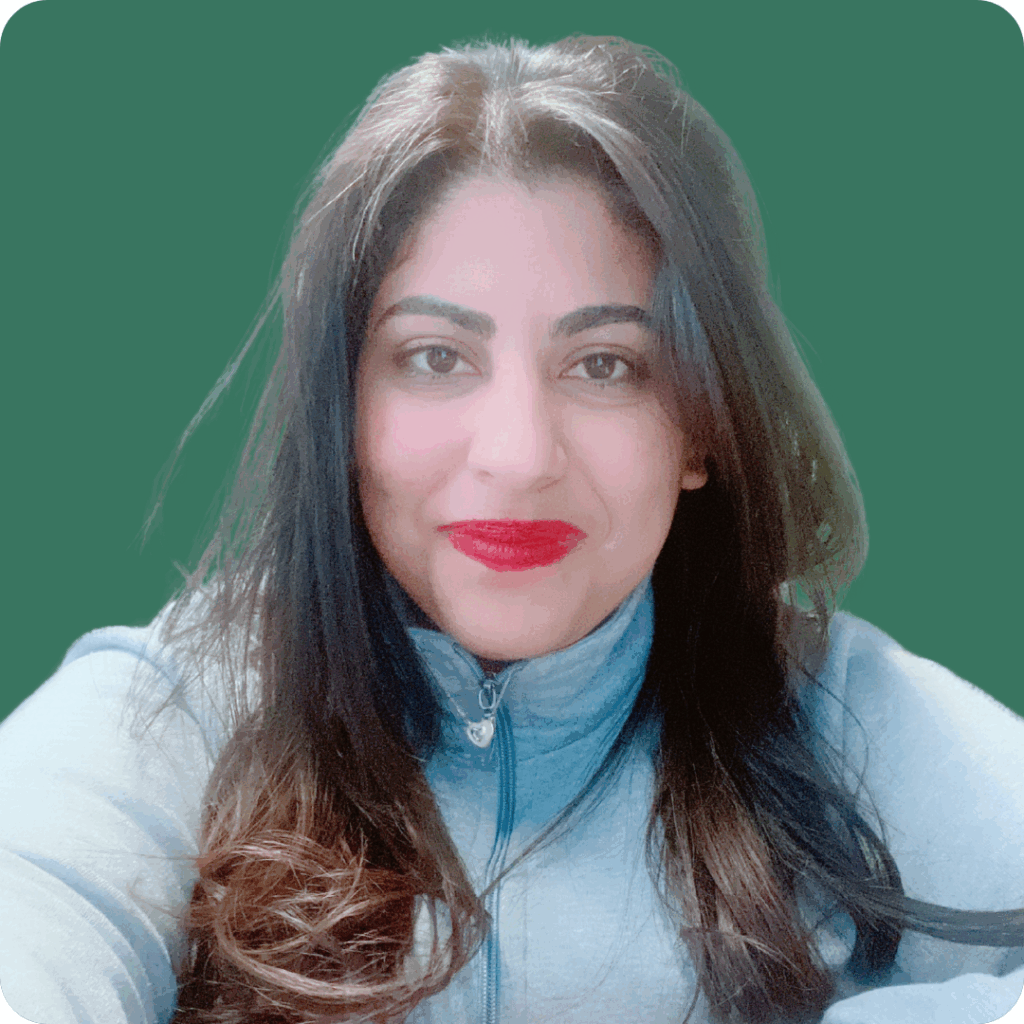
Profile photo of Shahd smiling, on a solid dark green background.

Shahd has been a Language Partner with NaTakallam for more than 3 years. She fled the Gaza strip for Egypt early 2024 along with her mother and some of her siblings, thanks in part to fundraising initiatives from her NaTakallam students. Through a scholarship, she was able to move to the U.S. to pursue a joint degree in Human Rights and Written Arts.

She finds education to be a tool to navigate ongoing challenges. Having studied English literature and education methods, she believes her writing ensures that the voices of marginalized and displaced individuals are being heard. Her academic experience reinforces her commitment to human rights and cross-cultural understanding. 

As a Language Partner, she tailors her lessons based on her students’ needs by using a combination of visual aids, fun activities and cultural discussions to make each session enjoyable and impactful. Her professionalism enabled her and her students to become a trusting community.

Her connection to her students goes beyond teaching. Shahd claims her students have challenged her, taught her and helped her grow. NaTakallam has become more than work, it has turned into a community. 

Kari initially booked NaTakallam lessons with Shahd to “practice more conversational Arabic to be able to speak to my aunts and uncles”. What she found went beyond conversation. Over time, they became friends and built trust. This eventually resulted in Kari initiating the GoFundMe campaign that enabled Shahd Safi to flee from Gaza. The fundraising was made possible by the students who knew and trusted her.

For both Shahd and Kari, what started as a simple language lesson has become something much more impactful: a powerful bridge of understanding and support. 

Their language sessions at NaTakallam have exceeded the purpose of learning and teaching to become a true, human experience, making meaningful connections along the way.

Start a conversation, find a friend.

Book a FREE trial today!

Finding Connection through Culture: Pavel, Anna & Graham

Profile photo of Pavel smiling, on a solid dark green background.

Anna and Graham both meet with Pavel on a weekly basis to brush up on their Spanish skills. 

Anna declares “I really love my sessions with Pavel. It’s so amazing to me that I can actually have a conversation in Spanish”.

Pavel rejoices in these victories.

Having fled political turmoil in Venezuela, Pavel reconstructed his life in La Plata, Argentina. Since he became a Language Partner at NaTakallam, he built his sessions around empathy, personal connections and helping the students through patience and cultural exchange. He believes this kind of approach “will change your view about how a language can be learned”.

Graham finds Pavel very responsive to his needs and extremely knowledgeable. Beyond Pavel’s professionalism, Graham also praises his open-mindedness and his great sense of humor. 

The many hardships Pavel has overcome as a refugee with a disability – from being unable to complete his degree in Modern Languages and Psychology, to rebuilding an entirely new life in an unfamiliar place – serve as the foundation for his love for teaching and the many stories he has to share. His experiences also highlight how intersecting factors – such as disability, forced displacement, and cultural adaptation – can amplify challenges, shaping the resilience and perspectives of individuals around the world.

One of Pavel’s favorite aspects of teaching at NaTakallam is getting to share the “real aspects” of his culture, not what the news or the books say, but the real, authentic stories of lived experiences.

Learn about the real nuances of Spanish, Arabic, or Persian cultures with one of NaTakallam’s Language Partners.

Pick from any of our 9+ languages and dialects and book a FREE trial!

Language as Resilience: Leila & Meg
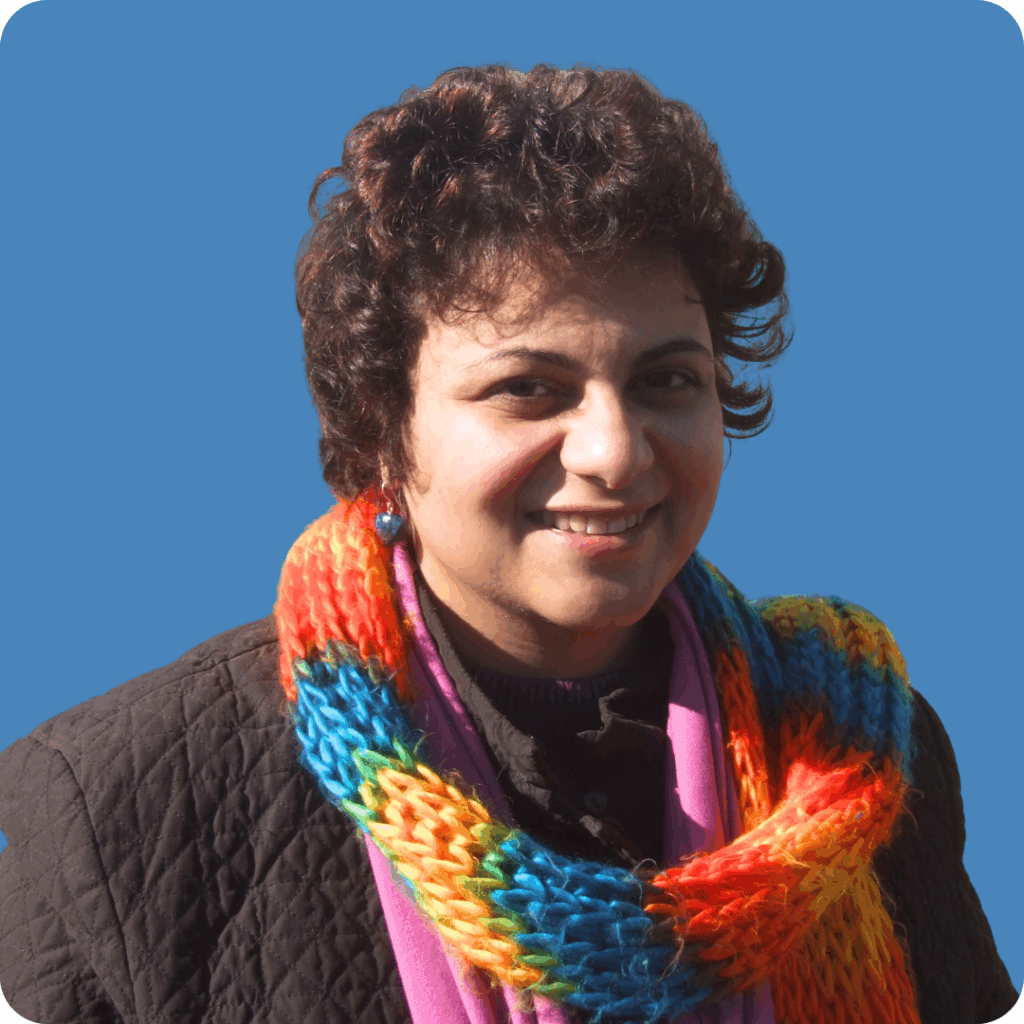
Profile photo of Leila smiling, on a solid blue background.

Leila joined NaTakallam to make up for her difficulty to find employment in Iran despite her extensive academic career. An accomplished scholar, she obtained her university degrees and PhD in archeology from Tehran University, and later completed an additional degree at Berlin University.

As an outspoken woman, her experience has not always been smooth which made her value education and its power even more. She is committed to making a difference in her students’ lives. She believes education to be a means of fostering resilience and hope. This approach has led her to work with marginalized communities and young students. 

An advocate for change, equality, and education, she personalizes each session to her students’ needs. Through games, conversation, and interactive exercises she wants to connect her students to the broader world and shared experiences.  

“Teaching is not just about sharing knowledge, it’s about connecting hearts and minds across cultures”. –  Leila

Leila claims engagement is a “two-way street”. She particularly enjoyed teaching Meg, a dedicated Farsi student. For them, NaTakallam provides the platform to bring together individuals who – in Leila’s own words – “remind us of the warmth of humanity, especially in these challenging dark times”.

Meg also reflects on her lessons with Leila:

"I am forever grateful to have stumbled upon NaTakallam online. I get to work with a remarkable human being who is my teacher, while supporting an important cause. I never thought I’d be able to make as much progress as I have and, even though I have so far to go, I always feel excited and motivated to use what I’ve learned."
Meg
Farsi student

Leila’s approach to teaching students such as Meg is built on her desire to empower future generations of scholars and intellectuals, especially as she believes language to be a tool to bridge gaps between cultures helping young people build better futures.

Book a session in any of our 9+ languages!

Behind the Scenes

Whether it is Arabic, Persian, or Spanish, here is how your language learning journey starts – and how we ensure tailor-made learning that drives impact and connection. 

It all starts with you – and your drive to learn and make a difference. Our matching process involves really getting to know you – not only your availability or your current language level, but also your goals, passions, purpose and any other interests you’re looking to spark conversations around.

With this information, the NaTakallam pairing team understands you, your pace and aspirations. The goal is to find a real partner, not just a time slot.

Why It Matters

At NaTakallam, we believe language is more than just a way to express basic needs. It’s a bridge to connection, to better understanding and to tighter communities. Through our tailored language courses, we offer a different kind of learning. 

While supporting our learners’ goals, every lesson also supports our tutors. By connecting displaced individuals through the very language you’re learning, you’re contributing to their livelihoods and building meaningful social connections – not to mention engaging in important linguistic and cultural preservation efforts that expand your mind and worldview.

Learning at NaTakallam is realizing how powerful and transformative language is. 

Many of our tutors and learners have found connections beyond learning to create real, long-lasting human bonds. 

For Shahd, this was life changing as support from her students enabled her and parts of a family to flee.  

“My entire economic survival depends on my job with NaTakallam” Pavel shares this as he explains how his language sessions help him with rent, food, expenses, and family support.

Leila found employment, both Shahd and Pavel were able to relocate, sustain themselves, and build their life in part thanks to the financial support that NaTakallam gave them. 

Learning with NaTakallam takes you beyond the classroom. It makes a real impact on our Language Partners’ lives – and on yours.

What are you waiting for?

Learn a language. Make a friend. Try a language session in one of our 9+ languages.

Kenza Lavallard Fadlane

Kenza is an intern at NaTakallam, currently completing her Master's Degree in International Affairs from the University of Saint Gallen, Switzerland. She is passionate about human rights and media.

Share this article on:
LinkedIn
Facebook
Threads
X

How Learning a New Language Builds Community Across Cultures Read More »
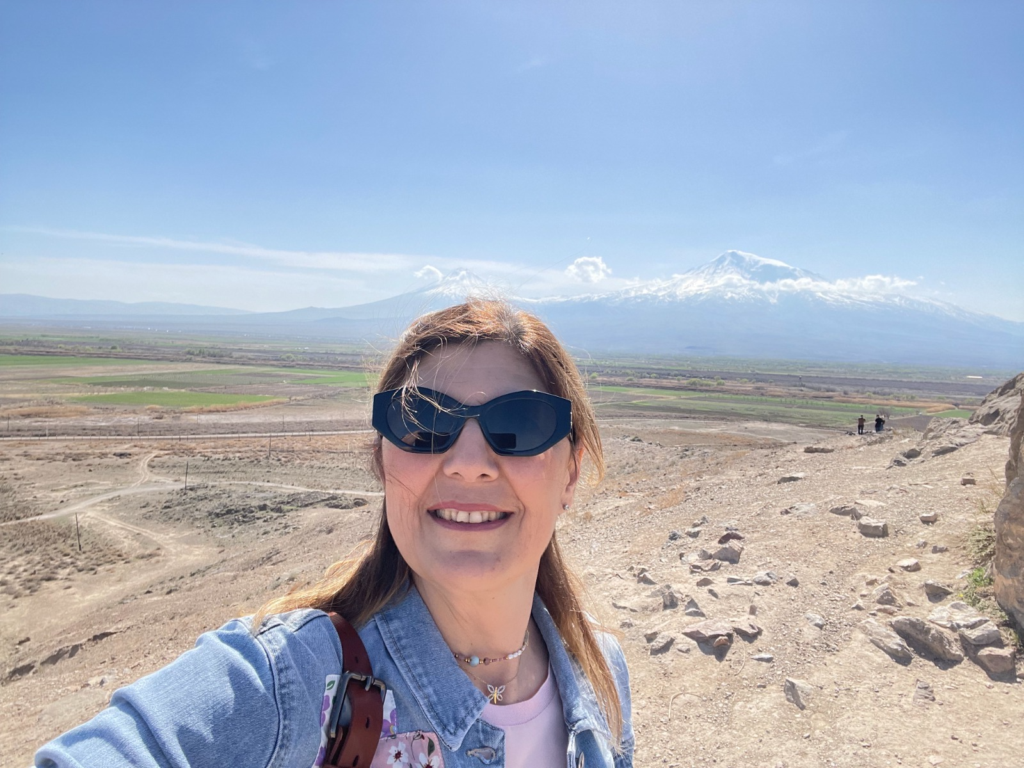
The Language of Survival: Ani’s Story of Culture, Connection, and Coming Home

Anahid — or Ani, as she likes to be called — is a Lebanese-Armenian Language Partner at NaTakallam, teaching Armenian to students all over the world. Seeking refuge has shaped her family history, starting with her grandparents, who fled the Armenian Genocide in 1915 and rebuilt their lives in Lebanon, where Ani herself was born and raised.

In 2020, facing growing instability in Lebanon, Ani decided to return to Armenia — her ancestral homeland. What started as a temporary trip turned into a new beginning, one that eventually brought her to NaTakallam. Today, we’re sharing Ani’s story of resilience and re-start — and how language and culture have enabled her to preserve the essence of Armenia long before she could call it home again.

"Language is at the core of any culture. It plays a great role in preserving the identity – influencing music, poetry, literature and all of the arts. Language is the main tool that struggles against assimilation.” - Anahid Dakessian

An Armenian Story of Resilience

Anahid’s name carries meaning: inspired by the Armenian goddess of fertility, healing, and wisdom. Born and raised in Beirut, Lebanon, those qualities — healing and rebirth — were deeply woven into the Armenian community around her. A community that had survived genocide and was committed to preserving a culture that had almost been erased.

They appeared in the smallest, everyday things. Her grandparents, originally from Adana (modern-day Turkey), only spoke Armenian to their children — even if someone in the community spoke in Turkish, their reply would always be in Armenian. Her parents, both born in Lebanon, learned the language of their hosts but never strayed from speaking Armenian at home.

Ani grew up in this tight-knit world: Armenian schools, churches, theaters, scouting associations, charity and healthcare centers — all within Lebanon. In the early 1930s, Armenians in Lebanon had began building Armenian institutions and organize a community life. Armenian became the main language of expression in schools. Turkish and Kurdish were banned from homes.

“It was amazing to witness that we had the freedom of religious expression and could maintain our culture, far away from home,” she recalls.

Despite Lebanon being her birthplace, Ani always considered Armenia her sacred homeland — a feeling shared by many Armenians born in the diaspora. Language, for her, was more than just communication; it was survival. Whenever new words entered global vocabulary, especially around technology, the Armenian community would always seek the proper Armenian term rather than mixing in English or French, as is common in Lebanon.

Eventually, Ani made it her mission to teach her language at an Armenian school in Beirut, instilling in a new generation of a community that makes up 4% of Lebanon’s population the significance and importance in honoring their identity. Her job as a teacher even gave her the chance to visit Armenia on school trips with her students, deepening her sense of connection to the homeland she loved.

Returning Home and Finding NaTakallam

“It was only supposed to be a 15-day trip to Armenia for summer, to visit my two sons who were studying at Yerevan’s Conservatory,” Ani remembers.

But 2020 had different plans. Lebanon’s worsening economic crisis and the devastating Beirut port explosion destroyed the lives and futures of many — Ani’s included. What began as a short visit turned into a permanent move.

For Ani the decision to start over wasn’t easy, but it was necessary. At first, she continued teaching remotely at her school in Lebanon, like many educators during the pandemic. With time, she started teaching at a local Armenian school. Her new job offered her both stability and purpose, though it also came with new challenges. For the first time, she was fully immersed in Eastern Armenian — the dialect spoken in Armenia — rather than the Western Armenian she had grown up with in Lebanon.

Even though she was fluent in both dialects, she grew up with the Western Armenian dialect – living and speaking Eastern Armenian daily was something new. “Conjugation is different from Western Armenian, but the root is the same: for example, Armenians in Lebanon say geh seerem (I love), while in Armenia people say seeroom em. It’s basically like the difference between Egyptian and Lebanese Arabic,” she explains.

Discover The Nuance of Eastern & Western Armenian Dialects with a NaTakallam Language Partner.

She also noticed how the Armenian spoken in Armenia often borrowed Russian words, reflecting the country’s Soviet past — another cultural layer to adapt to. But despite the challenges, Ani felt at peace. And after her first year, she had fully embraced her new life. She felt like she had reached home.

This is also when NaTakallam entered the picture.

“Online teaching had become more normal during COVID, and I was intrigued by the chance to continue pursuing my dream job, teaching, with new tools,” she says.

For the first time, she found herself teaching Armenian to non-Armenians from all over the world, as well as helping members of the diaspora reconnect with their heritage. One of her most touching memories is of a 70-year-old Armenian-American woman who, after a lifetime of not speaking the language, wanted to finally learn and reconnect with her roots — with Ani’s help.

Through NaTakallam, Ani realized the beauty of making Armenian accessible to anyone, anywhere.

And to anyone interested in learning, she always offers the same advice: “No better way to experience the language and culture than to visit Armenia.”

Home is Where Your Family Is

When asked if she would ever return to Lebanon — the place where she grew up, spent most of her life, and still has friends and connections — Ani’s answer is clear.

“You know, I will always love visiting Lebanon, and I do it regularly. But to me, the feeling of home is very simple: home is where I live, where the people I love are.”

She shares an Armenian reference to explain what she means: in Armenian, Danik means “roof” or shelter, while Endanik means “family.” The words sound almost the same — because, to Ani, family is the roof over your head. It’s what makes a place feel like home.

For the past five years, she and her husband have lived in Yerevan, close to one of their sons who is now married and settled there. Her younger son lives in London, and Ani hopes that one day, they will all be reunited under the same “roof.”

A woman of culture, resilience, and reinvention — Ani embodies the Armenian spirit. Like the nation she belongs to, she stands tall in the face of hardship, always holding onto her roots and her identity.

And it’s no surprise that a common Armenian saying is: “Our spirit is unbreakable and our will is unwavering.

Want to immerse yourself in Armenian culture and language from native speakers like Anahid? Book a session with one of NaTakallam’s expert tutors and connect with a community that brings language and culture to life.

ABOUT THE AUTHOR: Zeina Abou Taha is an intern at NaTakallam, currently transitioning from a career in IT consulting into journalism. With an academic background in Entrepreneurship & Innovation and a passion about exploring the world, Zeina spends her free time traveling, connecting with people from diverse cultures, and writing for her personal blog.

The Language of Survival: Ani’s Story of Culture, Connection, and Coming Home Read More »

Hope Through Language: A Mother’s Letter From Lebanon

At NaTakallam, we connect you with talented language tutors from around the world, offering not only top-quality online language learning opportunities but also a window into rich cultural insights. In this letter, Abir, a NaTakallam Language Partner from Lebanon, shares her story of growth, motherhood, and hope, in the face of conflict. Abir’s journey is a powerful reminder of how language is a source of strength, even in the most uncertain of times.

"Bukra Ahla" (بكرا أحلى) – Tomorrow will be better. That’s what I tell my kids every time Lebanon faces another crisis.

War in Lebanon Then and Now

I vividly remember the summer of 2006, my first experience living through war in Lebanon. At the time, I was only a teenager. The war felt like a distant reality; sounds of explosions in the background. Family gatherings filled our house, and there was even a strange sense of naive joy for me as loved ones sought refuge together. I was shielded from many responsibilities, such as securing food, water, and electricity. My parents took care of everything.

Now, in 2024, I am in their shoes. As a mother of two young children, the experience of war is dramatically different. It’s no longer just about my safety – I have to protect my family, both physically and emotionally. War through a mother’s eyes is exhausting. Every day, I have to stay positive for my kids, no matter how dark things get. I spend my days answering their questions in a way that preserves their innocence, keeping their spirits up with activities, all while also being ready to leave at a moment’s notice. It’s a weight I carry constantly, trying to be their pillar of strength through the uncertainty that surrounds us.

Abir with her two children

Beauty through Hope

The situation around us is only worsening. Our neighborhood is overcrowded as displaced families desperately seek some semblance of safety. What used to be a ten-minute errand now takes over an hour. Houses are crammed full, and schools have turned into shelters.

Houses are crammed full, and schools have turned into shelters. The children are the ones who suffer the most – losing their education, their friendships, and any sense of normalcy.

Through it all, I am reminded that the beauty of Lebanon lies not just in its landscapes but in its people. Our communities pull together in times of need. To me, Lebanon is like a mother – imperfect, yes, but dearly beloved and impossible to leave behind. “Bukra Ahla” is the promise I make to Lebanon, my children, and myself, as a reminder that, despite everything, there’s a future worth fighting for.

Purpose in Every Lesson

NaTakallam is more than a job for me – it’s a second family. One of my colleagues, a Palestinian Language Partner, despite facing her own struggles in Palestine, checks in on me regularly. The connection with my students gives me a sense of purpose. It allows me to do something beyond the confines of my home and the chaos outside. 

“All we have is hope,” I remind myself. “Bukra Ahla” – tomorrow will be better. I keep repeating these words, holding on to the promise of better days to come.

Now, Abir wants to share that sense of purpose. By learning Arabic with NaTakallam tutors like Abir, learners are not only gaining a new skill but also supporting a family striving for hope in difficult times. Together, we can build bridges of understanding and create a meaningful impact. Partner with Abir to learn Arabic, and help make a difference, one lesson at a time.

Abir has been teaching Arabic with NaTakallam since 2022

This post is part of the “Letters from our Language Partners” series, where NaTakallam Language Partners share their unique stories, cultures and experiences through the lens of language learning and connection. Want to immerse yourself in a new culture or learn a new language from native speakers? Book a session with one of NaTakallam’s expert tutors and connect with a community that brings language and culture to life.

ABOUT THE AUTHOR: Abir is in her early thirties, a Lebanese resident who has dedicated ten years to teaching maths and science. Recently, she focused on studying psychology in addition to working as a teacher for students with special needs. Passionate about travel, shopping, and meeting new people, Abir finds joy in exploring diverse cultures and experiences .

ABOUT THE EDITOR: Lenora Dsouza is an intern at NaTakallam and is currently pursuing her Masters degree in International security at Sciences Po Paris. She is passionate about learning new cultures, travelling and binge watching tv shows.

Hope Through Language: A Mother’s Letter From Lebanon Read More »

Spotlight on Women’s Voices: Bridging Cultures and Languages

Translation, Transformation and Transcendence

Translation work plays a crucial role in fostering language justice. In a world where language barriers pose significant challenges, translation allows stories to transcend borders, driving progress and empowerment. Through translation, narratives shift from a national language into an international one, breaking barriers and opening doors into new cultures and worlds.

Here are nine books written and translated by women to add to your reading list. By highlighting the contributions and perspectives of female authors and translators across cultures, we challenge prevailing assumptions and biases that have led to the lack of representation and recognition for women writers in translated literature. Each of these books bring forth important female perspectives for a more international, intersectional and inclusive understanding of our world.

1. Memory in the Flesh (2000) by Ahlam Mosteghanemi, translated by Baria Ahmar Sreih

Originally published in Arabic as ذاكرة الجسد (Dhākirat al-Jasad)
Translated into: English, French, Kurdish and more

Ahlam Mosteghanemi created history with Memory in the Flesh as the first female Algerian writer to write in Arabic instead of French. The choice to write in Arabic is informed by the story being told, of Algeria’s resistance to foreign oppression and its challenges in a postcolonial environment. Mosteghanemi was awarded the Naguib Mahfouz Medal for Literature for her use of realistic male narration in her novel, challenging and broadening the scope of gender perspectives in literature, and making her work a groundbreaking contribution to contemporary Arabic fiction.

2. Tomb of Sand (2021) by Geetanjali Shree, translated by Daisy Rockwell

Originally published in Hindi as रेत समाधि (Ret Samadhi)
Translated into: English, French, German and more

Geetanjali Shree is the first Hindi author to have won the International Booker Prize (2022), and Tomb of Sand also received the 2022 Warwick Prize for Women in Translation. The book follows the transformative journey of 80-year-old Ma, who grapples with depression after her husband’s death. Shree’s writing is timeless in its reflection of a woman’s inner life and her invisibility. The book evolves into Ma travelling from India to Pakistan to rediscover and reclaim her own identity.

3. Ru (2012) by Kim Thúy, translated by Sheila Fischman

Originally published in French
Translated into: English, French, Italian and more

Ru” translates to “lullaby” in Vietnamese and “small stream” in French, also referring to a “flow.” Kim Thúy’s Ru follows the flow of the unforgettable journey of a girl, turned mother, immigrating from Vietnam, and her life as a refugee. Thúy’s literary technique adopts the double meaning of its title, following the unpredictable flow of a river but eventually finding its calm in the new life that emerges as a result of the journey.

4. Your Wish Is My Command (2023) by Deena Mohamed, translated by the author herself

Originally published in Arabic as شبيك لبيك (Shubeik Lubeik)
Translated into: English

Deena Mohamed is known for creating Qahera, a webcomic about a hijabi superhero. Your Wish is my Command is her first graphic novel, featuring three volumes from 2017 to 2021, and it won the Grand Prize at the 2017 Cairo Comix festival. Mohamed brings life and magic to a familiar Cairo in a fantastically imaginative tale where wishes are for sale.

Feeling inspired to read Shubeik Lubeik in its original language? Partner up with one of NaTakallam’s Arabic tutors! We offer language sessions in six Arabic dialects, including Deena Mohamed’s native Egyptian.

5. What Have You Left Behind? (2022) by Bushra Al-Maqtari, translated by Sawad Hussain

Originally published in Arabic as ما الذي تركت ورائي (Mā Aladhī Taraktu Warāʾī)
Translated into: German, English and French

Bushra Al-Maqtari amplifies underheard voices in What Have You Left Behind with her collection of over 400 firsthand accounts of the Yemeni Civil War. Through these testimonies, the author presents the book as an act of witnessing, to not forget the resilience of the Yemeni people and their lives.

Interested in hearing more Yemeni voices? Visit The Yemen Listening Project, a bilingual collection of over 100 stories about culture beyond conflict and what life is really like beyond the headlines of humanitarian crisis – with translation and Arabic copyediting by NaTakallam. You can also connect directly with NaTakallam’s Yemeni Arabic Language Partners.

6. The Journey: An Egyptian Woman Student’s American Memoirs (2018) by Radwa Ashour, translated by Michelle Hartman

Originally published in Arabic as الرحلة: أيام طالبة مصرية في أمريكا (Ar-Riḥla: Ayyām Ṭāliba Miṣriyya fī Amrīkā)
Translated into: English

This book is Radwa Ashour’s memoir of her intellectual journey as a graduate student in the United States. The autobiographical account looks at the differences and similarities between life in Egypt and in America, in holding on to her identity whilst navigating a new environment. In her memoir, Ashour also touches upon the people who inspired her in the US, especially members of the African American community.

7. Disoriental (2018) by Négar Djavadi, translated by Tina Kover

Originally published in French as Désorientale
Translated into: English, Spanish, Italian and more

Disoriental, Négar Djavadi’s debut novel, explores its main characters’ exile to Paris from Iran. Djavadi explores the struggles of integration into French society while providing an account of Iranian history. The book travels with the main character into her burdens with history, family, identity and her country.

Did you know that the French and Persian languages share a long historical relationship? For example, “مرسی” (mersi) in Persian means “thank you,” as in the French “merci.” You can learn both languages and explore the links between them with NaTakallam’s native tutors.

8. August (2017) by Romina Paula, translated by Jennifer Croft

Originally published in Spanish as Agosto
Translated into: English and French

The novel revolves around a young woman, Emilia, who returns to her hometown in Patagonia to scatter the ashes of her best friend. The book navigates devastating loss with a narrator that feels extremely open and familiar to readers. The author brilliantly makes the novel feel like a conversation between the two female best friends as Emilia attempts to understand and work through her grief.

If you wish to learn more about Patagonian and South American culture, start a conversation with NaTakallam’s Spanish Language Partners from Latin America.

9. Minor Detail (2020) by Adania Shibli, translated by Elisabeth Jaquette

Originally published in Arabic as تفصيل ثانوي (Tafṣīl Thānawī)
Translated into: English, German, Italian and more

Set in Palestine, Minor Detail intertwines two narratives across different time periods. The book begins with a girl and an unforgettable incident in the summer of 1949. Many decades later, a woman in Ramallah becomes obsessed with uncovering the truth about this “minor detail” in history. Shibli’s haunting novel explores themes of memory, trauma, and the enduring effects of violence, offering a poignant meditation on personal and collective histories and the ongoing struggle for justice and recognition.

Discover Palestine’s rich literary tradition with these 15 must-read books by Palestinian women. And as you delve into the stories of Palestinian women, why not further your exploration by learning the language that carries their voices? Sign up for Arabic language learning with Palestinian tutors today.

Celebrating Women in Translation Month, NaTakallam is proud to have a women-led and female-majority translation and interpretation department, offering services in 100+ languages, powered by team members from conflict-affected backgrounds.

Whether you’re looking for document translation, event interpretation, website localization, or other products, explore our award-winning services and request a quote today.

ABOUT THE AUTHOR: Lenora Dsouza is an intern at NaTakallam and is currently pursuing her Masters degree in International Security at Sciences Po Paris. She is passionate about learning new cultures through travelling and language.

Spotlight on Women’s Voices: Bridging Cultures and Languages Read More »

One story of cross-border love from our Afghan tutor, Sadiqa

Since February is the month of love, we put out a call to our conversation partner community to tell us their stories of love and romance. Sadiqa, one of our tutors from Afghanistan, shared the story below

Sadiqa Sultani, one of NaTakallam’s Dari instructors, is originally from Afghanistan. She had moved to Quetta, Pakistan with her family when she was young to escape the Taliban rule, but soon after, they were forced to leave Pakistan due to persecution based on their ethnic and religious identities, rendering her double displaced.

Now living as a refugee in Bogor, Indonesia, Sadiqa is a volunteer teacher within the local refugee community. She tries to give her refugee students something meaningful to do as they wait out the resettlement process. She also teaches students on the other side of the world online through NaTakallam. 

One morning in October 2018, Sadiqa saw she had received a message from a man named Naeem Royan, a long-lost classmate of hers from her days in Quetta. In his love letter, Naeem wrote that he had loved her since primary school and had searched for her for eight years.

At first, she didn’t believe him! 

Sadiqa was waiting to go back to Pakistan, but she was still in Indonesia because of the slow resettlement process. She began chatting with Naeem online, getting to know each other after so many years apart and slowly falling in love…

When Naeem proposed, Sadiqa had a big decision to make.

Was he serious? Sadiqa wasn’t sure. She discussed the proposal with her parents. She spent more time talking to Naeem before making any decision, as she still didn’t know him very well. Naeem was trying very hard to make her feel his love and respect for her, never missing a single chance to express his feelings and thoughts. 

Finally, Sadiqa said YES and accepted his proposal. 

However, there were many challenges in store for the two lovers. As Sadiqa could not go back to Pakistan, Naeem decided to come to Indonesia. Just as he was planning his trip, the coronavirus pandemic struck, and the world went on lockdown. By this time, Sadiqa and Naeem had been in a relationship for more than three years and were still unable to be together. Last month, they were Nikahfied (married) in an online ceremony. 

They love each other dearly and unconditionally. These two lovers have been able to stand and be together through so many ups and downs. They are still searching for any possible way to start living together and bridge the forced divide between them, just praying and hoping to be together soon.

One story of cross-border love from our Afghan tutor, Sadiqa Read More »

loading gif

Available Coupon

X