Getting Started with Language Learning

How People Express Laughter in Different Languages

Laughter is a universal yet culturally-tinted phenomenon. It draws people together and has the power to stimulate physical, emotional, psychological and social changes. Ever wondered how people from different cultures conveyed laughter and humor? Join us as we explore laughter and humor in five different language-cultures!

1. PERSIAN

In Persian, laughter is transcribed as either خخخخخ (khkhkhkhkh), ههههه (hahahahaha), or هاهاهاها (ha ha ha ha). 

Central to Persian popular humor is the figure of Mulla Nasruddin Khodja. Born in Seljuk Sultanate of Rum in the 13th century, Khodja was a philosopher and a wise man who imparted his wisdom through witty jokes and funny tales. A famous Khodja tale that Persian-speakers (and others) chuckled to over generations goes as follows: 

Mulla had lost his ring in the living room. He searched for it for a while, but since he could not find it, he went out into the yard and began to look there. His wife, who saw what he was doing, asked: “Mulla, you lost your ring in the room, why are you looking for it in the yard?” Mulla stroked his beard and said: “The room is too dark and I can’t see very well. I came out to the courtyard to look for my ring because there is much more light out here”.

2. ARABIC

In Arabic, laughter is written as ههههه (hhhhh or hahahaha), هاهاها (hā hā hā), or even هع هع هع (ha’ ha’ ha’). 

Like Mulla Nasruddin Khodja in the Persian-speaking world, Arabic-speaking countries too have a popular figure who effortlessly combines humor and wisdom. Known as Juha, Djoha, or Goha, this figure first appeared in Al-Jahiz’s 9th-century book “Saying on Mules” (القول في البغال). However, over the centuries, the character of Juha was merged with that of Mulla Nasruddin Khodja. Juha appears in thousands of tales, always witty, sometimes wise, and other times gently absurd – a butt of his own jokes. 

In one story, a man sees Juha across a raging river. “How do I get across?” the man cries. “You are there already!” Juha shouts back.

3. SPANISH

In Spanish, laughter is expressed as jajajaja (hahahaha). 

The Spanish sense of humor is well encapsulated in Cervantes’ Don Quixote, a mock epic which satirizes early modern obsession with noble knights, ridiculous quests and chivalric attitudes. Published in two parts, in 1605 and 1615, it is considered one of the founding works of western literature. Humor in Don Quixote is subtle but sharp. Cervantes sets his story as follows, before going on to describe the absurd adventures of his titular character:

“En un lugar de la Mancha, de cuyo nombre no quiero acordarme, no hace mucho tiempo que vivía un hidalgo de los de lanza en astillero, adarga antigua, rocín flaco y galgo corredor.”

(‘‘Somewhere in La Mancha, in a place whose name I do not care to remember, a gentleman lived not long ago, one of those who has a lance and ancient shield on a shelf and keeps a skinny nag and a greyhound for racing.’’)

4. ARMENIAN

In Armenian, laughter is transcribed as հա հա հա (ha ha ha). 

Humor, in more recent times, has been used by Armenians as a form of resistance and empowerment. The famous Radio Yerevan jokes are an example. Popular in the 20th century, these jokes took a Question & Answer format, mimicking that of popular series on Armenian Radio. 

When asked ‘‘Could an atomic bomb destroy our beloved town, Yerevan, with its splendid buildings and beautiful gardens?’’

Radio Yerevan answered: ‘‘In principle, yes. But Moscow is a far more beautiful city.’’

5. FRENCH

In French, laughter is often expressed with the initials mdr’ for mort de rire (dying of laughter) – equivalent to LOL in English. 

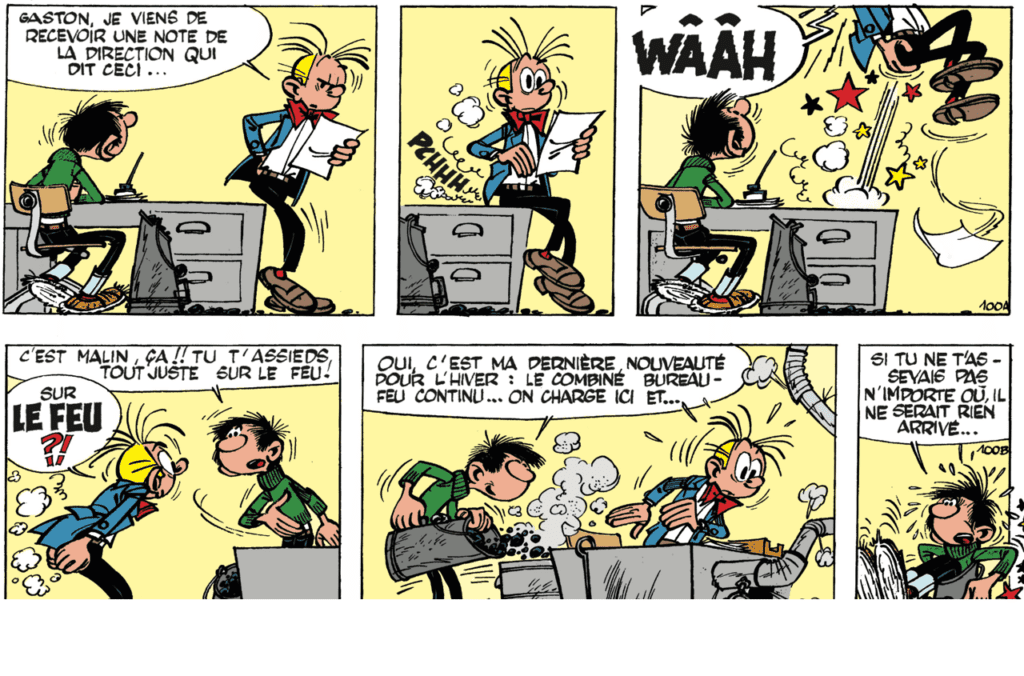
French humor is celebrated in cartoonist André Franquin’s Gaston, a gag-a-day comic strip first published in 1957 in the comic strip Spirou. The series focuses on the everyday life of Gaston Lagaffe (meaning Gaston “the blunder”), a lazy and accident-prone office junior working at Spirou’s office in Brussels. It is much loved not only for its perfectly timed comedy, but also for its warm outlook on everyday life.
Explore humor and laughter in different languages this New Year with NaTakallam’s native language partners! Sign up for sessions here or spread the laughter (it’s contagious!) with a loved one by gifting a NaTakallam session here – an experience like no other.

Gaston comic visual source: philonomist.com/en/article/innovation-smile-gaston-lagaffe

How People Express Laughter in Different Languages Read More »

Top 10 Reasons to Learn a Language this New Year

Want to introduce something new and transformative into your life this New Year? We recommend language learning! Picking up a new language, or brushing up an old rusty one, is the best way to (re)connect with yourself and with the world around you this new year.

Here are 10 reasons why learning a language would make a great new year resolution for 2022!

1. CONNECT

One of the most rewarding aspects of the human experience is our ability to connect with others. Being able to communicate with someone in their language is a vital and irreplaceable form of connection. Bilinguals have the unique opportunity to communicate and connect at a deeper level with a wider range of people in their personal and professional lives.

2. ADVANCE YOUR CAREER

Language skills can provide a significant competitive edge that sets you apart from your monolingual peers. They are among the top eight skills required of all occupations – no matter your sector or skill level – and the demand for bilingual professionals is rising exponentially. As an added incentive, in many instances, language skills also lead to hiring bonuses and increased salaries.

3. FEED YOUR BRAIN

The cognitive benefits of learning languages are undeniable. Recent studies have demonstrated that people who speak more than one language have improved memory, problem-solving and critical-thinking skills, enhanced concentration, ability to multitask, and better listening skills. If that isn’t enough, as we age, being bilingual or multilingual also helps to delay mental ageing and cognitive decline.

4. DEEPEN YOUR CONNECTION TO OTHER CULTURES

Language provides a unique insight into cultures. Being able to communicate in another language exposes and thus fosters an understanding and appreciation for the traditions, religions, arts, and history of the people associated with that language. This, in turn, promotes greater tolerance, empathy, and acceptance of others. Studies show that children who have studied another language are more open – and express more positive attitudes – towards the culture associated with that language.

5. SEE THE WORLD

While monolingual travelers are capable of visiting the same places, travelers who know more than one language are more easily able to navigate outside the tourist bubble. They are able to connect and interact with the place and its people in a way that is often inaccessible to those without knowledge of the language. Learning a second language also opens up additional doors to opportunities for studying or working abroad.

6. GO TO THE SOURCE

In a world with more than 6,000 spoken languages, we sometimes require translation, but speaking at least one additional language empowers us to access information that would otherwise be off-limits. For example, individuals proficient in other languages are able to navigate the Internet as true global citizens – accessing and consuming media and entertainment without being restricted by language barriers.

7. BECOME A POLYGLOT

Not only does learning a second language improve communication skills and multiply vocabulary in your first language, but research also shows that it makes picking up additional languages a much easier feat, especially among children. That’s because when you learn a new language, you develop new neural-pathways that are primed and ready when you embark on learning a third language.

8. BOOST YOUR CONFIDENCE

Any language learner can attest to making his or her share of mistakes while discovering a new language – often in front of an audience. It’s a necessary part of the learning process! Learning a language means putting yourself out there and moving out of your comfort zone. The upside is the amazing sense of accomplishment you will feel when conversing with someone in their native language.

9. STRENGTHEN YOUR DECISION-MAKING

Studies show that decisions made in your second language are more reason-driven than those made in your native language. Contrary to popular assumptions, when we deliberate in a second or third language, we actually distance ourselves from the emotional responses and biases deeply associated with our mother tongue. The result? Systematic and clear-headed decisions based solely on facts.

10. GAIN PERSPECTIVE

As we explore a new language and culture, we naturally draw comparisons to what is most familiar. Learning about another culture sheds light on aspects of our own culture – both positive and negative – which we may not have considered previously. This is likely to result in a greater appreciation for what one already  has, and/or provide an incentive to shake things up a little!

Find out more on how you can learn a language with one of our programs TODAY: natakallam.com

Top 10 Reasons to Learn a Language this New Year Read More »

5 Ways to Say “I Love You” in French


French is known as “le langage de l’amour”, the language of love! And we believe that love should not be defined by just a day or month. Here are 5 French phrases that you can use to express love this Valentine’s Day (or any day!).

1. Je t’aime
This is the most commonly used way to say “I love you” in French to a loved one, family member or friend!

2. Mon chéri/Ma chérie
Meaning “my darling/dear”, this is another common phrase of endearment used throughout the Francophone world. Fun fact: The term “chéri” is also used in the US as a form of endearment, common in (French-speaking) New Orleans and Louisiana.

3. Ma moitié
While literally meaning, “my half”, this term is better translated in English as “my better half” and understood as referring to a beloved “partner in crime”. This can be used with friends and romantic partners alike.

4. Avoir un cœur d’artichaut
This phrase literally means “to have an artichoke heart,” but refers to someone that falls in love easily or often!

5. Mon cœur bat la chamade
They don’t call it the language of love for nothing! This poetic expression translates as “my heart beats loudly [for you]”, encapsulating the anticipation and excitement in  seeing a loved one.

A fun fact, the word “la chamade” has an archaic use, meaning “a trumpet of signal inviting the enemy to parley”.

Do you have “un cœur d’artichaut”? Fall in love with French with NaTakallam’s unique one-on-one language learning with native tutors from displaced backgrounds.

Ps. Looking for a special Valentine’s gift? The Gift of Language is meaningful and impactful, a gift like no other!

5 Ways to Say “I Love You” in French Read More »

5 Ways to Express Love in Persian


As we count down to Valentine’s Day, did you know that another celebration of love – of women and earth – is just around the corner: the ancient Persian festival of  Sepandār-mazgān (سپندارمذگان), which is celebrated on February 18th this year?!

Although it was only recently that the festival gained popularity among Persian communities worldwide, Sepandār-mazgān was historically marked on the 5th of ‘Esfand’ (the 12th month in the Persian calendar) and dates back to the 20th century BC! Today, in Iran, this day is observed a week earlier, on 29th of ‘Bahman’ (the 11th month in the Persian calendar) due to changes in the calendar with time.

This Valentine’s Day through to Sepandār-mazgān (and beyond!), express your affection for a loved one with these Persian phrases.

1. Doostet daram (دوستت دارم)

It literally translates to “I like you” but is a common and widely recognized way to say “I love you” to a loved one, family or friends in Persian!

2. Asheghetam (عاشقتم)

From the word eshghعشق” (love), it literally translates to: “I’m in love with you.” It’s a much more intense expression of love used in both romantic and close platonic relationships alike!

3. Jigar tala (جیگر طلا)

Now this Persian expression is a truly unique way to address a loved one – it literally means “golden liver”! It conveys how vital you think they are to your existence.

4. Fadat besham (فدات بشم)

The ultimate expression of affection, this phrase means “I am willing to sacrifice myself for you.” Use this expression the next time someone says something super adorable that makes your heart melt. This expression is purely metaphorical and not to be taken literally in any case!

5. Eshghe mani (عشق منی)

Translating to “you are my love”, this phrase can be used in response to a lovely comment by a loved one. Derived from the word eshghعشق” (love), you can flip the expression around and add the possessive pronoun “my”, or suffix “-am” in Persian: “eshgh” + “am” = eshgham (عشقم) to mean ‘‘my love’’.

Other common terms of endearment include: azizam (عزیزم, my dear), asalam (عسلم, my honey), khoshgelam (خوشگلم, my beautiful), nafasam (نفسم, my breath), jigaram (جیگرم, my liver).


This February (and beyond), give the Gift of Language in Persian to your jigar tala (جیگر طلا) or take your love expressions to the next level with NaTakallam’s Persian sessions! At NaTakallam, every language session contributes to the livelihoods of our skilled tutors from refugee/displaced backgrounds. What says “doostet daram” more than that?

Ps. Thinking of Valentine’s Day gift ideas? Go beyond chocolates & flowers… surprise your loved one with the Gift of Language! Meaningful, impactful AND shipping-free! 😉

5 Ways to Express Love in Persian Read More »

5 Ways to Say “I Love You” in Spanish

With Valentine’s Day around the corner, express your affection to your loved one in one of the most romantic languages in the world – español! Here are 5 fun ways to impress your loved one this Valentine’s.

1. Te quiero

From the verb “querer” (to want), this phrase literally translates to “I want you”, however, within certain contexts, it is also taken to mean “I love you”. It is usually a lighter expression of care and affection compared to “te amo” (I love you), which has a more romantic or intimate connotation and is reserved for a lover.

2. Flechazo

Literally translates to “an arrow shot” – and connotes love at first sight! It is used to refer to the joys and pains of falling in love at the first sight and has no equivalent word/expression in English.

3. Querido/Querida

One of the most common terms of endearment – it’s translated as “darling” or “sweetheart”!

4. Mi reina/rey

Make your Valentine feel extra special – and royal – by calling them “my queen” or “my king”. This term of endearment is also used between platonic friends to mean “darling” or “dude”.

5. ¡Que mono/mona eres!

In Spain, this phrase means something like “you’re so cute”. But if you want to translate it literally, you would be telling your crush: “you’re so monkey”!

Have you ever experienced a “Flechazo”? Fall in love with Español, one of the most romantic languages in the world, with NaTakallam’s unique language learning experience with Latin American tutors from displaced backgrounds.

PS: Still scrambling for a last minute Valentine’s gift? NaTakallam’s Gift of Language is meaningful, shipping-free and will surely surprise your querido/querida!

5 Ways to Say “I Love You” in Spanish Read More »

5 Ways to Express Love in Arabic

Say “I love you” the authentic way. Explore the expressions used across dialects and cultures to convey love, care, admiration, and deep emotional connection.

Share the love and speak these expressions with confidence.
Start your Arabic conversation with a real tutor online today →
*Interested in going further? Check out our Integrated Arabic Curriculum for a more formal study pathway!


The month of love is upon us! This Valentine’s Day, or for that matter, any day of the year, show your love to that special someone in your life with one of these Arabic love expressions.

From our قلب ❤️  (heart) to yours:

1. Ahebbak/Ahebbik (أحبك)
This is the most common and widely recognized way to say “I love you” in Arabic.

2. ‘Ala raasii (على راسي)
This phrase literally translates to ‘‘on my head’’ and expresses your commitment to accomplish the hardest of tasks for the one you love. When a loved one asks you a favor, this Arabic reply allows you to assure them that you would walk across hot coals, move mountains, in short, do anything humanly possible for their happiness.

3. Ya rouhi (يا روحي)

If you know Arabic, chances are you’ve heard of the commonly used term ‘‘habibi/habibti’’, literally meaning “my dear”. Similarly, this sweet little phrase which literally means ‘‘my soul’’ also implies “my dear/beloved”.

4. Kalamak/ik ‘asal ‘ala qalbi (كلامك عسل على قلبي)

Make sure to add a wink after this phrase ;). Literally meaning, “Your words are honey on my heart,” this expression is the perfect response for when a special someone says something especially sweet.

5. Tuqburnii (تقبرني)

Although this phrase literally means “you bury me”, it’s used commonly to say “I love you so much.” Someone saying this is expressing that they would rather die and be buried than lose you. It’s actually quite sweet!

np9zczbxg8d31

Hubb (حب), Shaghaf (شغف), ’Ishq (عشق)… Arabic is known for its poetic expressions & beautiful ways of expressing love. Learn them with NaTakallam! Or give the unique Gift of Language to a loved one, available in 7 offerings: Egyptian, Iraqi, Lebanese, Palestinian, Syrian, Syrian, Yemeni, or Modern Standard Arabic.

Also this month, don’t miss NaTakallam’s “DUO” Valentine’s offer on our Integrated Arabic Curriculum, perfect for two – lover, sibling or friend! FREE trial on us before committing.

5 Ways to Express Love in Arabic Read More »

10 ways to go beyond a simple “thank you” in different languages

2020 has been a testing year for us all, to say the least. As a way of expressing our gratitude to all our language learners, language instructors, translators, interpreters, volunteers & team members throughout, here are 10 ways of saying thank you — in Arabic, French, Persian and Spanish!

1. تسلم / تسلمي (Tislam/Tislami)

Coming from the root verb “سلم” or “salama” meaning “to come out safe/healthy”, this phrase means “May you stay safe”, and can be used as a way to thank someone, while literally also wishing well for their health and safety!

2. يعطيك العافية (Ya‘tik al-‘afiya)

Literally translating to “may [God] give you health,” this is a recognition of someone’s hard work and allows you to show your appreciation.

3. Merci de tout coeur (mekh-see dah tu ker)

A heartfelt phrase in French meaning, “thank you with all my heart”.

4. C’est très gentil à toi / vous (seh tkheh jan-tee a twa/voo)

In more formal settings, one might say “that’s very kind of you”. Remember to use “vous” when speaking in a respectful manner! 

5. Daste shomā dard nakone (دست شما درد نکنه )

Never realized how poetic Persian is? This phrase means “may your hand not hurt”, often used when someone gives you a gift or prepares food for you.

6. Ghorbāne shomā (قربان شما )

Literally meaning “your sacrifice”, this is an example of a Persian taarof or an Iranian sign of etiquette and politeness, displaying humility. Read more here for context.

7. Te la/lo debo (te la/lo de-bo)

Spanish for “I owe you” – use this with friends to let them know you’re grateful for them and you got them next time!

8. (Estoy) Muy agradecido/a (ehs-toy muy agra-de-cido/a)

This is a lovely way to say “(I’m) very grateful for you” – another version of “thank you so much”, as the adjective “agradecido” is translated as “grateful”.

9. Mamnoun(t)ak/ek (ممنونك/ممنونتك)

You may hear this Arabic loanword, “mamnoun” or “ممنون”, in Arabic or Persian, as a way to say “thank you” or “I’m grateful to you”.

10. Merci (mekh-see)

Don’t be surprised if you hear “merci”, a common way to say “thank you”, beyond francophone countries, it’s also common in Middle Eastern countries and even Iran!  

Here’s to reaching new language feats in 2021! 

Happy new year, كل سنة وأنتم بخير, Feliz año nuevo, Bonne année, سال نو مبارک, from the NaTakallam family to yours 🙂

P.S. In case you missed our thank you series in the past month, check them here in Arabic, Persian, French and Spanish!

10 ways to go beyond a simple “thank you” in different languages Read More »

5 Ways to Say “Thank You” in Persian

Persian gratitude expressions reflect warmth, respect, and hospitality. Learn the most commonly used phrases and when to use them.

Practice Persian with native-speaking tutors.
Meet your Persian tutor and begin your journey →


Salaam (سلام, hello)! After exploring how to say “thank you” in Spanish and Arabic in our previous posts, this week we bring you 5 culturally meaningful ways to express gratitude in Persian!

1. Sepās-gozāram (سپاسگزارم)

Mostly used in formal settings with roots dating back to ancient Persia (before the Arabic influence over the Persian language circa 600s AD), the term Sepās-gozāram (سپاسگزارم) is used to say “I am grateful”.

Want to impress? Add kheili (خیلی) meaning “very” before sepās-gozāram to emphasize your gratitude. In semi-casual settings, you can shorten the phrase to sepās (سپاس).

2. Mersi (مرسی) or Merci

Looking for a more colloquial term? You can use the French loan word, Merci – pronounced “mer-see” with a rolled r. It is an informal term which is used commonly within Farsi-speaking communities. As a response, you may hear khahesh mikonam (خواهش می‌کنم) meaning “you’re welcome”.

3. Daste shomā dard nakone (دست شما درد نکنه)

This phrase literally means “may your hand not hurt”. You can use it to express gratitude when receiving a gift*, any form of assistance from someone, or even when being served a nice meal!

Shoma (شما) is a formal pronoun for “you” (similar to the French polite form “vous”). Make this phrase informal by taking it off and tweaking the first word: Dastet dard nakone (دستت درد نکنه).

*It comes particularly handy if you happen to give/receive our Persian Gift of Conversation to/from a loved one this holiday season 😉 

4. Kheili lotf dārid (خیلی  لطف دارید)

Remember “kheili” (خیلی, very)? This phrase literally translates to “you have much kindness” or “that’s very kind of you”. This can be used when receiving compliments, gifts, or even declining favors kindly and respectfully.

5. Ghorbāne shomā (قربان شما )

Literally meaning “your sacrifice”, this expression is an example of Persian taarof, or Iranian etiquette, and a sign of politeness. When someone compliments you, instead of saying “thank you” to accept the compliment, it is more common to display modesty and deny the compliment. This is where ghorbāne shomā comes in. It is used to display humility and to acknowledge and show appreciation for the sacrifice of the other.

For a more informal use, replace the formal shoma (شما) with ghorboone to (قربون تو) or ghorboonet (قربونت).

As in Arabic, these translations can come across as quite dramatic; however, they reflect the beauty of the Persian language (and culture)!

Lastly, remember “mamnoun” (ممنون) from our Arabic blog? Persians use it, too! If you’re fascinated by the links between Arabic and Persian, check this out: the Persian words tashakkur (تشکر) and motashakkeram (متشکرم) come from the Arabic root “sh-k-r”, meaning “to thank” – exactly like shukran (شكراً)!

Practice these phrases and learn more about the Persian language and culture with NaTakallam’s language partners this holiday season!

Book a one-on-one Persian language session here. Or give our Gift of Conversation to a Persian-learning friend!

5 Ways to Say “Thank You” in Persian Read More »

5 Ways to Say “Thank You” in French

Bonjour (hello)! Rounding up our “thank you” series, this week’s blog explores 5 different ways of saying “thank you” in French.

If you’re just tuning in, check out our previous posts on how to express gratitude in Spanish, Arabic and Persian.

1. Merci (mekh*-see)

Merci is the most common way to say “thank you” in French. The response you may hear is de rien, which literally translates to “from nothing”, meaning “you’re welcome”. You might also hear avec plaisir which means “with pleasure”.

Fun fact: merci is also used commonly in French-speaking countries across the MENA region as well as in Farsi-speaking countries!

* The letter “r” in a French word is pronounced as a soft version of the Arabic “kh”, like in the word “Khaled”.

2. Merci infiniment (mekh-see an-fee-nee-man)

You can combine merci with adverbs such as beaucoup, mille fois, infiniment to form expressions such as merci beaucoup (thank you very much), merci bien (thanks a lot), merci mille fois (thank you a thousand times) and the strongest, merci infiniment translating to “thanks infinitely”.

3. C’est très gentil à toi/vous (seh tkheh jan-tee a twa/voo)

In more formal settings, one might say “that’s very kind of you”. It generally follows merci and can be used when someone does you a favor.

A useful tip: if you’re thanking an elder, or in a situation that requires you to use the polite form, use the formal counterpart of toi which is vous, applicable to both men and women, to a single person or to a group of people: “C’est très gentil à vous!

4. Merci de tout coeur (mekh-see dah tu ker)

A heartfelt phrase meaning “thank you with all my heart”. It’s also sometimes used with the verb j’espère, to express hope. For example: J’espère de tout coeur que tu vas réussir cet examen, meaning “I hope with all my heart that you’ll pass this exam”.

5. Cimer (see-mekh)
Spice up the standard merci by using its inverse, “cimer”. Caution: this word is French slang, also known as “verlan”, for “thanks” and used mostly in conversations in younger crowds.

These are 5 ways to express gratitude in French. This holiday season, level up your language skills with one of NaTakallam’s native language partners or Gift a Conversation to your French-learning friends! À bientôt!

5 Ways to Say “Thank You” in French Read More »

5 Surprising Ways to Say “Thank You” in Spanish

Want to go beyond the blasé gracias? Here are some other ways to thank someone in Spanish! For curious cats out there, we’ve also written ways to say thank you in French, Persian, and Arabic.

In this article, you’ll learn the nuances of different ways to say thank you in Spanish. Whether you’re learning when to use eres un sol or going with the classic gracias, you can learn more greetings and conversational starters with our Spanish language partners.

1. Gracias (grah-see-ahs)

The most common way to say “thank you” in Spanish can be used anywhere and anytime: from receiving your “café con leche” at the cafe or thanking someone for holding the door open! You can also add “muchas” in front of the word to give “many” thanks to someone throughout all Spanish speaking countries. 

A simple response to this would be “de nada” meaning, you’re welcome, or quite literally “from nothing”

2. (Estoy) Muy agradecido/a (ehs-toy muy agra-de-sido/a)

This is a lovely way to say “(I’m) very grateful for you” a politer version of “thank you so much”. The adjective “agradecido” is translated as “grateful”, and preceding it with “Estoy muy…”  will earn you bonus points! Remember to modify masculine “agradecido” to “agradecida” if you’re speaking to a female!

3. Eres un sol (eres un sol)

This is slang-Spanish so make sure to read the room first! “Eres un sol” literally means “you are a sunshine” and by calling this person “the sun” or “sunshine” you’re thanking them for something! For example, if you give your Spanish-speaking friend a gift, you may receive a flattering “eres un sol”, similar to the English term of endearment “You’re a doll!”

4. Eres recapo/a (eres reh-capo/a)

Anyone looking to head to Argentina once lockdowns ease up? This is a term used by Argentines to mean “You’re the best!” when you want to go beyond just “gracias”. Again, -o for the masculine and -a for the feminine noun!

Did you know, the “acento argentino” or Argentine accent of Spanish is influenced by Italian, due to large waves of Italian immigration to Argentina in the 19th & 20th centuries? You may even hear Argentinians use the word “chao”, to mean “bye” derived from the Italian “ciao”!

5. Te la/lo debo (te la/lo de-bo)

Spanish for “I owe you” Instead of responding with a simple “gracias” if your friend buys you tickets to see “partido de fútbol” or “a football match”, you can say “te la/lo debo”, to let them know you got them next time! Both versions roughly mean the same thing, but “te la debo” means “I owe you one” whereas “te lo debo” means something like “I owe it to you”.

Now, want to put your motivation into action?

“¡Vámonos!” Lets go… Book a conversation session, here,  with one of our native Spanish conversation partners or gift a conversation, here, to a loved one near or far!

5 Surprising Ways to Say “Thank You” in Spanish Read More »

loading gif

Available Coupon

X