
Start learning with NaTakallam!
Unlock the beauty of language and culture with a NaTakallam Language Partner.
Arabic Language Partner, Varty, uses the beauty of Arabic poetry to unpack the ideas central to Love in the Arab world.
Interested in diving deeper into language and culture with a Language Partner?
Have you ever heard of a "loving ear" or a "dove wearing a ring"?
In the tradition of the Arabian Nights of One Thousand and One Nights, we have a short story for you on the occasion of Valentine’s Day – celebrated around the world.
As Valentine soon will knock at our doors, (valentine 3al-ebwab فالنتاين عالأبواب) I would like to tackle the Love concept in the Arab world, through Arabic poems and culture.
Unfortunately it is a common misconception that Love in the Arab world is prohibited. That Arabs are not allowed to talk about love, show love, have lovers.
We often hear the phrase, “Love doesn’t have a language” because feelings are a part of human being. But I know well… even pets and animals have feelings. Therefore it is a common thing that people also feel and show love. But how we show love may vary from one culture to another and from one person to another.
The Age of Ignorance: a Misnomer
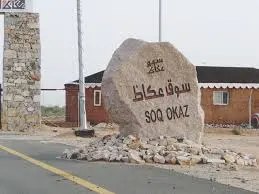
In the tribal era before Islam, as some call it “ 3aSr al Jahiliyah” (Age of Ignorance) but it was never ignorance that characterized this age. Indeed, trade and civilization was advanced in some Arab countries, in addition to poetry. Examples of “ al mou3alaqat” (publications or “hang-ups”) of the best poetry pieces in “Souq ‘ukaz” (the market) were common; here even some female poets were mentioned.
Some of these poems were about the love of the tribe, wars, victories, and very concept of love itself. You may have even heard of Imru’ al Qays – given the title “the King of Poets”.
Lovers, Flirtation & Poetic Influence
Later during the Umayyad era, Umar Ibn Abi Rabia rose to prominence, known for his “Ghazal”(flirtation) poetry.
One of his famous lines is:
قتلننا ثم لم يحيينَ قتلانا
qatalnana thoumma lam youHyina Qatlana
إن العيون التي في طرفها حورٌ
Inn al 3iyoun alti fi tarfiha Hawaraon
Other poet names were more obvious in their connection as lovers, such as “Jamil Buthayna” (Jamil, the poet and Buthayna: his lover’s name). Or, “Majnun Layla” (Majnun: Crazy because he was madly in love with Layla). Some of those love poets’ destinies can compete Shakespeare’s Romeo & Juliet in their misery, tragedy and unending quest for love.
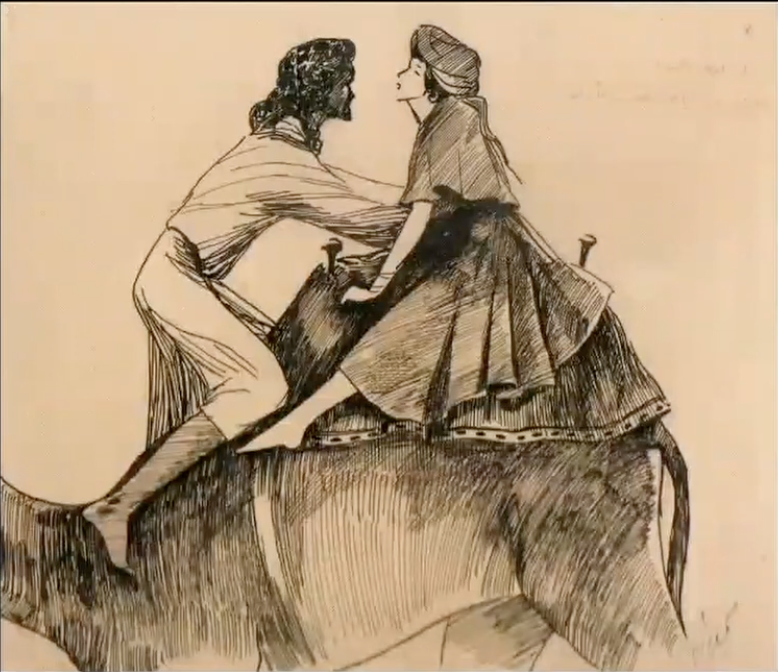
In the Abbasid era too, although it was considered to be the most strict era of the Arabic Islamic time, we can observe the themes of love as a constant in the poetry of the times – such as Bashar Ibn Burd, great work (and perhaps one of the most romantic poems of all time:
Oh people, my ear has fallen in love with someone.
Sometimes the ear falls in love earlier than the eyes.
Ya Qomou ouzouni li-ba3d el Hayyi asheqaton.
Wal ouzounou ta3shaq qabla al3eini aHyanan.
We can understand this love better when we know that the poet had some vision problems. This is why he said that he fell in love with the charming voice of the lady, before even his eyes fell on her.
Love in action: from definition, to feminism, homeland to politics
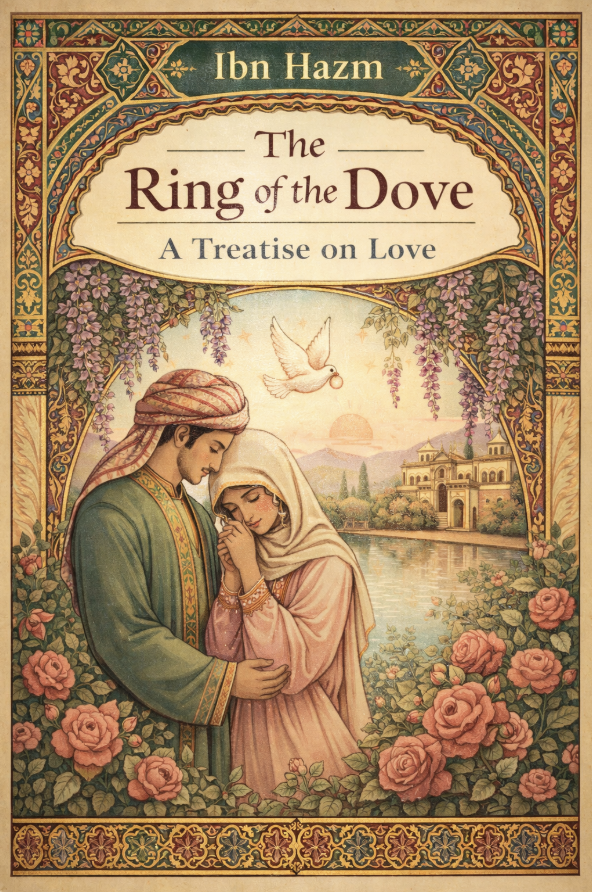
Around this time and in far Andalus, Ibn Hazm wrote the famous love and relations Arabic book “Tawq al Hamamah fil al-oulfi wa al-oullaf (The Ring of Dove) around 1022-1028 CE. In this book, you can find 8 main chapters that the author calls “babs” (doors) starting by the definition of love, passing through the stages of love, the methods of expressing love and concluding by reflection and philosophical insights on love
On the other hand, the modern era has produced poets, but perhaps the most famous was Nizar Qabbani, the Syrian poet who had poems about politics, feminism, homeland and love. The simple style he uses attracted many musicians to add melodies to the poems and sing them too.
You love
Oh you with fathomeless eyes,
Is extreme,
Mystic,
Holy.
You love, like birth and death,
Is impossible to repeat.
حُبّكِ …يا عميقة العينين
تطرفٌ
تصوفٌ
عبادة.
حُبُّكِ، مثل الموتِ و الولادة
صعبُ بأن يُعادَ مرتين…
Another poet worth looking into the the literary quest toward love is Adonis, and his work, “ If Only the Sea Could Sleep”.
Once I sang: every rose
As it tires, is her name
As it journeys, is her name
Did the road end, has her name changed?
The list goes on of poets who wrote about love – with many put to music and song – including Mahmoud Darwish, Badr Shaker al Sayyab, Fadua Tuqan, and others.
With poetic icons like these embedded into the Arabic literary tradition, it’s no wonder you can find many words for “Love” and its levels in the Arabic language.
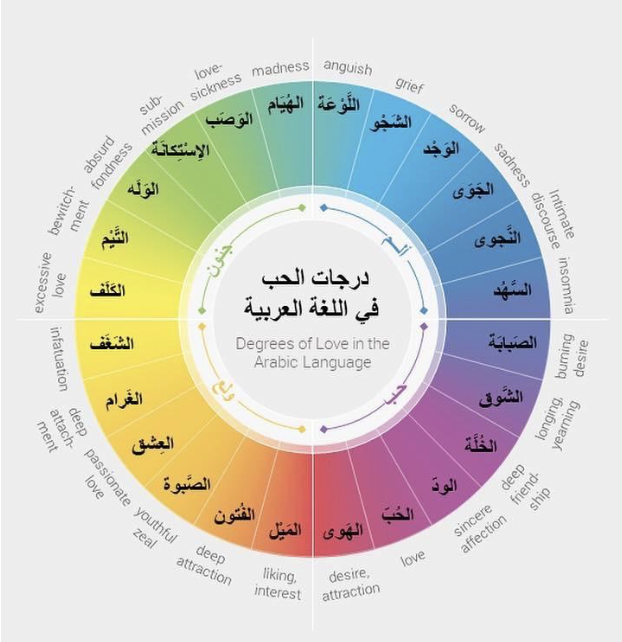
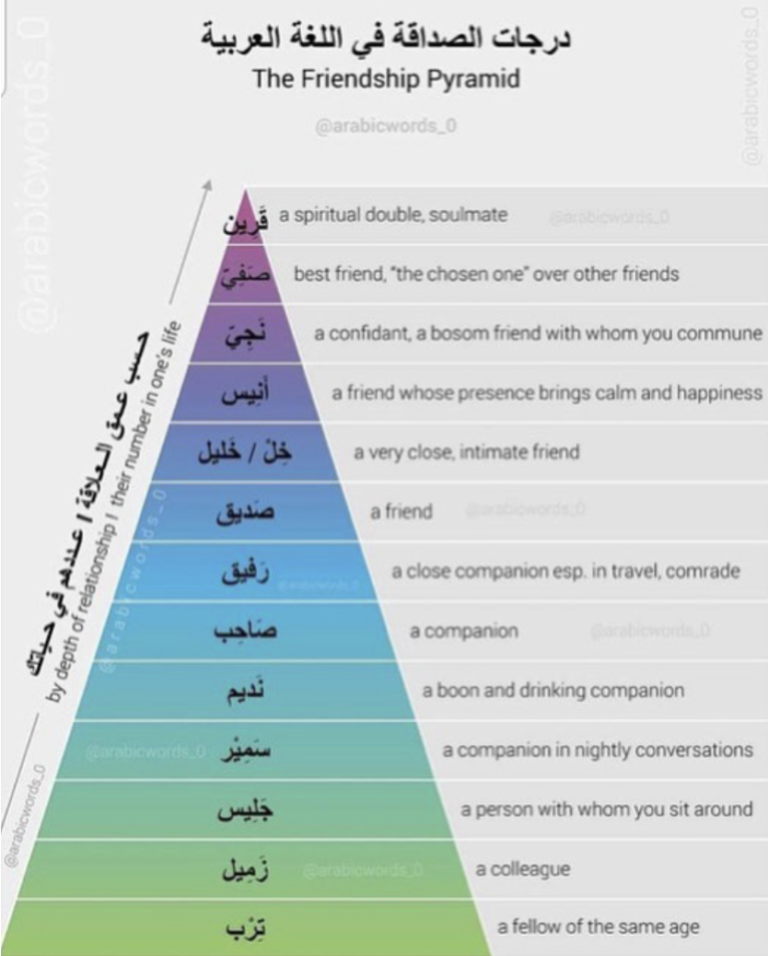
Beyond love in its “Hallmark card” sense, in Arabic, we have many words for the word friend. From a relation that can start as a usual friend to evolve to the relationship where this friend can become a lover. Here are the words used for different types of friends:
The Arab world hasn’t historically celebrated St. Valentine, as obvious from its name, but in the last century as the world becomes more interconnected many celebrate it.
Our world may not have this patron saint, Romeo and Julliet, or Shelley, but we have those who put our vision of love to lyric: Qays and Lubna, Majnoun Layla, Antarah and Abla, and many others.
Wishing you a wonderful moment filled of love – in whatever language and form most speaks to you.
إلى أن يلتقي القدر بنا
(until fate brings us together),
Varty
Start learning with NaTakallam!
Varty
Varty is an Armenian Syrian from Aleppo – and her name means "Rose" in both languages! She has an extensive background in teaching Arabic in Syria and holds a Bachelor’s degree in English Literature. Varty has also worked as a translator and interpreter for over fourteen years.