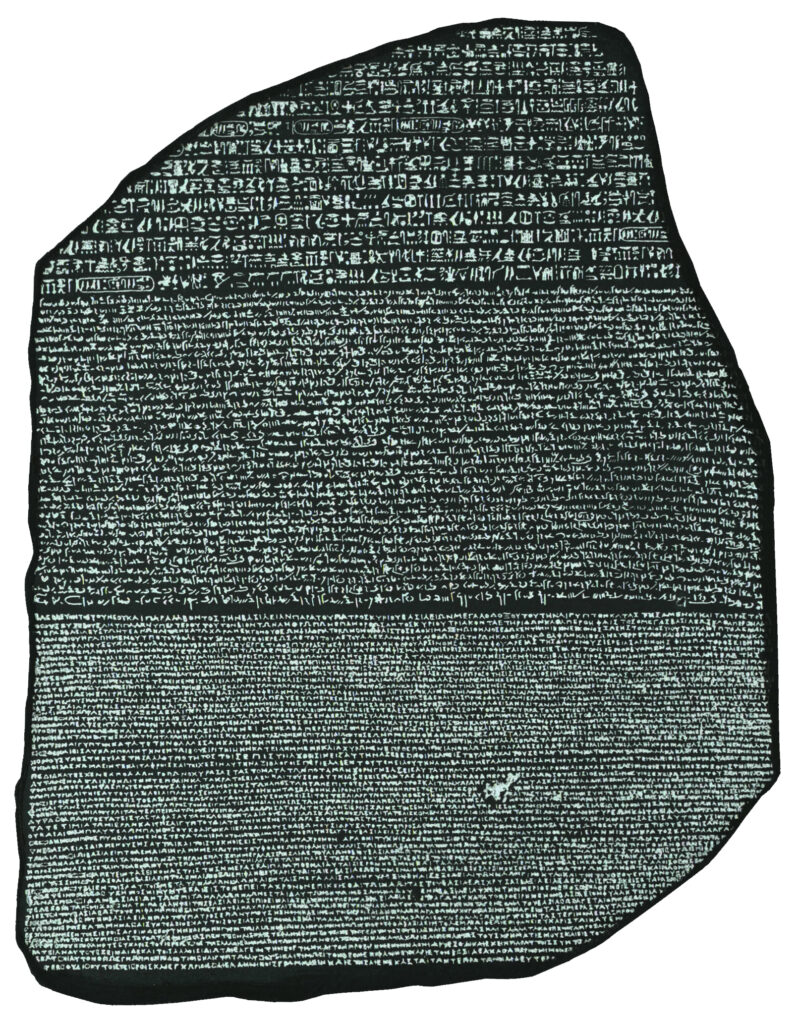
Arabic has shaped the world in ways we rarely acknowledge today. Centuries before the digital age, Arabic was a global language of science, philosophy, and innovation. It carries knowledge across continents and cultures. From algebra to astronomy, much of modern thought was preserved and propelled forward thanks to Arabic-speaking scholars.
Want to Support Language Justice in Action?
Bring NaTakallam’s interpretation and translation services to your classroom, clinic, or company.
A Global Language Left Behind by AI
Today, Arabic is still one of the most widely spoken languages in the world. Over 400 million speakers span across more than 25 countries. It’s one of the six official languages of the United Nations. Yet, an increasingly AI-first world continues to digitally sideline and undermine it; it is glaringly underrepresented in the datasets that train most modern AI systems.
At NaTakallam, we believe that Arabic is not only a heritage language — it’s a living, evolving system, spoken and shaped every day by millions. Its contributions to our daily lives surpass what most imagine, and its legacy and influence must be protected not just by preservation efforts, but through a firm commitment to language justice — the right of all people to communicate, access services, and participate in public life in their preferred language.
What is Language Justice?
Language justice is about power: who is heard, who is understood, and who gets to shape the narrative. In a world increasingly mediated by technology, the absence of linguistic representation becomes another form of exclusion. Especially for communities already pushed to the margins.
For displaced people, power imbalances exacerbated by language barriers are even more critical to address. From healthcare to education to legal systems, these barriers can mean misinformation, disempowerment, and invisibility. That’s why language justice is foundational to human rights — and to building inclusive technologies.
NaTakallam puts this into practice by offering interpretation and translation services that are trauma-informed, culturally fluent, and community-powered. Whether through dialect-specific support or mental health-sensitive interpretation, our Language Partners do what machines can’t. They listen, they contextualize, and they connect.
Where AI Falls Short
Modern AI systems like Common Crawl or GPT’s corpora are heavily skewed toward English and other dominant languages. Despite the global reach of Arabic. As a result, AI struggles with Arabic — especially when it comes to dialects, context, and nuance.
According to NaTakallam translators, literal meaning translations often lose the real meaning of sentences :
" One example I've encountered, where AI fell short, was the translation of the verb to navigate in the context of "navigating an issue". In this case, the machine translation suggested was الإبحار في المسألة (literally to sail in this issue), while the accurate translation in Arabic would be التعامل مع هذه المسألة. This is one of many examples that prove that machine translation is rarely a reliable tool in Arabic translation when it is not reviewed by a professional human translator."
- Perla, NaTakallam Translator Tweet
The consequences aren't just technical. They're deeply human.
Why AI Misunderstanding Arabic Matters
Consider another real-world example: a restaurant attempted to transliterate “milkshake” into Arabic as “مِلك شَك”. However, machine translation misread it as “مَلِك شَك” (malik shek), translating back to English as “King Doubt”—a humorous yet telling illustration of AI’s challenges with Arabic transliteration and context .
Further weight is added to this problem due to the complexity of Arab dialects. When we talk about Arabic, we’re talking about a vibrant spectrum of dialects and expressions—Syrian, Iraqi, Egyptian, Palestinian, Lebanese, Sudanese, and many more. Each deeply rooted in specific histories and geographies. Developers rarely train AI on these dialects.
A study evaluating ChatGPT’s performance in Tunisian and Jordanian dialects showed major gaps in understanding, especially on health-related prompts. That kind of inaccuracy isn’t just inconvenient — it’s dangerous.
Last month, one of our Language Partners, Yara Hasan, took to the stage at the Dubai Future Forum to discuss exactly that:
"When using AI to translate, often memories, identity, and history are erased, especially when using Arabic idioms which can be lost. AI should be learning from Arabic, not the other way around. We have to make the system representative of this culture."
- Yara Hasan, Arabic Language Partner with NaTakallam since 2019 speaking at the Dubai Future Forum Tweet
NaTakallam’s Model: Language Justice in Action
At NaTakallam, we see every day how systems that fail to reflect lived experience fail to serve real people. Refugees who have already endured loss and trauma often encounter platforms that don’t understand their words — literally.
That’s why we root our work in human-led, refugee-powered solutions. We don’t just offer services — we offer linguistic equity. From Palestinian proverbs to Iraqi idioms, our Language Partners preserve culture while helping people communicate across borders, systems, and trauma.
In this way, language becomes both a livelihood and a lifeline.
Arabic and the AI We Need
There are reasons to be hopeful.
Initiatives like the Abu Dhabi-based CAMeL Lab for Arabic NLP are proving that community-based, linguistically diverse AI can work — and achieve powerful results.
A recent development worth watching is Yalla AI, which Saudi tech company Yalla Plus launched as an Arabic-first platform. Developers in Saudi Arabia fully built, developed and trained it to reflect the linguistic and cultural realities of Arabic-speaking markets. Most global models flatten Arabic into a single formal register. Contrastingly, Yalla AI aims to support both Modern Standard Arabic and regional dialects.
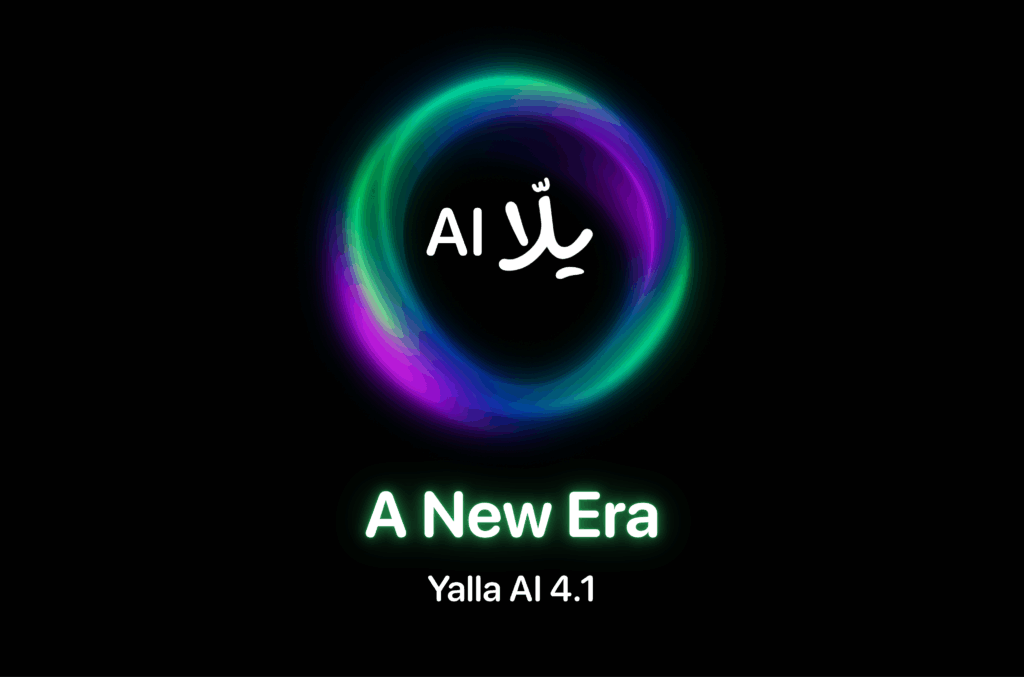
What’s especially notable is its integration into real-world business tools — like point-of-sale systems in retail and F&B — this makes AI accessible even for non-technical users. Early days, yes, but it signals a growing push from the region to define its own digital future, rather than just adapting to someone else’s.
So What’s Next?
If we want AI — and our digital ecosystems — to serve the world equitably, we must:
- Invest in multilingual corpora
- Fund refugee- and community-led tech
- Treat language preservation as innovation, not nostalgia
- Center language justice in design and policy
At NaTakallam, we’re proud to be part of this broader shift. Our work sits at the intersection of technology, language, and lived experience. We offer not just services, but insight — real-world data, dialect-specific use cases, and ethical frameworks centered on dignity and inclusion.
This is what Thaura AI is already trying to achieve. This ethical alternative to ChatGPT was built by two Syrian engineers who experienced displacement and witnessed first hand how big techs profit from these models. Thaura AI’s ethical approach relies on data privacy, environmental sustainability – by using 94% less energy than ChatGPT – and amplifying marginalized communities.
At NaTakallam, we’re proud to be part of this broader shift. Our work sits at the intersection of technology, language, and lived experience. We offer not just services, but insight — real-world data, dialect-specific use cases, and ethical frameworks centered on dignity and inclusion.
Want to Support Language Justice in Action?
Language justice doesn’t happen by accident — it’s built through deliberate choices. Whether you’re designing technology, shaping policy, teaching, or learning, your decisions matter. Partnering with NaTakallam is one way to turn values into impact by advocating for AI systems that reflect the world’s true linguistic diversity — not just a fraction of it.
Arabic has always been a language of futures: of possibility, invention, and exchange. In an AI-driven world, ensuring it thrives isn’t optional. It’s a responsibility that will define whose voices shape the future.
Partner with NaTakallam to advance language justice across 100+ languages
Make an impact as an organization or individual:
Translation & Interpretation: Human-powered translations across 100+ languages.
Organizational & Academic Learning: Tailored programs for teams, employees, or students.
1-on-1 Learning: Connect with native speakers to learn a language and culture.
Support linguistic diversity, empower communities, and help languages like Arabic thrive in an AI-driven world.
Zeina Abou Taha
Zeina Abou Taha is an intern at NaTakallam, currently transitioning from a career in IT consulting into journalism. With an academic background in Entrepreneurship & Innovation and a passion about exploring the world, Zeina spends her free time traveling, connecting with people from diverse cultures, and writing for her personal blog.